
Glenveagh Castle, in Ireland’s Glenveagh National Park, is a “must-visit” for anyone who craves history, nature, and off-the-beaten-path experiences. In the heart of County Donegal’s rugged landscape, the 19th-century mansion overlooks a pristine lake. Surrounded by mountains, a visit to Glenveagh Castle offers visitors romantic architecture with wild Irish scenery. Once a private estate, the castle grounds and gardens, as well as the ornate rooms, are now open to travelers. Wander its rooms, stroll through its renowned gardens, and immerse yourself in the stories that led to the formation of this national treasure. Whether you come for the Castle, its breathtaking landscape, or its intriguing history, Glenveagh Castle delivers.
** Darla Travels is reader-supported.
When you buy through our links, we may earn a commission. **
Find a great place to stay near Glenveagh Castle:
In a hurry? Book a popular Donegal Tour here:
- Immersive 8-day guided tour of County Donegal, including Sligo and Leitrim
- Private South Donegal Day Tour with Guide: Explore Killeybegs, Slieve League sea cliffs, and Glencolmcille Folk Village
- Donegal Coast 1 Day Self-guided Electric Bike Tour: Visit Sliabh Liag (Slieve League) Cliffs, the beautiful Silver Strand, and historic Glencolmcille
- Donegal: Sunset Kayak Trip on Dunlewey Lake
- Is Glenveagh Castle a Hidden Gem?
- Where is Glenveagh Castle? How to Get There
- The Story of Glenveagh Castle: A Quick History
- Outside the Glenveagh Castle
- Glenveagh Castle Interior: What to Expect on the Castle Tour
- Other Activities in Glenveagh National Park
- Practical Information for Visiting Glenveagh Castle
- Accommodation Options Near Glenveagh Castle
- Visiting Glenveagh Castle: Pin it for Later
- Wrapping Up a Visit to the Captivating Glenveagh Castle
Is Glenveagh Castle a Hidden Gem?
Glenveagh Castle receives approximately 200,000 visitors per year. In contrast, the Cliffs of Moher, one of the most popular attractions in Ireland, welcomes about 1.3 to 1.5 million sightseers annually. That’s 6 to 7 times more than Glenveagh Castle!
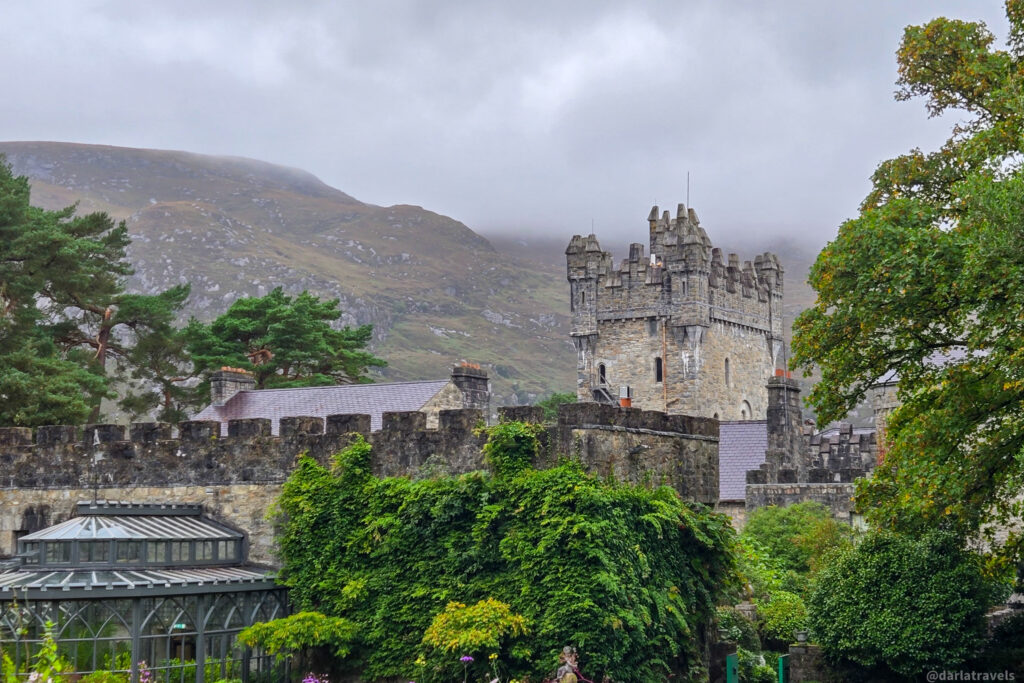
So although Glenveagh Castle is cherished by those who make the journey, it still feels like one of Ireland’s best-kept secrets. I’m calling it a hidden gem!
Where is Glenveagh Castle? How to Get There
Glenveagh Castle is within Glenveagh National Park in Ireland’s County Donegal. It’s about a 25 to 30-minute drive from the towns of Gweedore, Dunfanaghy, and Letterkenny.
How to Get to the Glenveagh National Park Visitor Center

By Car. The Glenveagh National Park Visitor Center is located at Derrylahan, Church Hill, Co. Donegal, F92 P993, Ireland. If self-driving, use scenic route R251. Other location information:
Google Plus Code: 3347+H6 Church Hill, County Donegal, Ireland
GPS coordinates: 55.0570121317782, -7.93656741802346
By Bus. Glenveagh National Park is accessible by the TFI Local Link bus number 971. The bus runs five times daily (except for Christmas Day) between Burtonport (Ailt an Chorráin) and Letterkenny, stopping at the parking lot next to the Visitor Center.
Tour Options. If you’d like to leave the logistics to someone else and enjoy the scenic drive to Glenveagh, consider taking a tour. For example, the Donegal: Private Coast and Castles Day Tour includes stops at Glenveagh, Fanad Head Lighthouse, and Doe Castle.
Note:
- From the Park Visitor Center, get to Glenveagh Castle on foot, by bike, or take the park’s shuttle.
- Entrance to Glenveagh National Park is free, but the shuttle bus and the castle tour have fees.
These options are explained in more detail below.
The Story of Glenveagh Castle: A Quick History
Glenveagh Castle is an impressive piece of architecture. But its riveting history makes it much more than a photo stop. Here’s a quick rundown of the history of Glenveagh Castle.
1857–1859. John George Adair began assembling the Glenveagh Estate by acquiring the landlord rights over Derryveagh and Glendowan, giving him control of the land and the ability to collect rents from the tenant farmers living there. Glenveagh means “valley of the birches.”
April 1861. Adair carried out the Derryveagh Evictions, forcibly removing around 244 people (across about 46 houses). It was one of the most harrowing episodes of landlord oppression in Irish history, occurring in the aftermath of the Great Famine. This cruelty earned Adair the nickname of “Black Jack.” Although widely condemned, Adair suffered no punishment for the evictions as they were not illegal.
1867–1873. Construction of Glenveagh Castle, designed by John Townsend Trench, began around 1867 and was completed by 1873.
1869. Adair married Cornelia Wadsworth Ritchie, an American widow from New York.
1885. John George Adair died suddenly, and Cornelia inherited the estate.
1885–1921. Cornelia Adair oversaw significant improvements: she introduced red deer, expanded and landscaped gardens, enhanced the castle, and became a noted society hostess.
1921. Death of Cornelia Adair. Glenveagh fell into relative decline, and during the Irish Civil War, the estate was occupied by both sides at different times
1929. Arthur Kingsley Porter, a Harvard professor and scholar of Irish archaeology, purchased the Glenveagh Estate.
1933. In July, Porter mysteriously disappeared while visiting Inishbofin Island off Donegal’s coast.
1937. Irish-American art collector Henry McIlhenny acquired the estate.
1975. McIlhenny sold most of the estate to Ireland’s Office of Public Works, enabling the establishment of a national park.
1983. McIlhenny bequeathed Glenveagh Castle and its gardens to the Irish State.
1984. Glenveagh National Park opened to the public.
1986. The castle opened to the public, and Henry McIlhenny died the same year.
The timeline only scratches the surface—Glenveagh National Park’s past is rich, layered, and well worth exploring further for anyone intrigued by Ireland’s cultural and social history. But let’s get to the main point of this article, a visit to Glenveagh Castle.
Outside the Glenveagh Castle
Glenveagh Castle Setting: The Wild Beauty of Donegal
Glenveagh National Park is considered one of Ireland’s most breathtaking landscapes. Spanning over 39,540 acres (16,000 hectares), the park encompasses the rugged Derryveagh mountains, freshwater lakes and rivers, peatlands, and ancient woodlands. John George Adair was “enchanted by the surpassing beauty of the scenery”, a primary reason for his original acquisition of the land and construction of the castle.
Glenveagh Castle is approximately 2.2 to 2.5 miles (3.5 to 4 km) from the Park visitor center, reachable on foot, by bicycle, or with a shuttle bus–more on these options below.
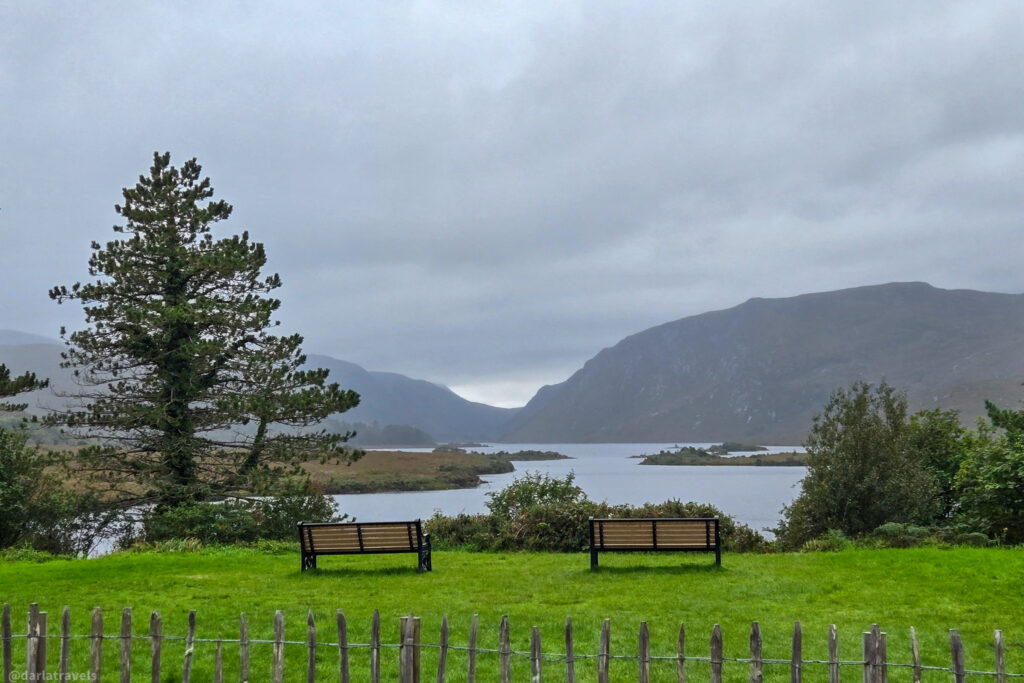
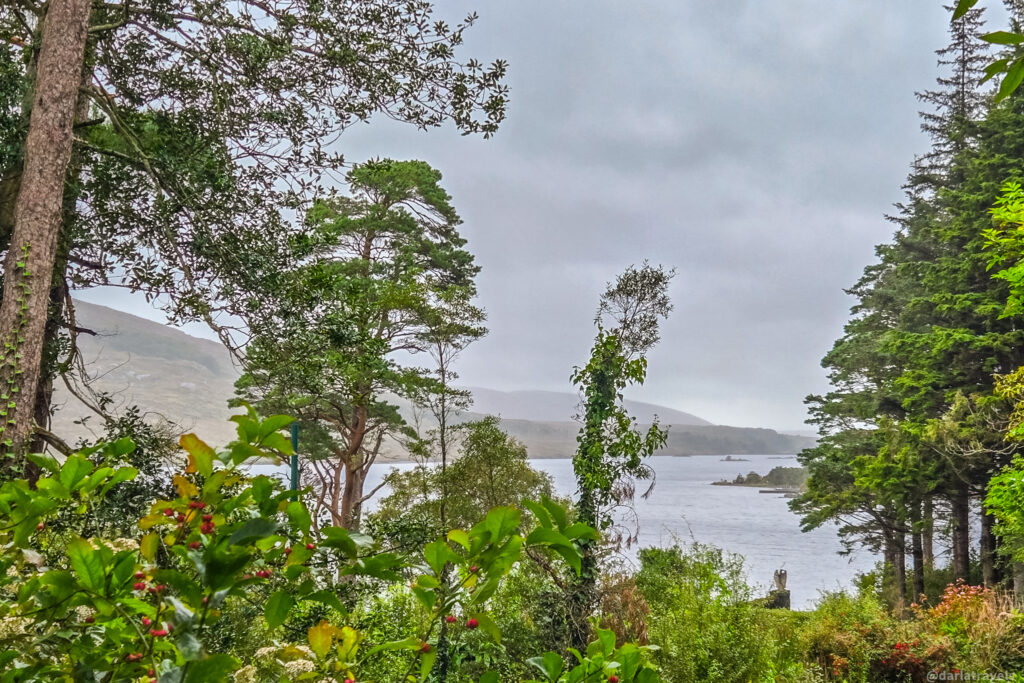
The Castle sits in the narrow Glenveagh valley on the eastern shore of Lough Veagh. (“Lough” is a word for a lake). The lake, while only 0.6 mi (1 km) wide, is nearly 3.7 miles (6 km) long. On either side, granite cliffs of the Derryveagh Mountains slope up sharply to about 1,000 ft (300 m).
Glenveagh Castle Appearance and Architecture
The original Scottish Baronial castle tower had a square footprint and was four stories high. Scottish Baronial is a Gothic Revival form that was “trending” in the British Isles at the time. Built from local granite, the castle’s architecture includes typical features intended to protect its inhabitants against attack, such as towers, battlements, and turrets.
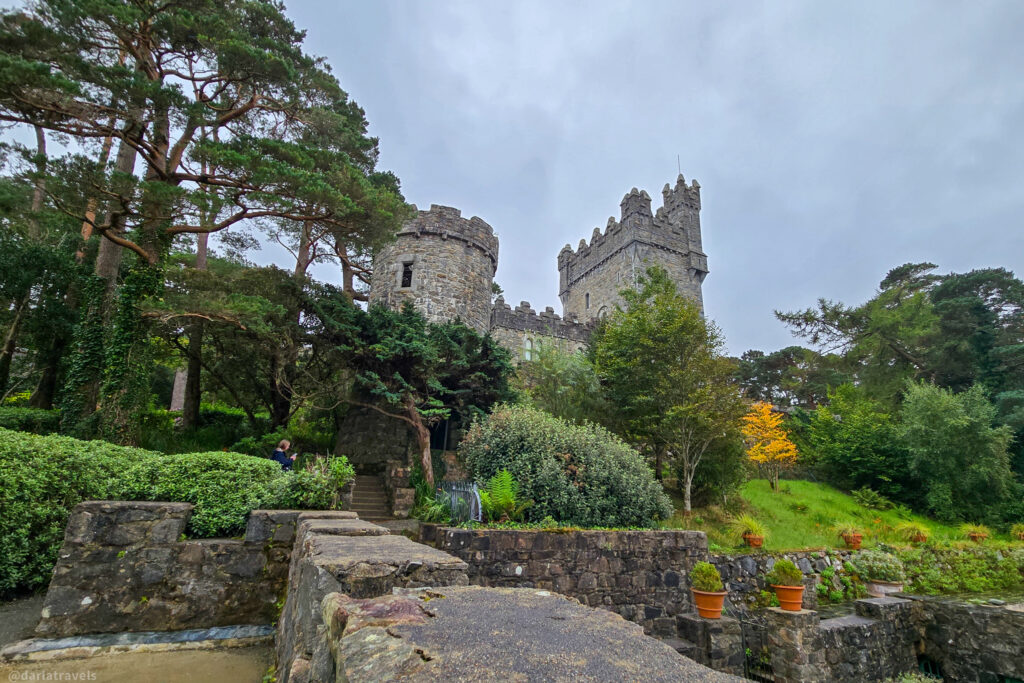
Adair had a grandiose vision for his estate and castle. Some sources say his admiration for Balmoral, Queen Victoria’s Scottish retreat, influenced the location and design of Glenveagh. Other sources go so far as to say that Adair intended to rival or even “surpass” Balmoral with his estate in the remote Irish countryside.
Cornelia Adair added a two-story wing to the northeast in 1888 and a three-stage round tower to the northeast in 1901.
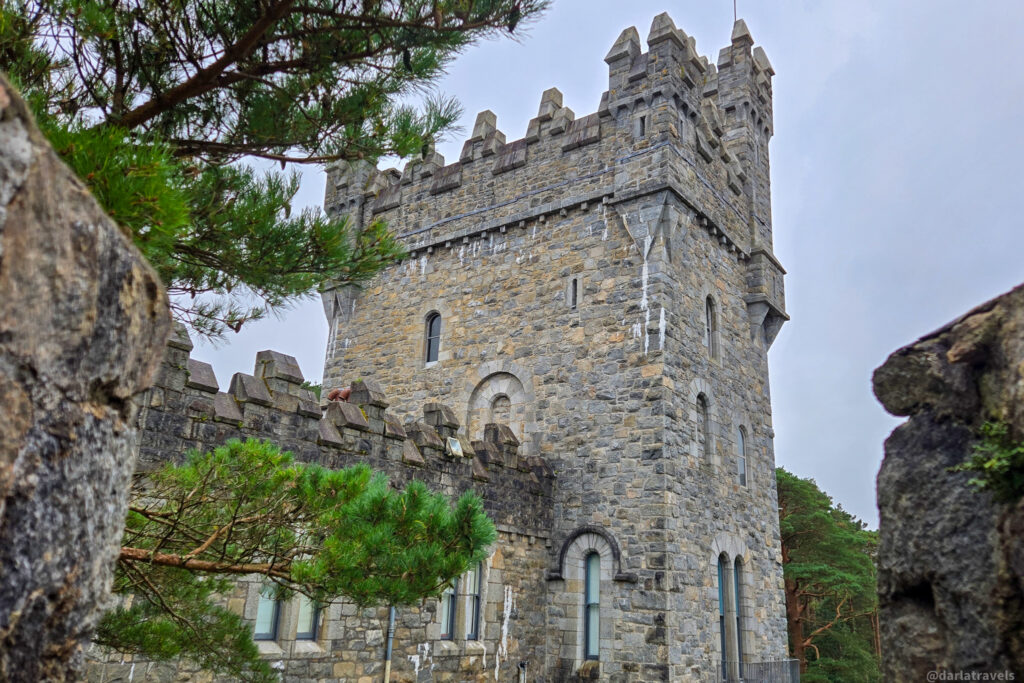
Over 100 years later, Glenveagh Castle remains an impressive, solid structure in a picture-postcard setting.
Glenveagh Castle Exterior: The Gardens
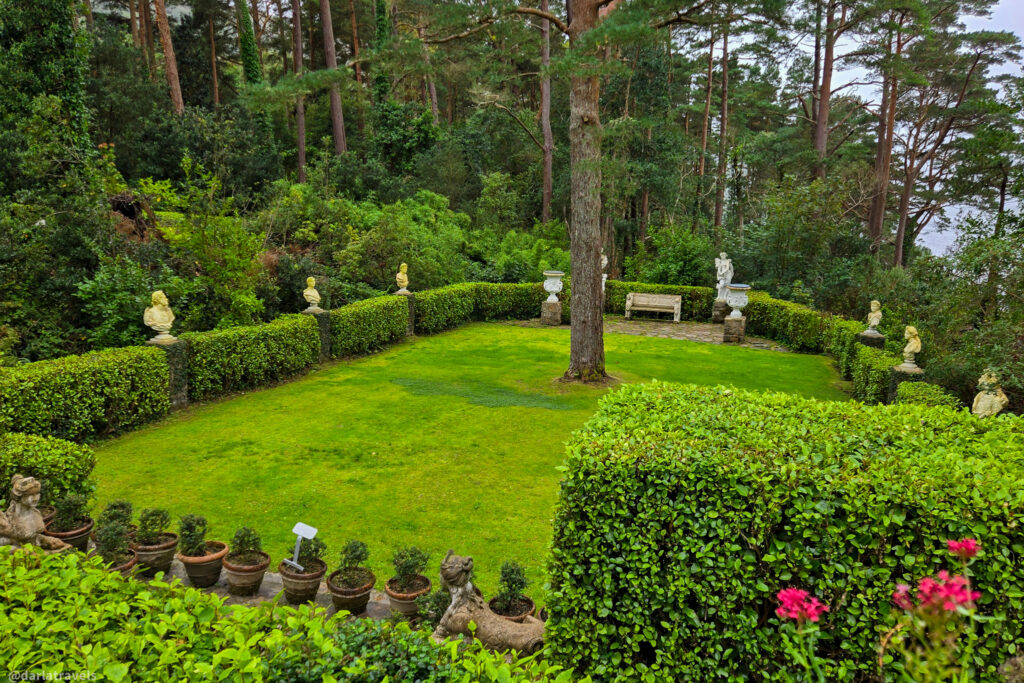
Surrounding Glenveagh Castle, more than 27 acres (11 hectares) of gardens showcase creativity and horticultural excellence. Each owner of Glenveagh left their mark on the garden, transforming the rugged natural terrain into a richly layered outdoor sanctuary.
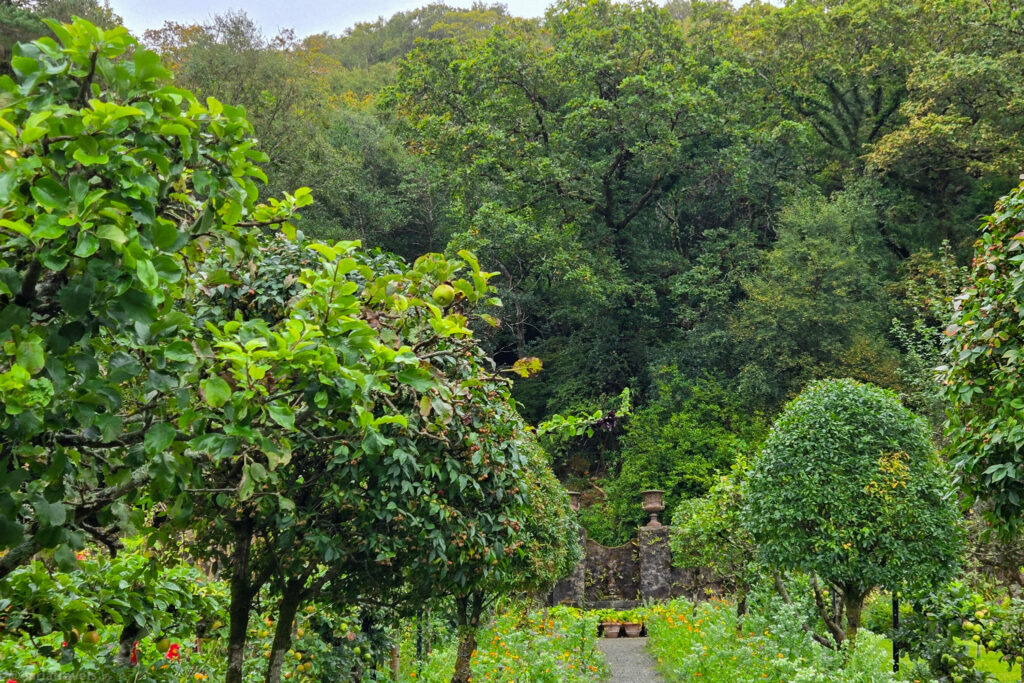
Cornelia Adair’s Vision Takes Root
In the late 19th century, Cornelia Adair reshaped the estate’s natural landscape by bringing in immense quantities of topsoil to make large‑scale planting possible. Her first efforts, the walled kitchen and pleasure gardens, created sheltered spaces for reflection and ingredients for the estate’s cook. She also introduced practical plantings, such as Scots Pine and rhododendron, to shield the grounds from the wind. Some of these early additions survive today, including the pines, select rhododendron, and three enduring Chusan palms.
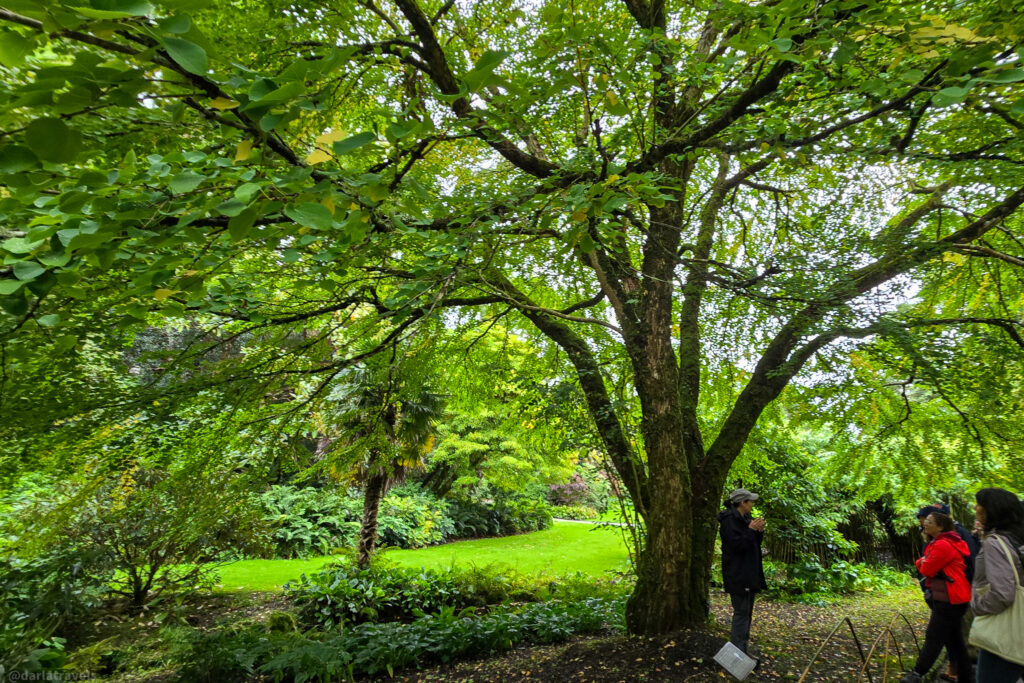
A Signature Dahlia and a Long‑Serving Gardener
The gardens continued to supply the estate’s kitchen during Lucy Porter’s time at Glenveagh (Lucy was Arthur Porter’s wife). In 1930, she gifted flower seeds to young gardener Matt Armour, which produced a single red dahlia. That bloom became a defining feature of the Walled Gardens, spreading year after year. Armour went on to serve as head gardener for more than 50 years, and in 1996, the radiant red dahlia was officially named Dahlia ‘Matt Armour’ in his honor.
McIlhenny’s Artful Enhancements
When Henry McIlhenny acquired the estate in 1939, he elevated the gardens into a global showcase. Under his direction, rare plants arrived from abroad, new garden layouts took shape, and unexpected touches—like tranquil oriental statues—added an element of discovery. With a team of eight gardeners, he refined existing spaces and created new ones, crafting distinctive color, texture, and fragrance palettes.
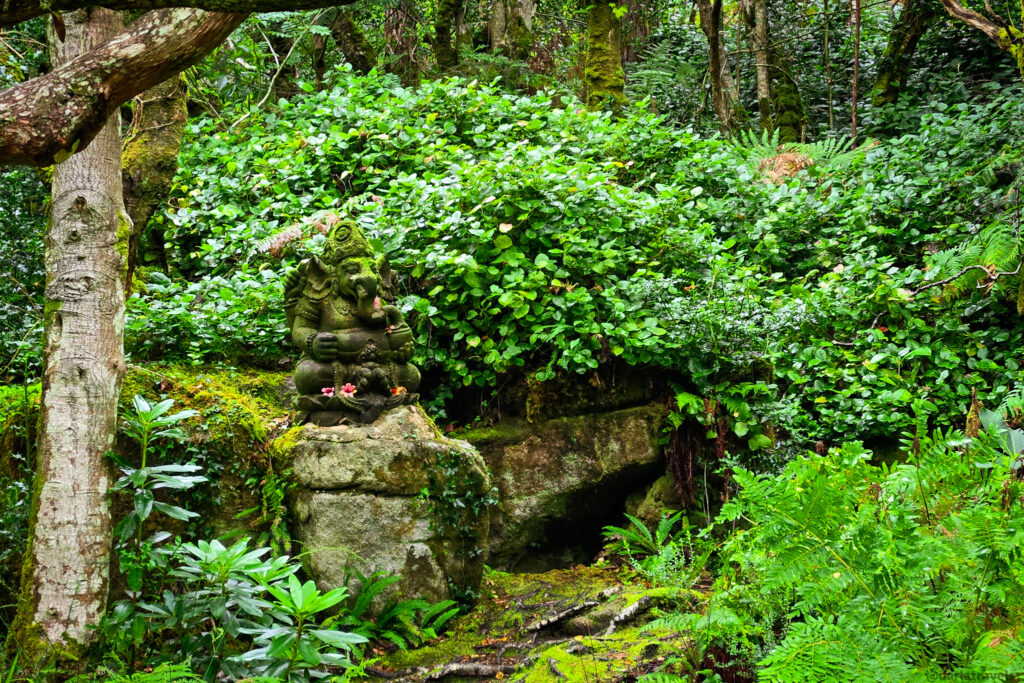
Today, the gardens contain roughly 1,700 plant species and varieties, including about 180 native to Ireland. The current garden team at Glenveagh continues to preserve and enhance these historic landscapes, ensuring that every visitor experiences a living tapestry shaped by more than a century of imagination and care.
Glenveagh Castle Interior: What to Expect on the Castle Tour
Leaving the gardens behind, it’s time to step across the threshold and explore the interior of the castle itself. The Glenveagh Castle tour is self-guided only for individuals. (You may read elsewhere that guided tours are available; however, this information is outdated.)
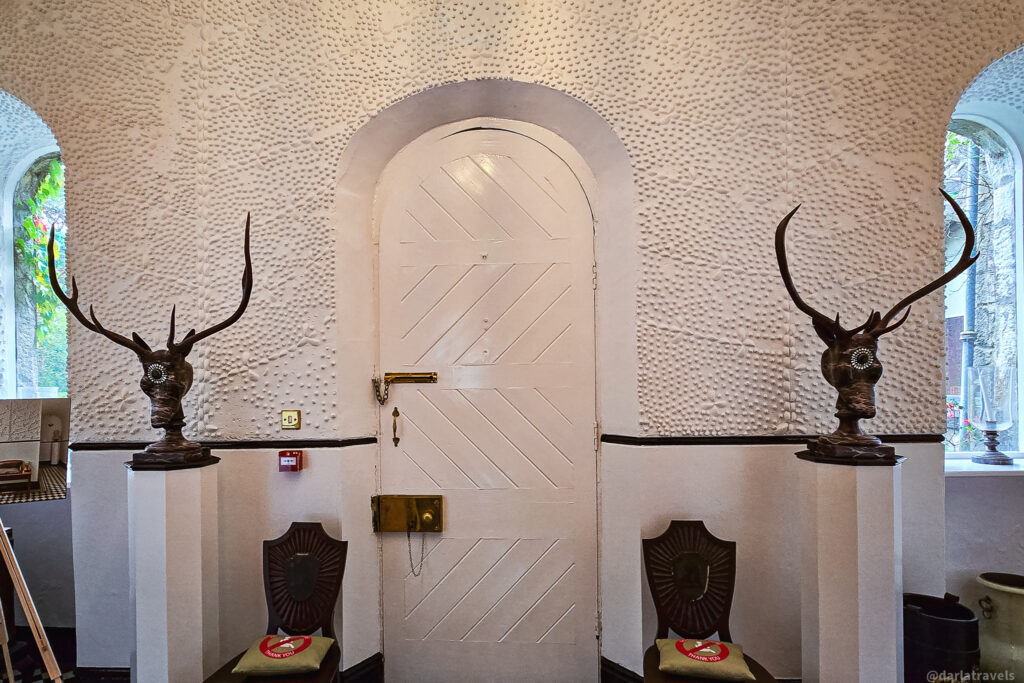
In keeping with Adair’s original aim of using Glenveagh as a hunting retreat, hunting-inspired decor can be found throughout the building, with an emphasis on deer.
Glenveagh’s last private owner, Henry McIlhenny, furnished the castle with fine art, antiques, and decorative pieces that reflected his taste and background. Since becoming part of Glenveagh National Park, the Office of Public Works (OPW) has restored and conserved the interiors. Many of the rooms retain the atmosphere of McIlhenny’s time, with paintings, furniture, and décor he chose still on display. The following are some highlights of Glenveagh Castle.
The Entrance Hall (Foyer)
The foyer is one of Glenveagh’s spaces refurbished by Lucy and Arthur Porter. The delicate shellwork on the walls of the entrance hall reflects their backgrounds in fine art.
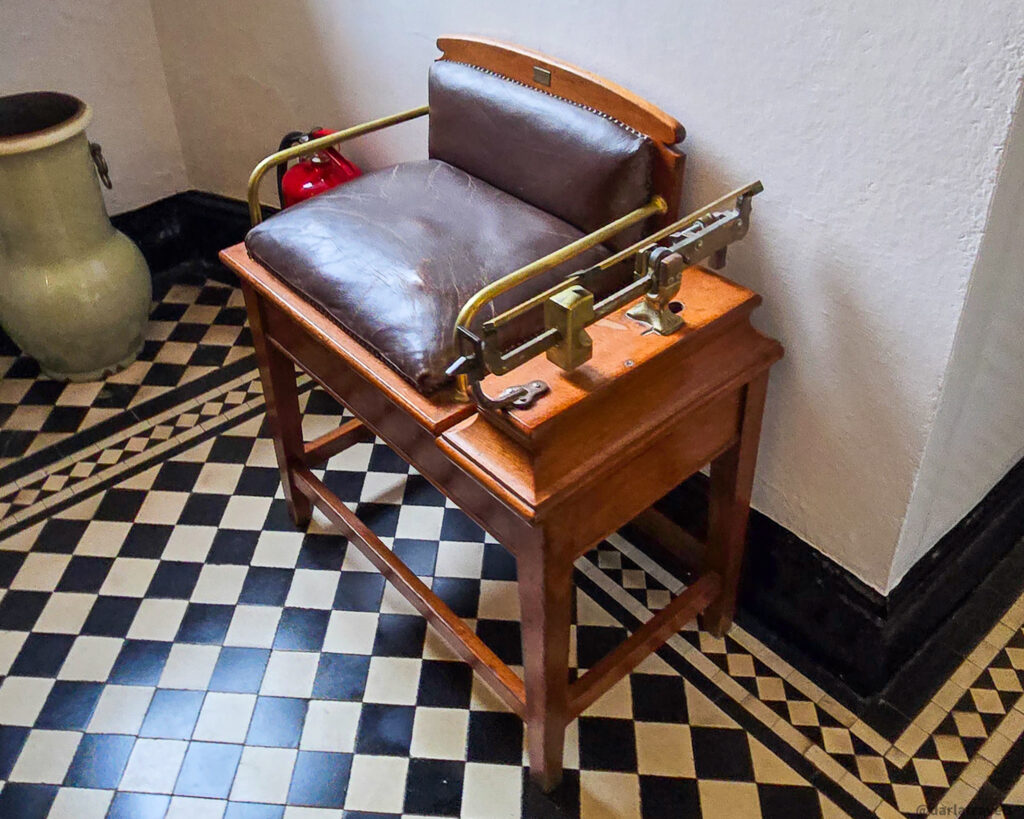
The foyer also contains a weighing chair. The story goes that Henry McIlhenny would ask his guests to sit in the chair at the beginning and end of their visits. Any weight gain was taken as proof of McIlhenny’s hospitality! (The original purpose of the weighing chair was to weigh jockeys before a horse race.)
The Drawing Room
One of the most elegant spaces in the castle, visitors can see period furnishings and decorative details that reflect the tastes of its owners.
The Drawing Room contains a mahogany Gothic-style chest of drawers and bookcase holding books owned by Henry McIlhenny. This elegant piece features glass-paneled doors and dates from the 1790s.
Notice the movable heat screen next to the fireplace. A heat screen prevented ladies’ wax-based makeup from melting!

The Study
The walls and upholstery in the Study are in rich crimson, creating a warm atmosphere. The Study was Henry McIlhenny’s main office at the residence. It was here that he met with his Estate Manager and Housekeeper to discuss estate business and weekly menus.

The Library
A highlight for many visitors, the Library contains books and artifacts that reflect the intellectual interests of past owners. It offers a quieter, more contemplative atmosphere compared to the social rooms. The Library is decorated in blue and cream tones.

The Music Room
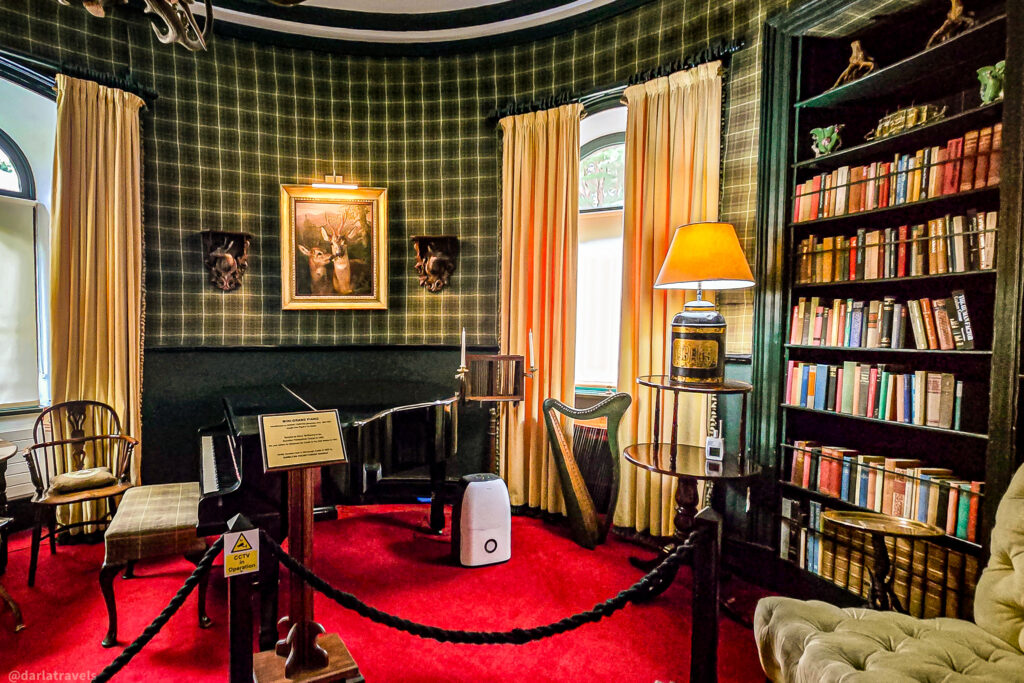
The Music Room is circular and has padded fabric walls to improve acoustics. This fabric is a Scottish tartan pattern associated with the Gordon clan. The room contains a mini grand piano and an Irish harp made in Dublin in the 1820s.
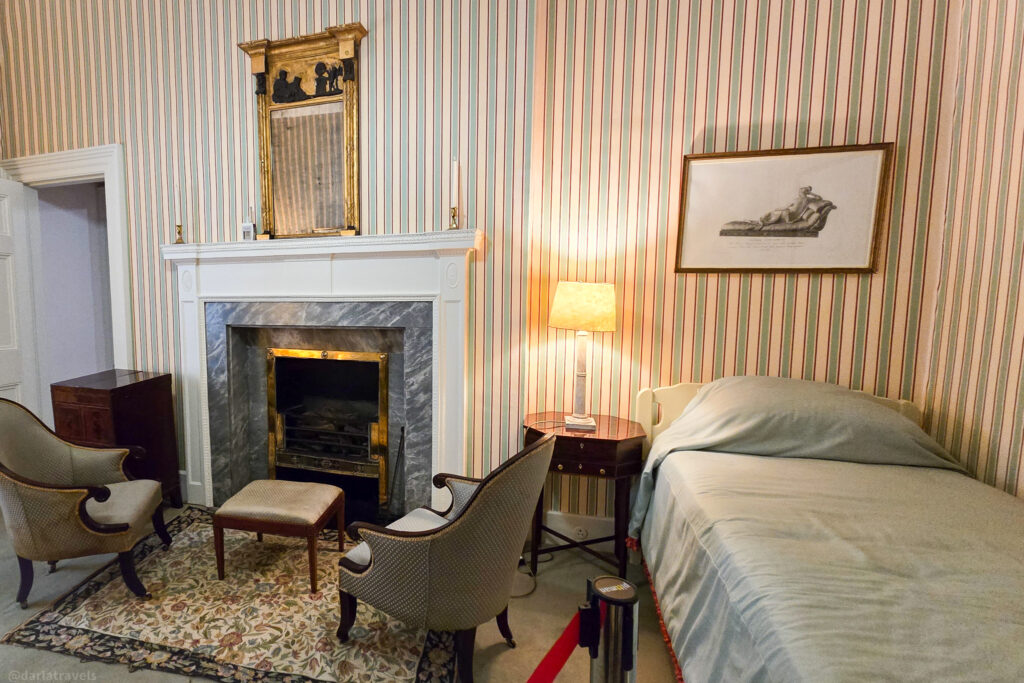
The Castle Bedrooms
Several bedrooms are open to visitors and furnished to reflect the castle’s domestic life. They provide insight into how the castle functioned as both a private residence and a place of retreat. Each bedroom has a distinctive decor, palette, and style.
Other Activities in Glenveagh National Park
The Visitor Center
It might be a good idea to start at the Visitor Center before jumping in. Here, you can purchase tour tickets, browse interpretive exhibits, and pick up maps or information about trails, the park history, local wildlife, and seasonal programs. Staff are welcoming and knowledgeable, making it an easy place to ask questions or fine‑tune your plans.
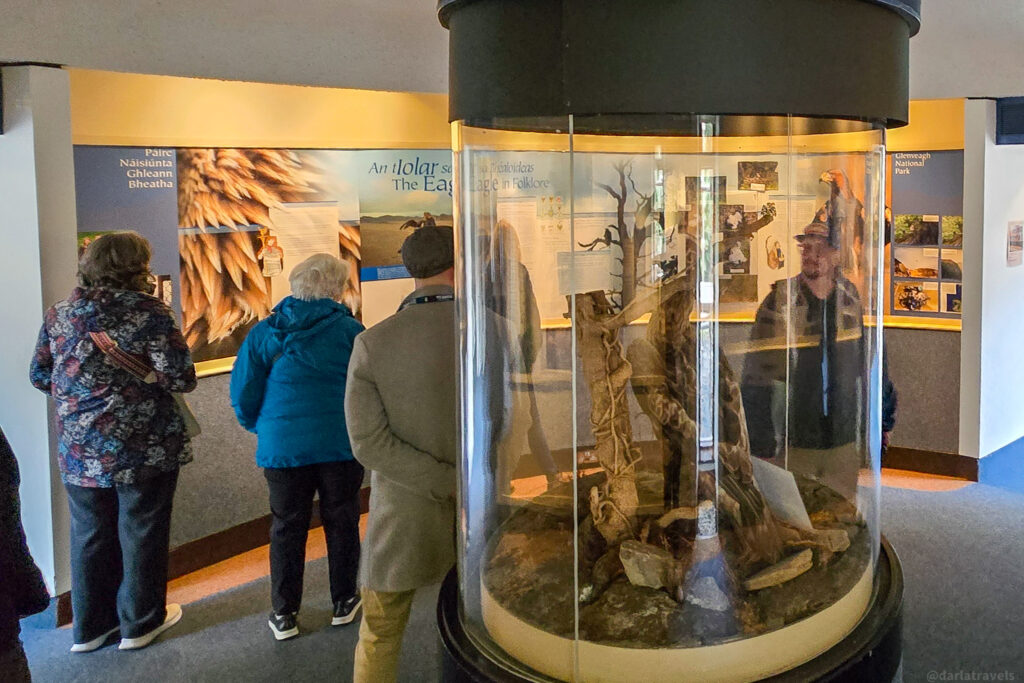
The center also includes a gift shop with Irish crafts, books, and locally inspired souvenirs—an ideal stop for shoppers.
Walks and Hikes
Several walking trails begin near Glenveagh’s Visitor Center and Castle, each offering distinctive opportunities to experience the park’s landscape and history. They range from 0.6-mile (1 km) loops like the Garden Walk to longer (4.3-5 miles, 7-8 km ) and more strenuous routes through the Derryveagh Mountains and to the nearby town of Gartan, the birthplace of St Colmcille.)
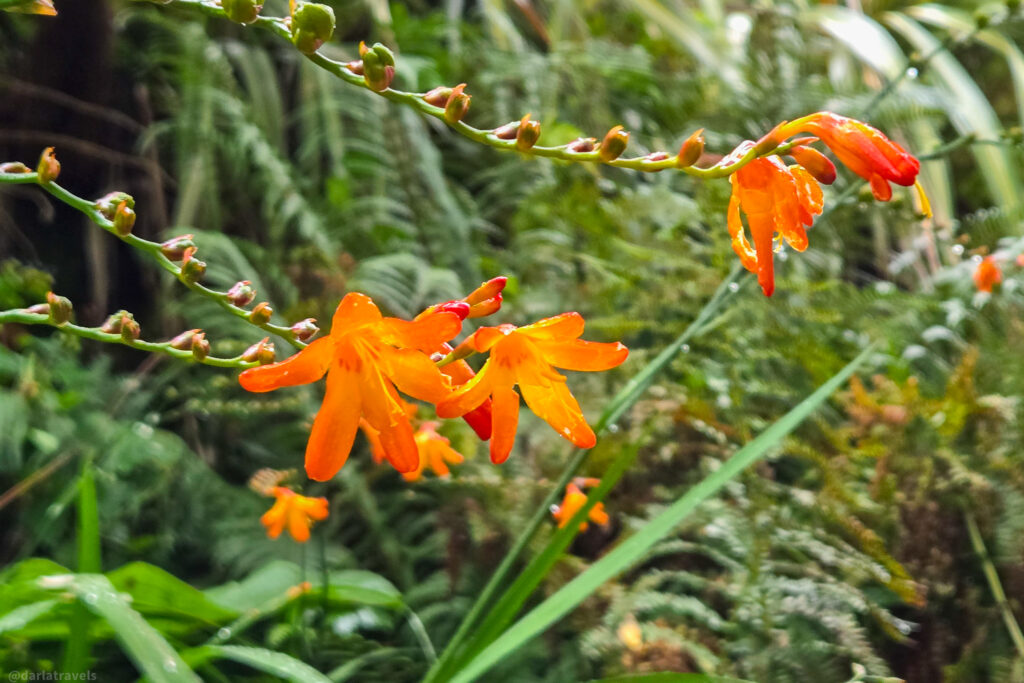
All routes are clearly marked and maintained by Glenveagh National Park, with maps and current details available at the on-site Visitor Center and on the Glenveagh National Park website.
Hiking and camping are also permitted. See the Park website for complete details.
Fishing
The park runs a defined fishing season on Lough Veagh from July to September. A fishing permit is required.
Practical Information for Visiting Glenveagh Castle
Glenveagh National Park is worth a visit in any season, but a little planning can make it even more enjoyable. While the park offers enriching programs year-round, summer often brings the busiest calendar of events. These include guided walks, talks, and family-friendly activities. A quick check of the park’s event listings and social channels before your trip can help you line up your visit with something special.
Because the park sits in a remote upland area, the weather can shift quickly. Look at the forecast before you go and dress with flexibility in mind: sturdy walking shoes, layers, and rain protection will keep you comfortable as you explore.
If you’re considering guided activities or hoping to secure a fishing permit, plan your visit so you can focus on the landscapes, the stories, and the peaceful atmosphere that make Glenveagh such a standout destination.
- Opening Hours:
- March–October: 9:15 a.m. – 5:15 p.m.
- November–February: 10:00 a.m. – 5:15 p.m.
- Closed Christmas week and certain Mondays and Fridays (except bank holiday Mondays).
- Last tour of the day: 4:45 p.m.
- Castle Tours:
- Self-guided tours are available Tuesday, Wednesday, Thursday, Saturday, and Sunday.
- Walk-up (no advance booking): €7 adult, €5 senior/concession, €15 family, children under six free.
- Group Bookings:
- Group rates available with advance booking (slightly reduced).
- Specialist-guided tours are offered to groups by prior arrangement.
How to Get to Glenveagh Castle from the Visitor Center
There are three options for getting to Glenveagh Castle from the Park’s Visitor Center.
Walk: Take the 3.5 km Lakeshore Trail, a well-surfaced, mostly flat path that runs parallel to the road. The walk starts at the Visitor Center and offers views of Lough Veagh. The walk takes about 40-50 minutes and is not physically demanding. Consider walking to the Castle, and then returning via the Shuttle Bus.
Shuttle Bus: The Glenveagh Castle Shuttle Bus runs daily at regular intervals between the Visitor Center and Castle.
- Service hours:
- First bus to Castle: 9:30 a.m.
- Last bus from Visitor Center: 4:30 p.m.
- Last bus from Castle: 5:15 p.m.
- Tickets:
- Adult return: €3
- Concession return: €2 (Children 7–18, students, over 65)
- Single ticket: €1.50
- Children (6 and under): Free
- Tickets sold at the Visitor Center and the Castle reception
- Additional notes:
- No service on Good Friday or during Christmas week
- Dogs are not allowed except for service dogs
Bike: Finally, you can rent a bike from GrassRoutes Bike Hire near the shuttle bus stop and enjoy a relaxing lakeside bike ride to the castle. Although bikes are not allowed on the roads, they can be taken to other locations in the park via the trails. Reservations are encouraged. GrassRoutes rents bikes in the spring and summer.
Shuttle Bus Service:
- Adults: €3 return
- Concession (students, over 65, children 7–18): €2 return
- Children under 6: free
If you’re interested in exploring Glenveagh by bike, look at the Gweedore: Guided eBike Tour. This tour stops at Glenveagh Castle, but also includes sights including the Bad Eddie shipwreck, the Gweedore Golf Club, and the village of Dunlewey. Also, see my post on Exploring Rural County Donegal by E-Bike.
Where to Eat and Drink on your Glenveagh Castle Visit
Exploring Glenveagh works up an appetite, and the park’s two dining spots offer convenient—and pleasantly scenic—places to refuel.
Nellie’s Restaurant, located at the Visitor Centre near the parking lot, is the hub for sit‑down meals and heartier options. It’s a welcome stop before or after exploring the estate, especially if you’re looking for a comfortable place to relax. Hours vary by season, and it typically closes during the winter, so it’s worth checking ahead if you’re visiting in the quieter months.
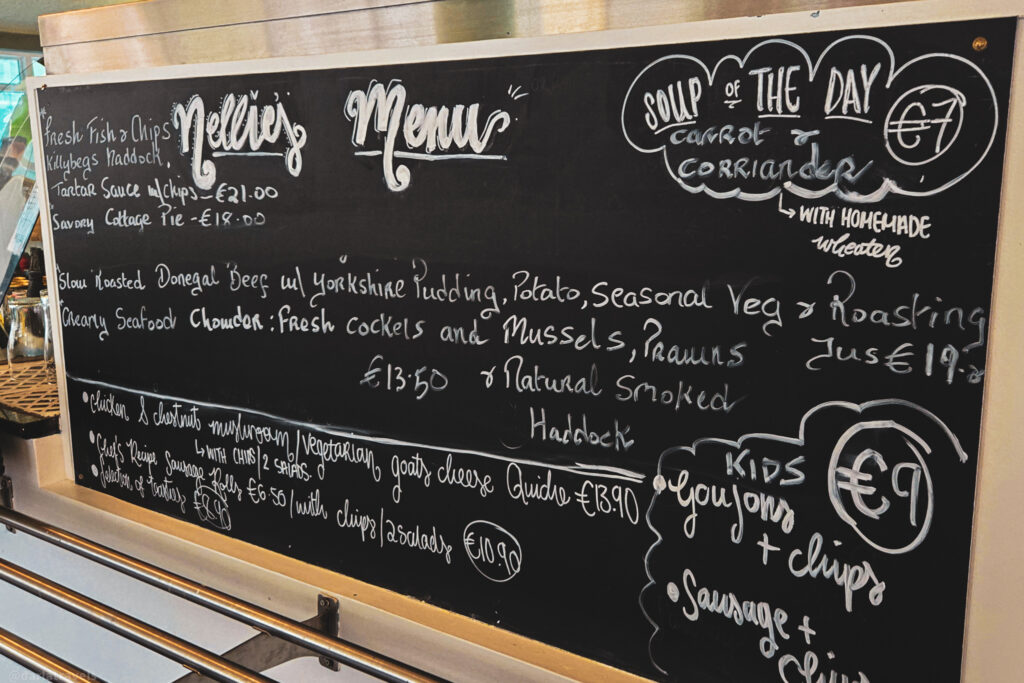
Closer to the castle, the Synge & Byrne tea room offers a cozy break with light bites, baked treats, and hot drinks. Open from 10:00 to 4:00 daily, it’s an inviting spot for a refreshment break on your castle visit.
Accommodation Options Near Glenveagh Castle
Ready to plan your Donegal adventure? Use the links and map below to explore options, whether you’re seeking a cozy guesthouse, a stylish hotel, or a country retreat. Letterkenny, the largest town in County Donegal, offers a range of lodging for visitors.
Book now at Booking.com ♦ Book now at Expedia ♦ Book now at Hotels.com
Visiting Glenveagh Castle: Pin it for Later
Add these pins to your Pinterest boards for future planning.
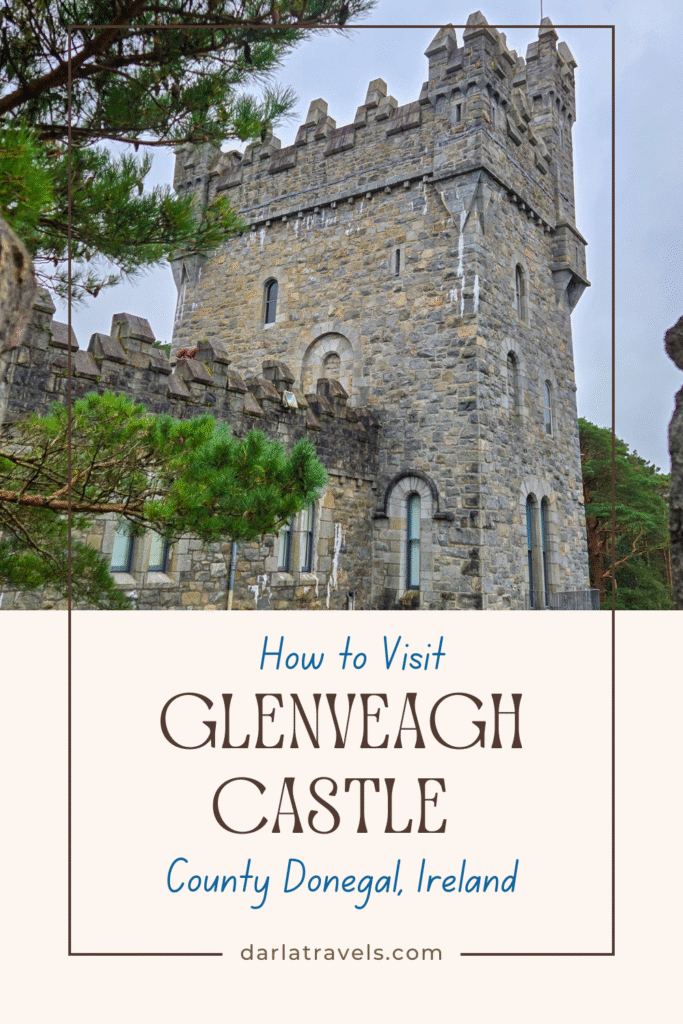
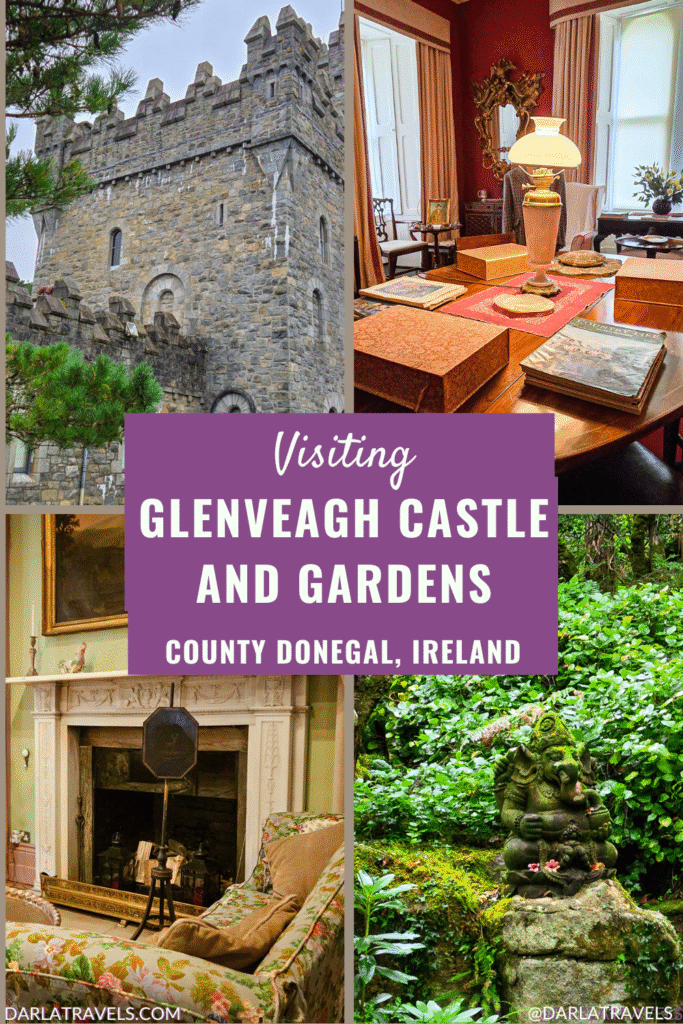
Wrapping Up a Visit to the Captivating Glenveagh Castle
Glenveagh Castle is one of those amazing places that is off the usual tourist trail but leaves a lasting imprint on those keen enough to visit. The impressive Castle and its gorgeous gardens are even more remarkable against the rugged landscape surrounding them. The richly decorated rooms, the gardens tended for generations, and the estate’s singular history are among the layers of the Glenveagh story.
Whether you come just for the Castle and gardens, or to spend some time in the remote uplands at Glenveagh National Park, you’ll develop an enduring sense of connection to one of Ireland’s lovely hidden gems.
Both the castle and the gardens look beautiful and lovely to visit.
Glad you enjoyed the post, Sonia!
This is a fantastic and very informative guide. I love how you balance the castle’s romantic setting with its complicated history—it really adds depth to the visit. The comparison to the Cliffs of Moher puts the “hidden gem” label into perspective, and the detailed transport tips make planning so much easier, especially for travelers without a car. Glenveagh truly sounds like one of those places where history and wild Irish landscapes come together in a powerful way.
Thank you, Agnes, I’m so glad you found the post valuable!
This will be a helpful article, as I am hoping to get to Ireland soon.
That’s great news, Amy!
History, nature, off-the-beaten path? I
‘m into all of the above. I’d like to spend some quality time in the national park. Ireland sounds like such a fascinating place!
I’d love to go back and spend more time there, too! It truly WAS fascinating.
I would love to try the weighing chair!!!
I love your adventurous spirit!