Discover the historic mission churches of Costilla County, Colorado, nestled inside the Sangre de Cristo National Heritage Area. Located in the south-central part of the state in the San Luis Valley, this high-desert basin feels worlds away from the bustling Front Range. When planning a list of things to do near Alamosa, most travelers naturally gravitate toward the towering peaks of the Sangre de Cristos, the shifting dunes of Great Sand Dunes National Park, or one-of-a-kind roadside stops like the Colorado Gators Reptile Park. However, skipping the region’s historic chapels is a mistake, as they reveal a deep cultural legacy worth preserving and celebrating.
Established by Congress in 2009, the Sangre de Cristo National Heritage Area (NHA) protects a profound historical, religious, and ethnic diversity where Hispano, Anglo, and Native American cultures converged. The primary way to experience this landscape is via the Los Caminos Antiguos Scenic and Historic Byway, a 129-mile (208-km) interpretive route for the NHA that provides a rough driving guide to the nine historic mission churches of Costilla County. Built between the 1850s and 1930s, these missions showcase local architectural styles and community resilience, making them essential stops for cultural enthusiasts.
These historic churches in rural Colorado are not just isolated buildings. Instead, they are waypoints in a networked cultural landscape that still matters. Visits to the churches combine scenic driving, local heritage, and quiet reflection. Unfortunately, they are facing an urgent crisis. In 2024, Colorado Preservation, Inc. (CPI) collectively designated these structures as one of Colorado’s Most Endangered Places, vulnerable to “Demolition by Neglect”. So the time to see them is now, before their stories are lost forever.
** Darla Travels is reader-supported.
When you buy through our links, we may earn a commission. **
Ready to book your San Luis Valley Trip? Find a great hotel here:
- Your Driving Route for the Mission Churches of Costilla County
- Orientation to the San Luis Valley and Costilla County
- Mission Churches in the Mid-19th Century – The Frontier and the Land Grant
- Mission Churches in the Late 19th to Early 20th Century – The Railroad and the New Aesthetic
- The Post-WWII Shift – Transformed the San Luis Valley’s Sacred Spaces
- Map of the Mission Churches of Costilla County
- Where to Stay to Visit the Mission Churches
- The Endangered Mission Churches of Costilla County – Pin it for Later
- Conclusion: A Living Heritage Worth Protecting
Your Driving Route for the Mission Churches of Costilla County
While I almost always advocate for exploring a historic district on foot, experiencing the full expanse of Costilla County requires a different kind of travel. You are going to need a reliable vehicle and a full tank of gas for this trip.
These historic structures are sometimes collectively referred to as the “Sacred Circle Mission Churches.” Don’t let the name fool you, though; they aren’t arranged in a circle. The good news is that they roughly form a loop, with just a little backtracking involved.
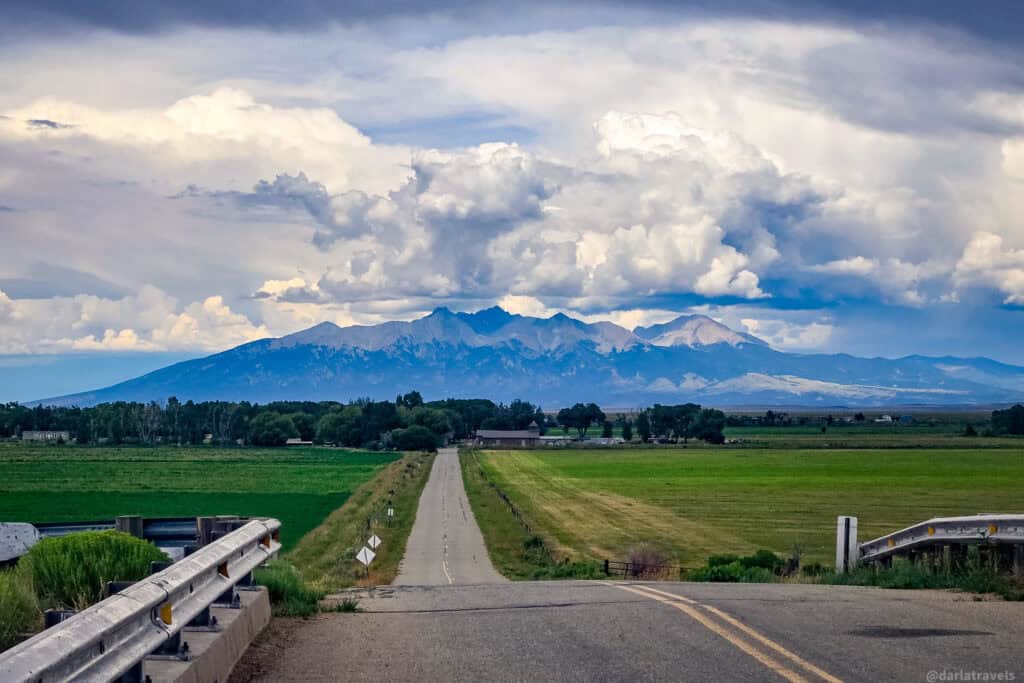
If you are already driving the Los Caminos Antiguos Scenic and Historic Byway, you won’t have to deviate far from the route to find the mission churches. To make your journey seamless, I’ve mapped out the mission churches below. Whether you want to see them all in a single day or break them up into individual stops across multiple weekend drives, you will quickly realize these buildings are more than just architectural milestones: they are quiet connectors for the communities sprinkled across the vast alpine desert.
If, like me, you’re drawn to walking as much as driving, you might also like my separate guide to two contemplative walks that deepen the sense of place in this valley: Stations of the Cross in San Luis and the adobe labyrinth at Our Lady of Guadalupe in Conejos.
Orientation to the San Luis Valley and Costilla County
Cradled in south-central Colorado, the San Luis Valley is a staggering geographical marvel. It’s the highest and largest mountain desert in North America and the largest alpine valley on Earth. Stretching roughly 100 miles (160 km) long and 45 miles (75 km) wide, it is flanked by towering mountain ranges. The average elevation of the floor is 7,664 feet (2,336 m). In a state famous for jagged peaks and crowded trailheads, this high, sun-drenched basin offers an immense, unhurried space where you can drive for miles seeing few others under a seemingly endless sky.
The valley spans five counties, including Costilla County. I’ll make the case that stopping to view the mission churches of Costilla County on a cultural road trip through the San Luis Valley is as meaningful as it is scenic. These small religious sites tie the region together, enriching your understanding of southern Colorado’s history and identity. Instead of a drive in the middle of nowhere to see an obscure historic site, you’re on a mission to uncover southern Colorado’s roots.
Those roots go back centuries, and this guide describes the mission churches across three historical periods.
Mission Churches in the Mid-19th Century – The Frontier and the Land Grant
Long before the Colorado Territory existed, the San Luis Valley was a traditional Ute hunting ground. From the 1500’s, Spain began expeditions north of modern-day Mexico, establishing the Viceroyalty of New Spain, although the San Luis Valley was largely uncolonized. Mexico gained independence from Spain in 1821, inheriting the territorial boundaries; the San Luis Valley became part of Mexico.
Mexico issued the massive Sangre de Cristo Land Grant in 1843 in what is today Costilla County. After Mexico was defeated in the Mexican-American War (1846–1848), the Treaty of Guadalupe Hidalgo surrendered this territory to the U.S. Crucially, the U.S. agreed to honor existing Mexican land grants. In practice, this was typically neither smooth, fair, nor efficient.
Nonetheless, this official accord, along with the 1849 US-Ute treaty, gave the Taos Valley’s Hispanos, known as pobladores (settlers), the confidence to establish San Luis de la Culebra (now San Luis) in 1851. The settlers used the traditional vara (long-lot) land system and communal resources such as acequias (irrigation ditches). The collective Culebra River Villages of Costilla County are listed on the National Register of Historic Places as a multiple property submission (2002)
A note on Hispano Heritage: In the context of the San Luis Valley and Northern New Mexico, the term Hispano refers to the descendants of Spanish-speaking settlers who established communities in this region before it became part of the United States.
Unlike more recent immigrant groups, the Hispano identity is rooted in the Spanish Colonial and Mexican eras of the 16th through 19th centuries.
The Colorado Territory was formed in 1861, with Costilla County (Spanish for “Little Rib”) established as one of its original seventeen counties. Colorado became a state in 1876.
The pobladores also brought their Catholic religion to the San Luis Valley. When resources became available, they established mission churches to focus the religious life in their communities, even without dedicated priests.
Two mission churches dating from the frontier and land-grant period are the Capilla de Viejo San Acacio (San Acacio) and the Sangre de Cristo Parish (San Luis).
Capilla de Viejo San Acacio (San Acacio)
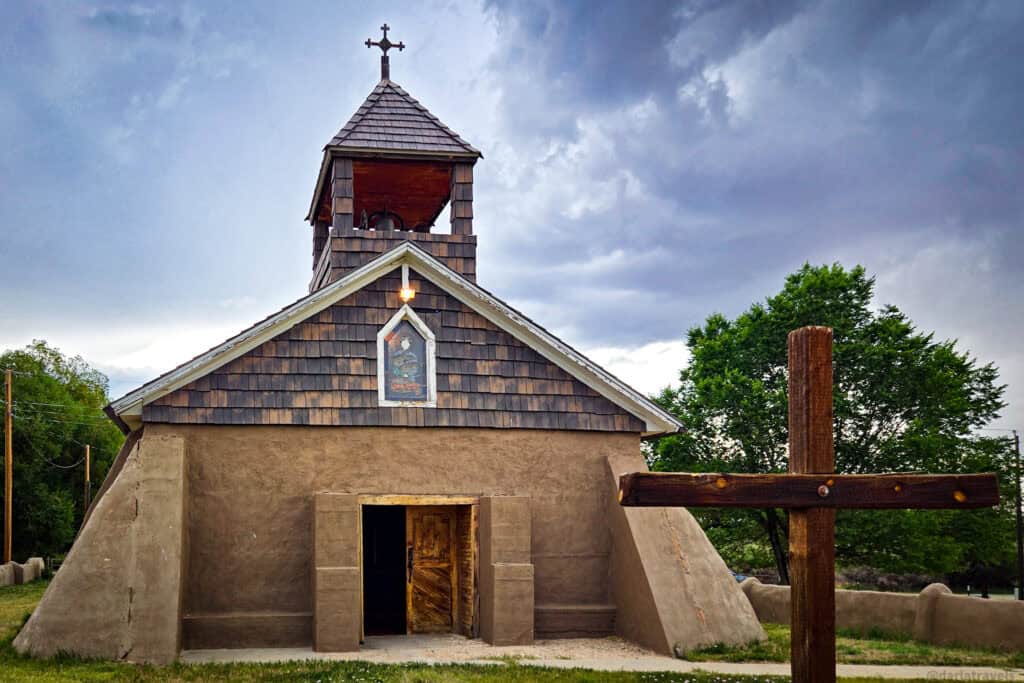
San Acacio was settled in 1856. Built in the early 1850s, the village’s mission church is the oldest non-native place of worship in Colorado.
Traveler’s Note: Our Lady of Guadalupe in Conejos, Colorado (established 1854) is often called the “oldest church” in Colorado. This statement refers to the oldest parish in Colorado: the state’s oldest continuous Catholic congregation and administrative unit. In contrast, the Capilla de Viejo San Acacio, or San Acacio Mission Church is the oldest structure used for worship in Colorado. Its original adobe walls have survived for over 170 years.
Featured Insights
Following traditional customs, Hispano settlers chose Catholic saints as spiritual protectors, naming their villages after them, as is the case here in San Acacio.
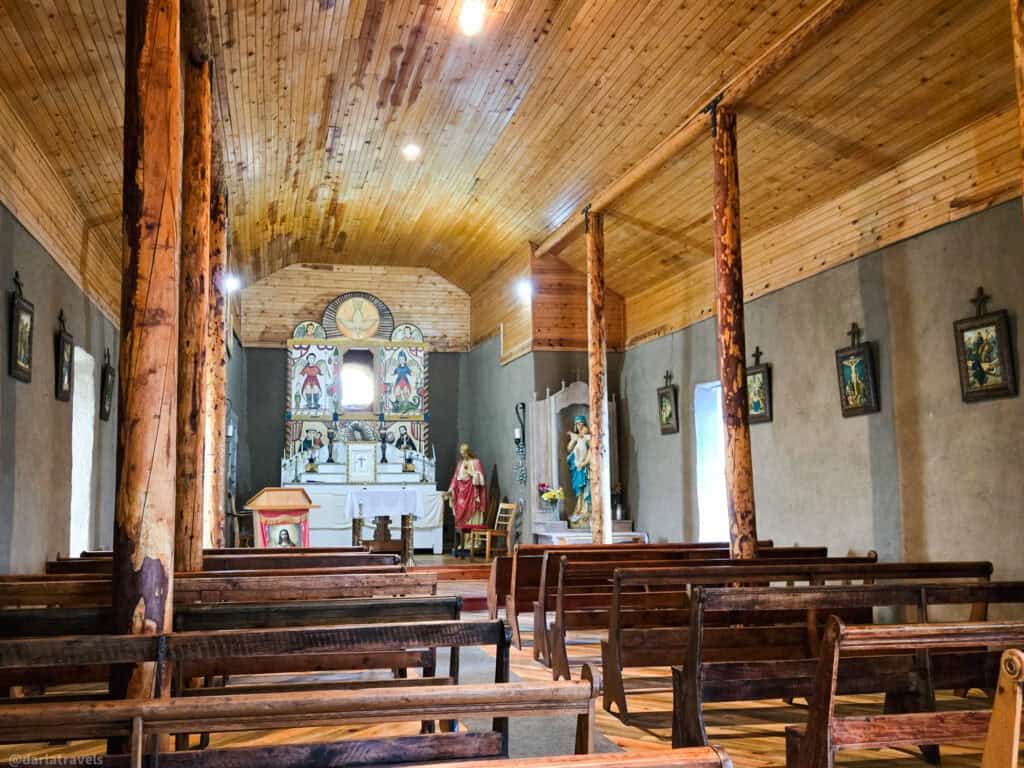
The mission is a model of early New Mexico village architecture, featuring 24-inch (61-cm) thick adobe walls. Originally constructed with a flat roof, the building features an indented entry and lacks a tower incorporated into the façade.
The church has gone through numerous alterations and improvements over the years. Critical structural issues stemming from poor drainage and moisture evaporation required extensive restoration, which was undertaken between 1989 and 1990 under the leadership of Father Patrick Valdez.
Church Specifications – Capilla de Viejo San Acacio
📍Location | (also called the Chapel of San Acacio or Saint Acacius); County Road 15, San Acacio;
Google Plus Code: 6F2R+PM San Acacio, Colorado;
GPS: 37.20165572609578, -105.50852589691493
Built | c. 1853–1856
Style | Hispano Adobe / Northern New Mexico Vernacular
Status | Restored; holds mass on specific summer Saturdays
Sangre de Cristo Parish (San Luis)
Located in Colorado’s oldest continuously inhabited town, San Luis (founded in 1851), this parish church serves as the administrative and spiritual hub for all the outlying mission churches. The parish was formally established in 1881 with Father J.V. Montaño as its first pastor.
San Luis is one of four “Cornerstone Communities” (along with Alamosa, Fort Garland, and Antonito) situated along the 129-mile (608-km) Los Caminos Antiguos Scenic & Historic Byway. The town preserves a classic Spanish layout, traditional adobe architecture, a608-kmnd communal resources.
Featured Insights
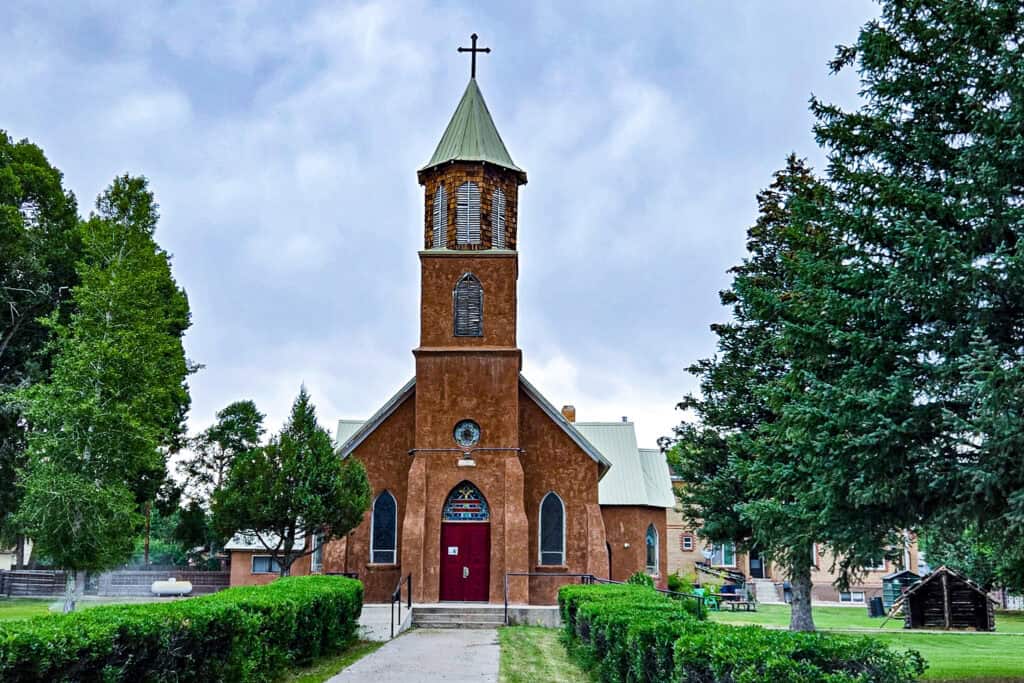
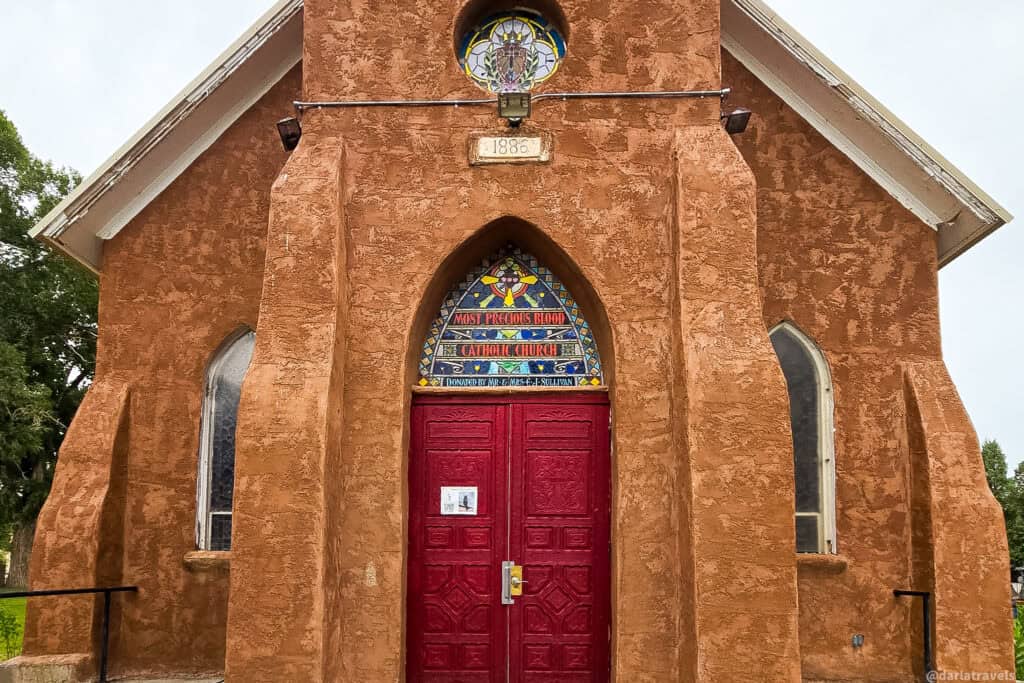
The Adobe church building, erected in 1886, introduced Gothic Revival elements to the valley:
- Lancet Windows: Tall, narrow windows with pointed arches.
- Vaulted ceiling covered in decorative metal sheeting to reflect light
- Steep Front-Gable Roof: A sharp contrast to the flat roofs often found in traditional adobe structures.
- Impressive Bell Tower
Sangre de Cristo Parish Church is an active site of regular worship, showing that these buildings are not merely relics of the 19th century, but living centers of community. As the Parish website notes, these religious spaces reflect the “values, aspirations, spiritual outlook, and faith of families who have resided in Costilla County for multiple generations.”
Traveler’s Note: While in town, don’t miss the short hike at the Stations of the Cross Shrine, a series of bronze sculptures by Huberto Maestas that line the slope of the mesa overlooking the town, culminating at the modern chapel La Capilla de Todos los Santos on the mesa top.
Church Specifications
📍Location | 511 S Church Pl, San Luis
Built | 1886 -1894
Style | Gothic Revival Adobe / Cruciform Plan
Status | Active central parish hub.
Mission Churches in the Late 19th to Early 20th Century – The Railroad and the New Aesthetic
The arrival of the Denver & Rio Grande Railroad in the San Luis Valley in 1878 marked a major turning point in the San Luis Valley. Suddenly, it was much easier to transport commercially manufactured materials such as milled lumber, glass, nails, and hardware.
With new building materials available, traditional Hispano adobe architecture began to change. Blending Anglo-American building styles with what was already present resulted in a distinctive hybrid style called Territorial Adobe. These buildings typically kept their adobe walls but incorporated newer features such as milled trim, larger windows, and more formal rooflines.
The railroad also influenced where and how people lived. During this period, land speculation companies bought up land and promoted “new towns” to attract settlers from the east. Places with rail access, such as the “new town” of Blanca, were settled as developers looked to profit from the valley’s agricultural potential.
Attempting to transform the valley into a more commercially productive region came at the expense of the Hispano residents, sometimes explicitly. As the value of the land accessible to the railroad increased, many villagers were priced out, unable to pay property taxes. While some left the area, others became employees and workers in the new industries, which included railroads, mining, and agricultural commerce. Costilla County served the needs of the Front Range but failed to thrive. The Hispano villages, with their traditional communal resource model, could not expand, nor could new villages based on this heritage take root.
By the early 20th century, the San Luis Valley had become a place where land ownership, architecture, and settlement patterns all reflected a region undergoing a significant transition.
One mission church, built in 1894, exemplifies the stylistic changes of this period.
San Isidro Mission (Capilla de San Isidro, Chapel of St. Isidore, Los Fuertes)
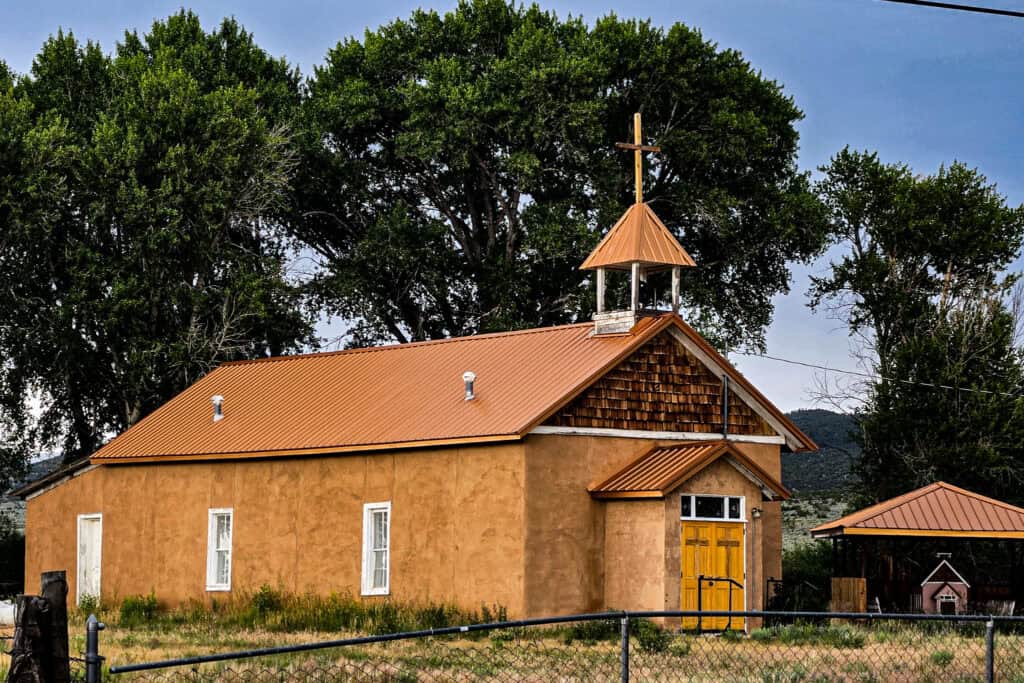
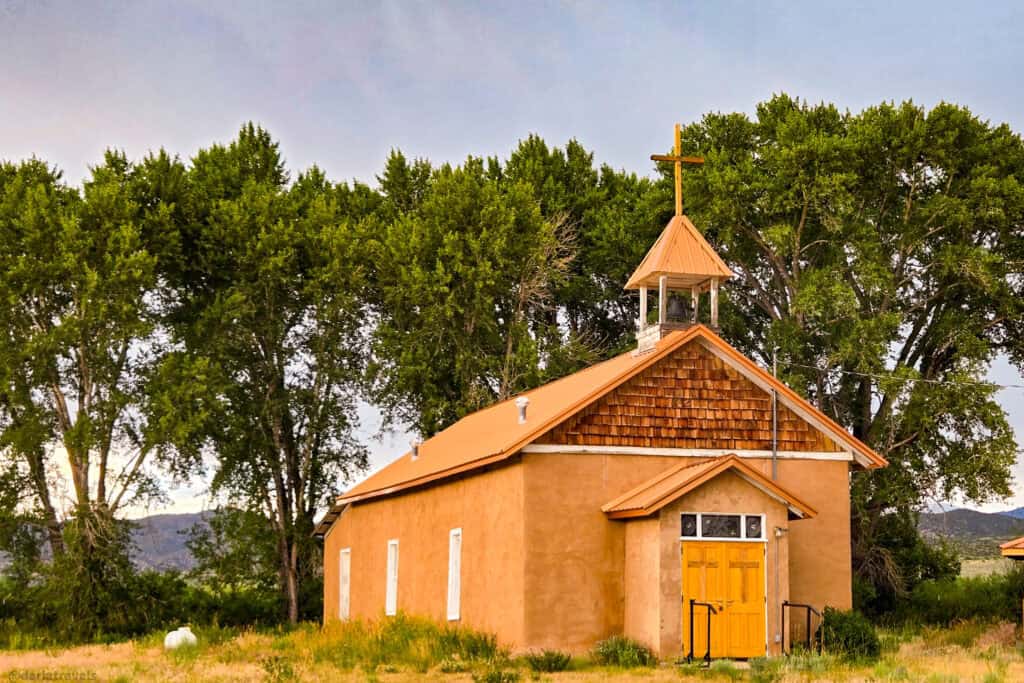
Dedicated to the patron saint of farmers, the San Isidro Mission church was added to the National Register of Historic Places in 2013. Originally built circa 1894, it began as a classic Hispanic Adobe structure with a single story and a flat roof.
Improvements made between 1894 and 1921 by Father Samuel Garcia changed the building to the Territorial Adobe style. The “Anglo” design elements included a front-gabled cedar-shingle roof and a wooden belfry. In the 1930s, cement stucco was used to seal out moisture, a move that likely saved the building’s foundation for the next century.
Featured Insights:
San Isidro is a modest, 1,000-square-foot (93-square-meter) rectangular building:
- The Structure: The thick adobe walls are protected by cementitious stucco and a concrete “apron” at the foundation, designed to shed water away from the fragile earth blocks.
- The Roofline: The cedar-shingled roof features two metal stovepipes and a central brick chimney, serving the wood stoves that once heated the nave during the San Luis Valley’s brutal winters.
- The Entryway: A small adobe vestibule protects the modern double doors. Look closely at the transom window above the door; it features a three-light window hand-painted to simulate stained glass.
- The Cupola: Atop the roof sits a pyramidal-roofed cupola with an open square base. It houses a cast-iron bell and is surmounted by a simple, dignified wooden cross.
- The Gazebo: During the Feast of San Isidro (May 15), the community carries a statue of the saint in a procession through the village and fields to bless the upcoming crop. The gazebo often serves as a focal point for the communal meal, music, and celebration that follows.
Church Specifications – San Isidro Mission
📍Location | 21801 Rd K 5, Los Fuertes; GPS: 37.134845028835116, -105.3802405604992
Built | c. 1894; modernized through the 1930’s.
Style | Territorial Adobe
Status | Endangered; summer mass rotation.
Mission Churches Newly Built in the Early 20th Century
Three other mission churches were built during this period.
Sts. Peter and Paul Mission (San Pedro)
Hispano settlers from New Mexico established the twin communities of San Pedro and San Pablo in 1852 and 1853, respectively.
Situated on opposite sides of Culebra Creek, the two towns worked closely together to maintain common places of worship.
The original 19th-century chapels no longer exist, but the history of the current building speaks to the community’s dedication. After a fire destroyed the previous chapel, the pastor of Sangre de Cristo Parish, Father Onofre Martorell, oversaw the construction of the current adobe mission in 1933–34. Disaster struck again in 1941 when the new church was severely damaged by fire, but it was quickly repaired, modified, and rededicated in July 1942.
Featured Insights
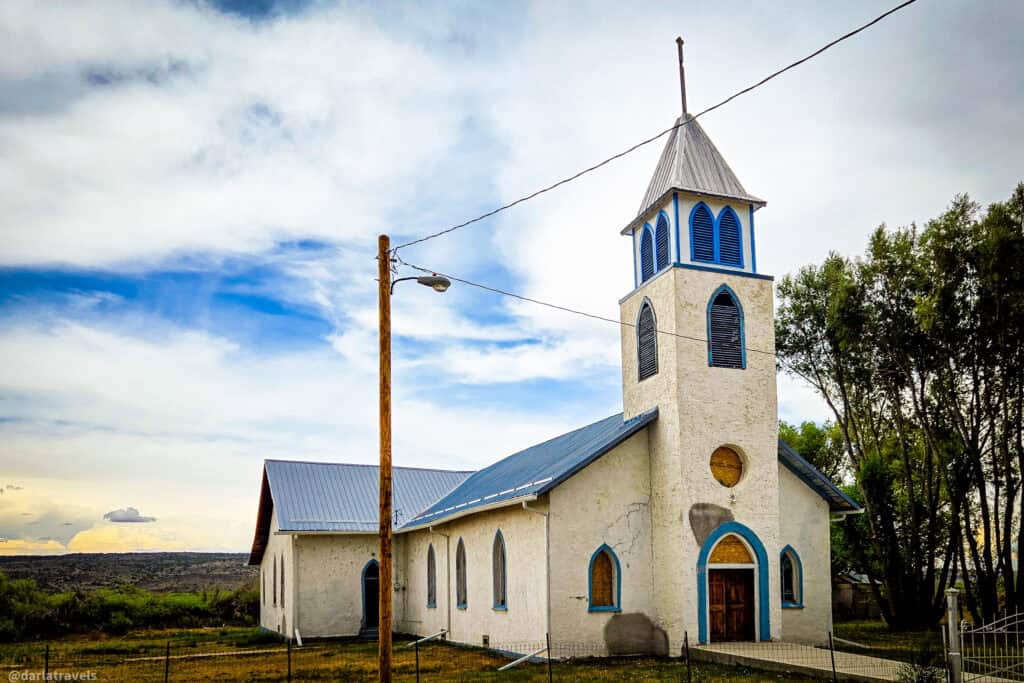
Saints Peter and Paul (known locally as Iglesia de San Pablo y San Pedro) is a classic Territorial Adobe church built in a cruciform (cross-shaped) plan.
- Thick adobe blocks are finished in a white cement stucco to protect them from moisture.
- The building is beautifully accented with blue trim and features simplified Gothic Revival elements. Look for the pointed-arch windows, louvered openings in the belfry, and the distinctive steep cap on the bell tower.
The church is perhaps the most fragile of the mission churches in the Culebra River villages. For the last decade, the stucco exterior has been cracking, and the church has been closed for over four years. Water damage is evident, and the bell tower is deteriorating. The building has been condemned, and the interior furnishings have been taken out. But there is hope. Due to dedicated parishioners, repair work has commenced.
Church Specifications- Sts. Peter and Paul Mission
📍Location | 11423 County Rd 21;
GPS: 37.161345744745354, -105.40188948776246
Built | 1933–1934
Style | Territorial Adobe with blue trim
Status | Condemned; furnishings removed; restoration started
Immaculate Conception Mission (Chama)
Just down the road from San Pedro, the Iglesia de la Inmaculada Concepción (Immaculate Conception Mission) serves the small town of Chama. Settled by Hispanos from New Mexico in 1864 under the original name of Culebra, Chama remains a quintessential example of the remote, agricultural villages that dot the Sangre de Cristo Land Grant.
Featured Insights
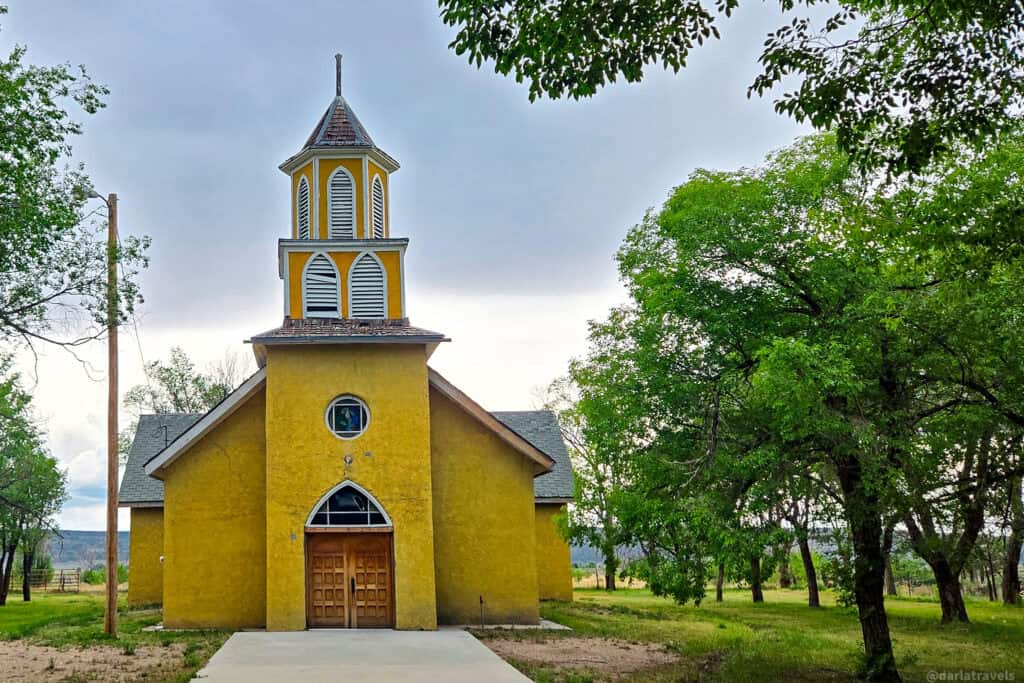
Like its neighbor in San Pedro, the spiritual history of Chama is marked by both tragedy and renewal. The village’s original church was lost to a fire in 1935. The current structure was completed in 1938 under the direction of Father Onofre Martorell. Because Father Martorell designed both this mission and the Sts. Peter and Paul Mission during the same era, they share a common architectural DNA.
While it follows a similar Territorial Adobe and cruciform (cross-shaped) footprint to its “sister church” in San Pedro, the Immaculate Conception Mission offers several flourishes that give it a dignified appearance:
- The Palette: In contrast to the white and blue of San Pedro, the cement stucco here is finished in a warm, earthy yellow-to-ochre tone.
- The Entryway: The church feels slightly more imposing due to its formal double-door entrance, a detail often reserved for more prominent village chapels.
- The Tower: While San Pedro features a flat-faced tower, the tower base here projects forward from the main facade. Most notably, the bell tower is articulated into two tiers, creating a more complex silhouette against the Colorado sky.
When you visit, you will find the mission slightly isolated from the main cluster of town buildings. The roof has failed, and sections of the adobe wall have collapsed due to water damage. The grounds are currently protected by a chain-link fence, a visible reminder of the “Endangered” status of these sites and the ongoing need for preservation.
Church Specifications – Immaculate Conception Mission
📍Location | 21812 County Rd P.6, Chama
GPS: 37.16457812354174, -105.38143961134318
Built | 1938
Style | Territorial Adobe
Status | Closed; severe structural failure; endangered
St. James the Less Mission (Blanca)
Unlike the older Hispano towns founded under the Sangre de Cristo land grant, Blanca began as a twentieth‑century railroad town and land‑promotion venture. From its founding in 1908, agriculture and ranching drove an early economic boom. Blanca has been subject to population shifts depending on whether the local agricultural economy is on the upswing or in decline. The Catholic mission tradition of the valley extended into Blanca, a newer twentieth-century settlement that became a predominantly Hispanic community.
Featured Insights:
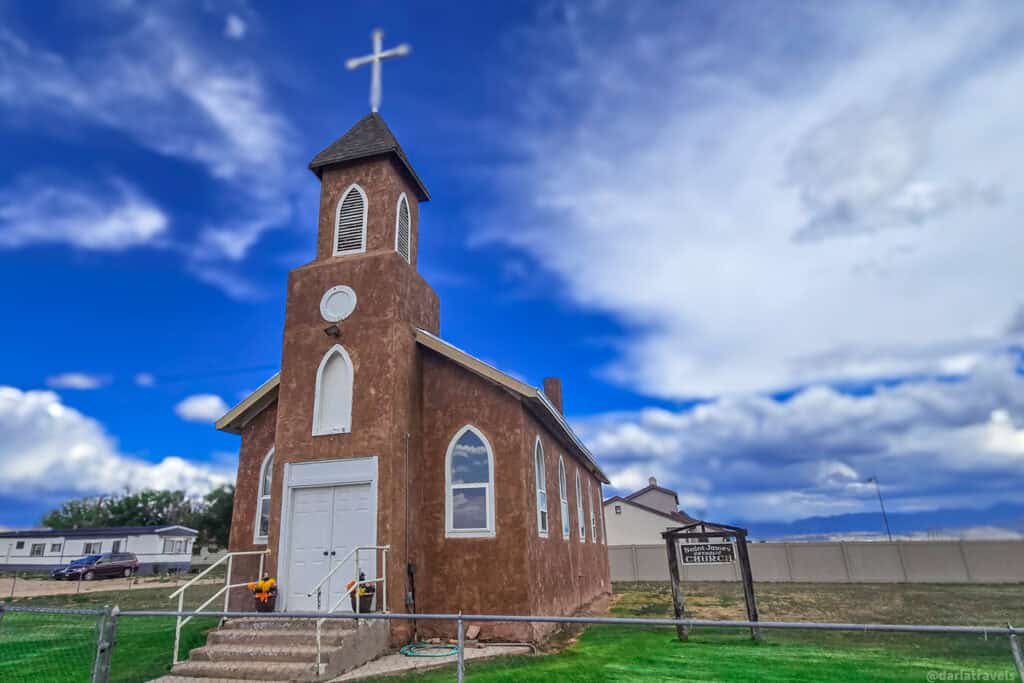
Blanca’s small adobe mission church, St. James the Less (1938), combines traditional San Luis Valley adobe construction with Gothic-inspired features such as pointed-arch windows and a blind rose window above the entry.
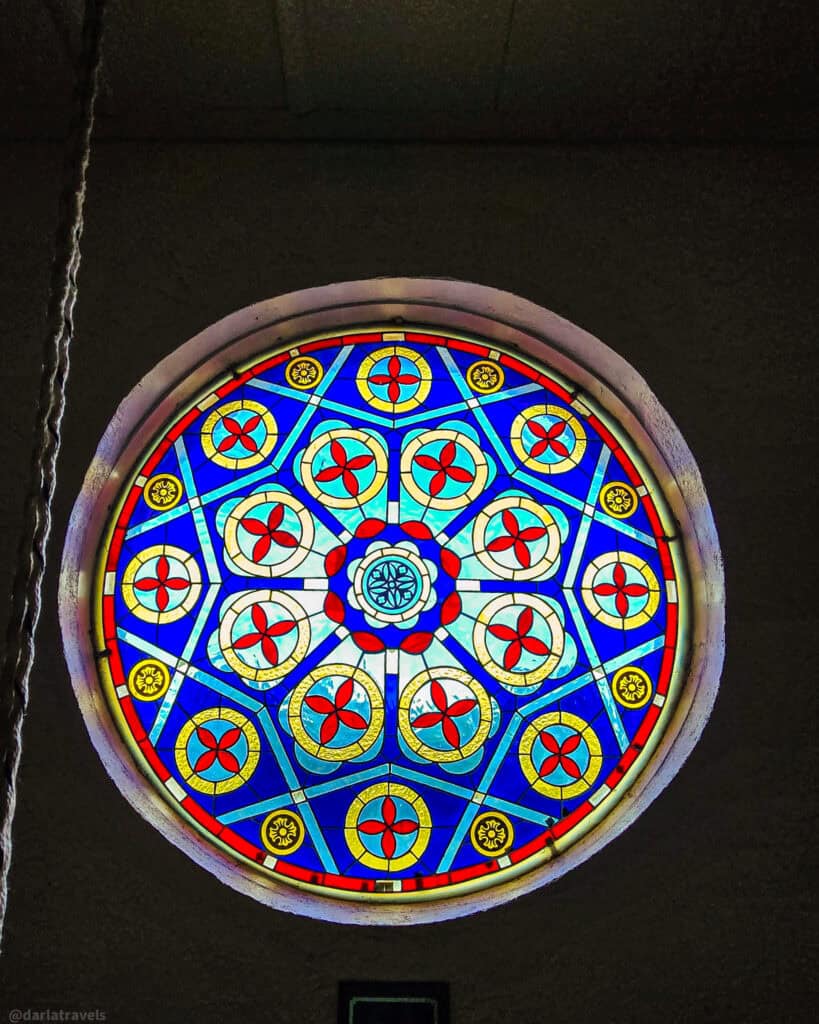
Traveler’s Note: If you are heading north toward the Great Sand Dunes from here, take the turn-off for Zapata Falls, where a short hike leads to a 30-foot (9-m) waterfall hidden inside a rocky crevice.
Church Specifications – St. James the Less Mission
📍 Location | 807 Broadway Ave, Blanca
Built | 1938
Style | Simple Gabled Adobe
Status | Endangered; limited services.
The Post-WWII Shift – Transformed the San Luis Valley’s Sacred Spaces
Following World War II, the deep-rooted, self-sufficient lifestyle of the Culebra River Villages underwent a dramatic transition. The introduction of post-war public efforts and Great Society anti-poverty initiatives brought sweeping modernization, standardizing infrastructure with centralized water systems. Federal affordable housing programs were introduced. While well-intentioned, these programs incentivized some families to move out of their ancestral homes, resulting in the widespread abandonment of historic adobe properties.
Newly implemented building codes actively restricted the use of traditional adobe for new structures. Communities were forced to adopt wood-frame construction and to use standardized, mass-produced materials such as concrete and stucco. This architectural pivot is captured in the mission churches erected during this period. With dwindling populations, older adobe chapels were harder to keep up. The newly built churches became experimental monuments to this new era of standardized construction.
The remaining three mission churches in Costilla County date to the post-World War II period.
San Francisco de Assisi Mission (San Francisco)
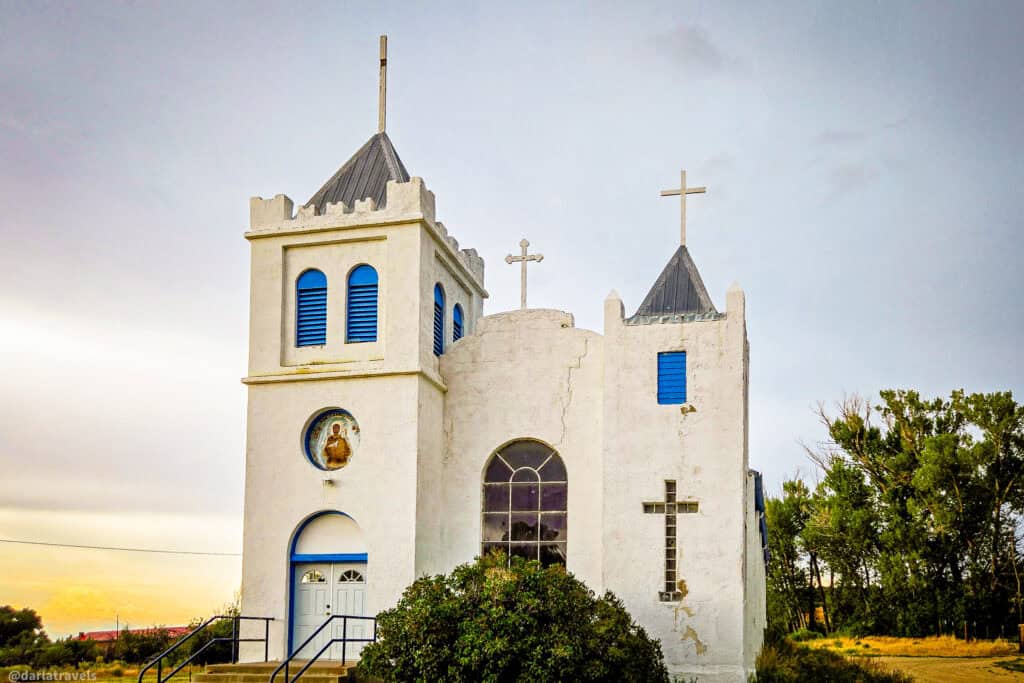
Tucked into the southeastern corner of the valley, closer to the mountains, the village of San Francisco was established in the early 1850s. While the mission churches in neighboring towns are made of adobe, the current Iglesia de San Francisco de Assisi, or San Francisco Mission Church, represents a mid-century chapter in the valley’s history.
Construction of the San Francisco Mission began in 1950 after the community decided to build a new church rather than repair the failing adobe chapel dating from the 1880s. Under the leadership of Father Onofre Martorell, this project was a decade-long communal effort, with the building finally consecrated in 1960.
Featured Insights
Unlike the other mission churches made of adobe, San Francisco was built using concrete blocks, a material choice made for its perceived durability at the time.
- The Design: It features two crenelated towers (notched like a fortress) that frame the entrance, giving it a distinctive, guarded appearance.
- The Material Shift: While it maintains the “Mission” look with white cement stucco, the move to concrete reflected the changing post-war building patterns of the 1950s.
- The Windows and Roof: The building uses single-pane metal casement windows, allowing for a different quality of light than the deep-set wood frames of its neighbors. The gabled roof is clad in metal panel roofing, a practical choice for shedding heavy snow at this higher elevation.
Church Specifications – San Francisco de Assisi Mission
📍Location | 23587 County Rd J.2, San Francisco
Built | 1950s
Style | Mid-century Cinder Block / Gothic and Mission Revival elements / Dual Towers
Status | Endangered; summer mass rotation.
Holy Family Mission (Fort Garland)
The United States Army built Fort Garland in the San Luis Valley in 1858 to protect settlers from Native American raids. As white settlers arrived from the east, Fort Garland became a commercial center. Its post office opened in 1862. The fort operated for 25 years, eventually becoming obsolete. Today, the adobe buildings and site are listed on the National Register of Historic Places and preserved as the Fort Garland Museum & Cultural Center.
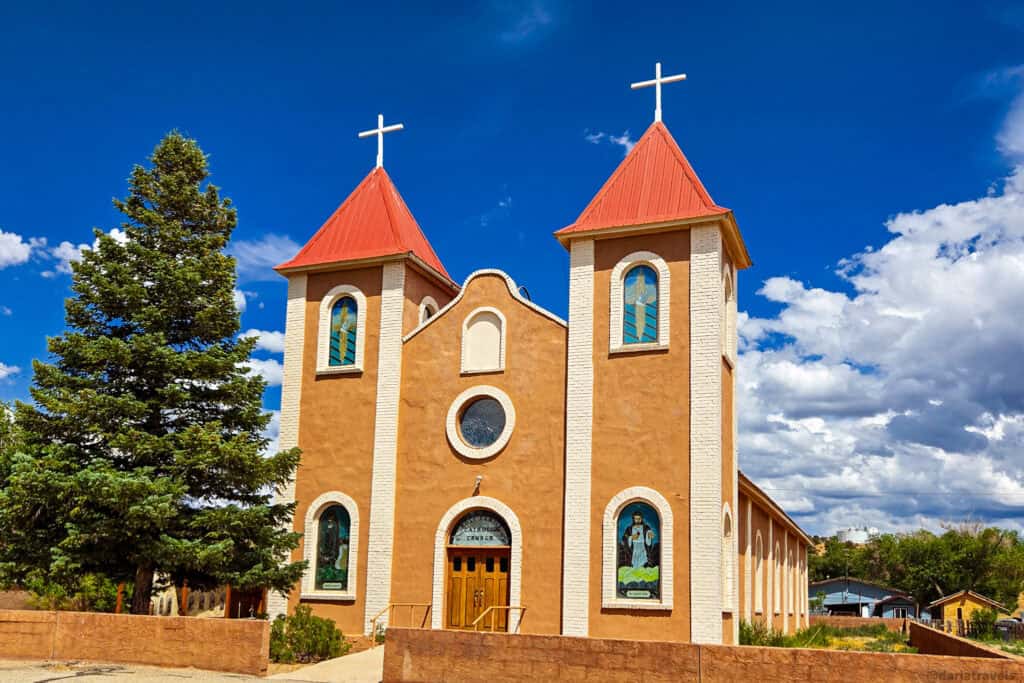
Just a few blocks away is the Holy Family Catholic Mission Church, built in 1949. This building replaced an adjacent adobe church, built ca. 1894, which is now abandoned.
Featured Insights
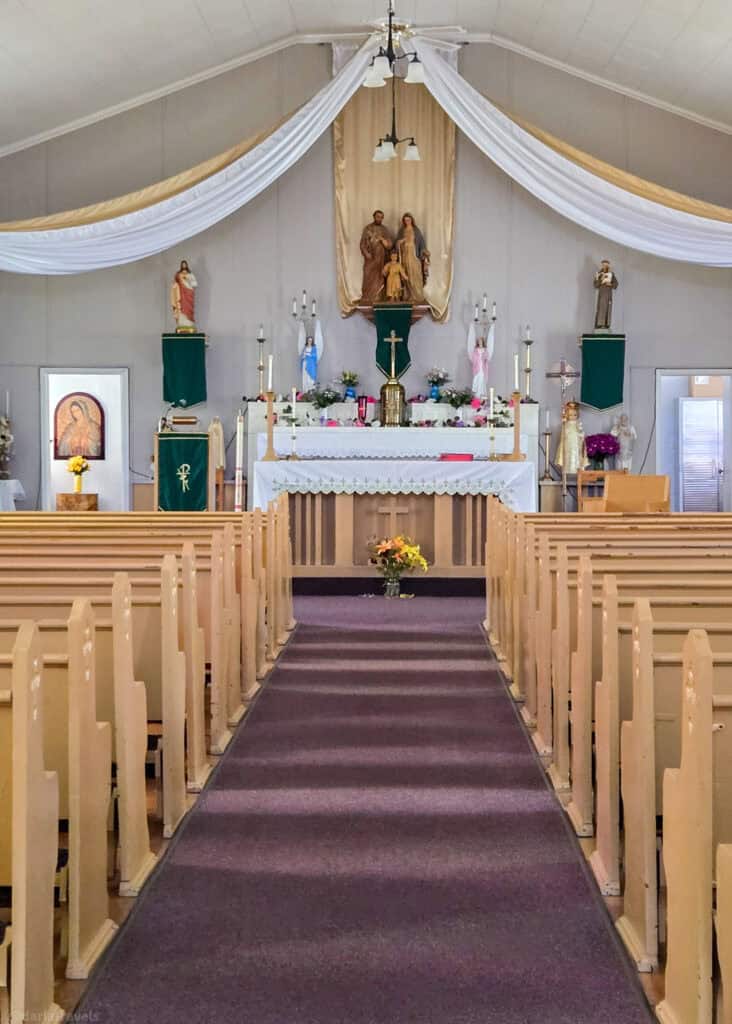
Holy Family Church, built much later than the adobe mission churches, is made of stuccoed cinder block. When viewing this church, you may notice that its design resembles that of Our Lady of Guadalupe Parish in Conejos, Colorado.
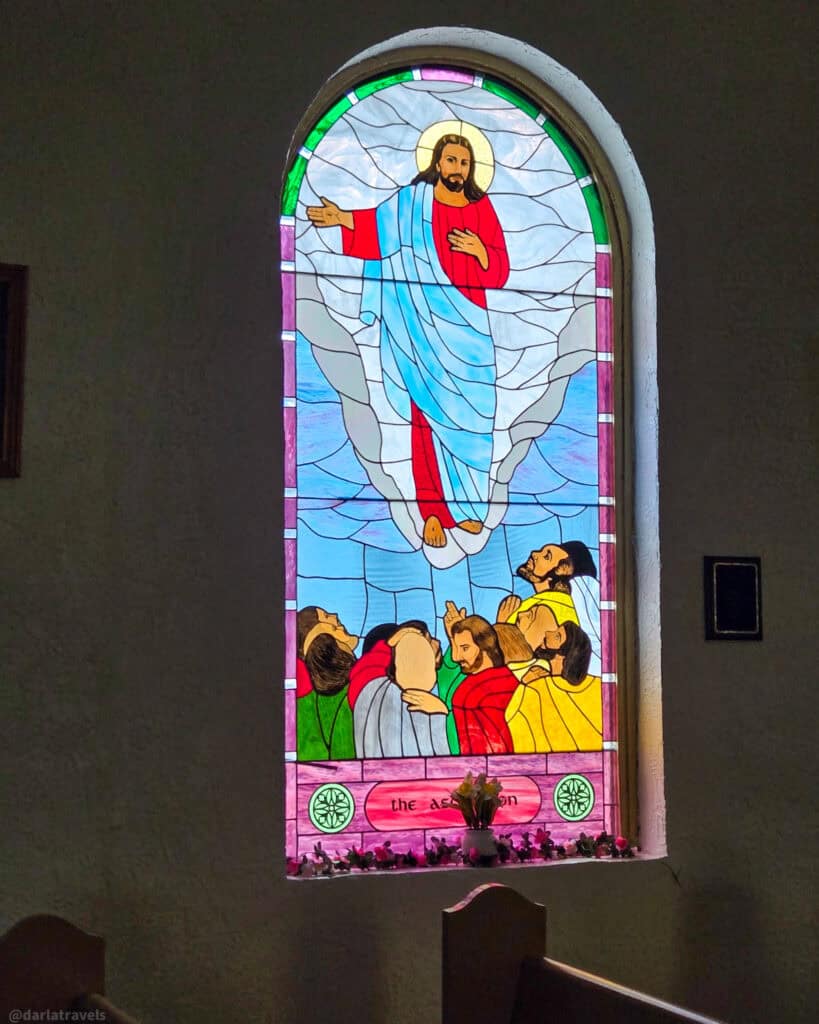
And unlike most other mission churches, Holy Family is often open and worth a visit for its wonderful stained-glass windows.
Church Specifications – Holy Family Mission
📍 Location | 626 Beaubien Ave, Fort Garland
Built | 1949
Style | Regional Mission
Status | Active summer mission.
Sacred Heart Mission (Garcia)
Garcia, originally settled in 1849 as Plaza de los Manzanares, is the southernmost town in Costilla County with a mission church. It’s close to the state line between Colorado and New Mexico. Garcia is technically two years older than San Luis, but was never formally incorporated, a significant reason why it was passed over for the title of “oldest town” in Colorado in favor of San Luis.
Featured Insights:
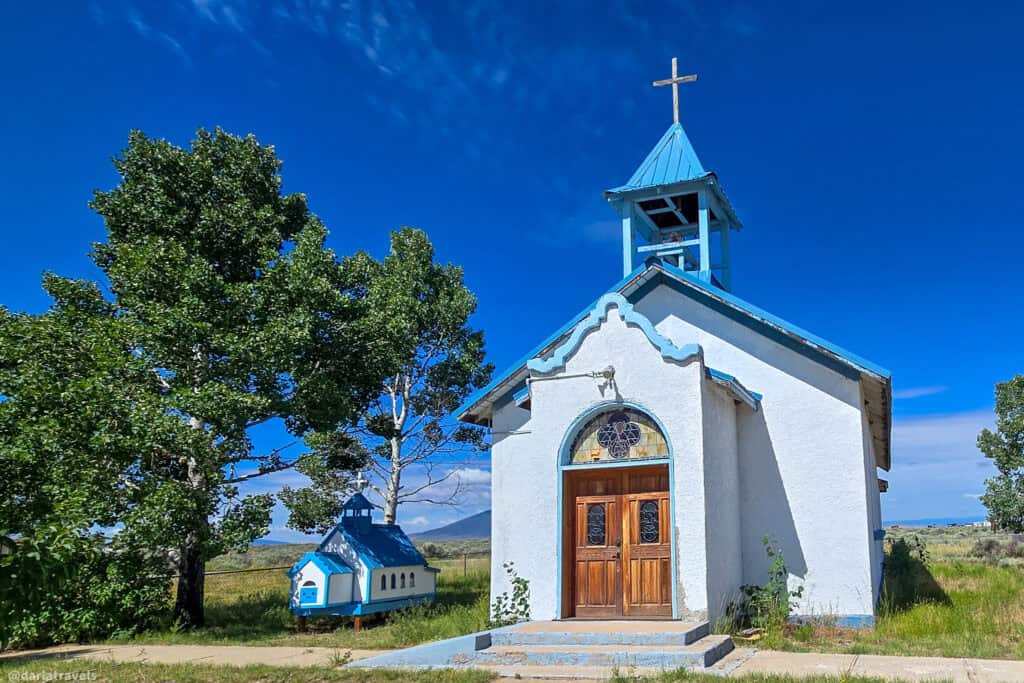
The Sacred Heart Mission, built in 1944, has a distinct architecture when compared with gabled, more angular churches. It may be a replacement for a late 1800’s adobe church with Gothic elements. Some of its features include:
- Rounded Arch Windows: The windows in Sacred Heart feature the distinct semicircular (rounded) arches synonymous with the Mission style. This rounded motif is repeated in the main entrance and the arched openings of the belfry.
- Spanish Mission Influence: The church moves away from the “Territorial” sharp angles. You can see this in the curvilinear (scalloped) parapet, which is the decorative, wavy line at the top of the facade. The element is a signature of the California Mission style that migrated into Colorado via the railroads.
- The Facade: The central bell tower is integrated directly into the front wall, creating a flat, tall facade that emphasizes the rounded arch of the bell chamber at the very top.
Church Specifications – Sacred Heart Mission
📍| Location | County Road 13.2, Garcia
Google Plus Code: 2F56+FG Garcia, Colorado
GPS: 37.00874965504148, -105.53869671294753
Built | 1944
Style | Mission
Status | Endangered
Map of the Mission Churches of Costilla County
Use this map to help you plan your visits to the Mission Churches in Costilla County as you explore the San Luis Valley, the Sangre de Cristo, NHA, and the Los Caminos Antiguos Scenic and Historic Byway.
Where to Stay to Visit the Mission Churches
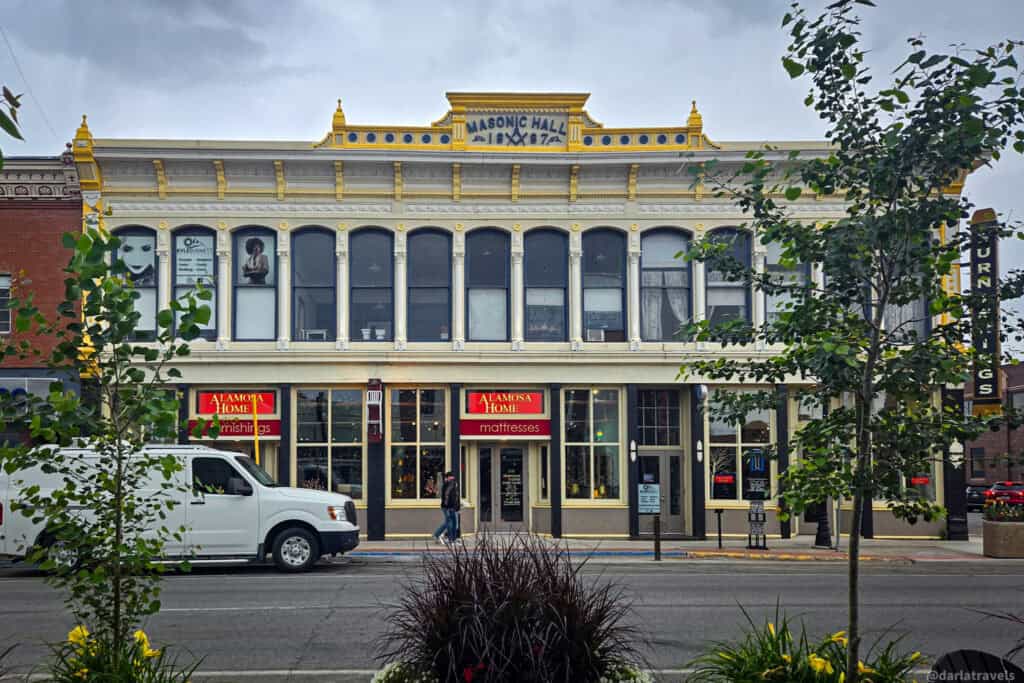
For most travelers, Alamosa is the best city for your home base in the San Luis Valley. It’s the largest city in the San Luis Valley and has the most services for tourists. It’s a convenient jumping-off point for both the cultural sites highlighted here and other attractions in the area.
Reliable mainstream chain properties in Alamosa include the Hampton Inn Alamosa, Holiday Inn Express & Suites, Comfort Inn & Suites, and the Fairfield by Marriott. Each pet-friendly hotel offers comfortable rooms, Wi‑Fi, an indoor pool, a hot tub/spa, a fitness center, coffee- and tea-making facilities, and a free breakfast. standard amenities like Wi-Fi, fitness centers, in-room coffee setups, and indoor pools or hot tubs to unwind after a long day on the road.
Use the interactive map and booking links provided below to plan your itinerary and secure your Alamosa lodging.
Book now at Booking.com ♦ Book now at Expedia ♦ Book now at Hotels.com
If you’d like to stay in San Luis, the San Luis Inn Hotel on Main Street offers simple, convenient lodging within walking distance of town landmarks. While pets aren’t allowed, it offers Wi-Fi and free parking.
The Endangered Mission Churches of Costilla County – Pin it for Later
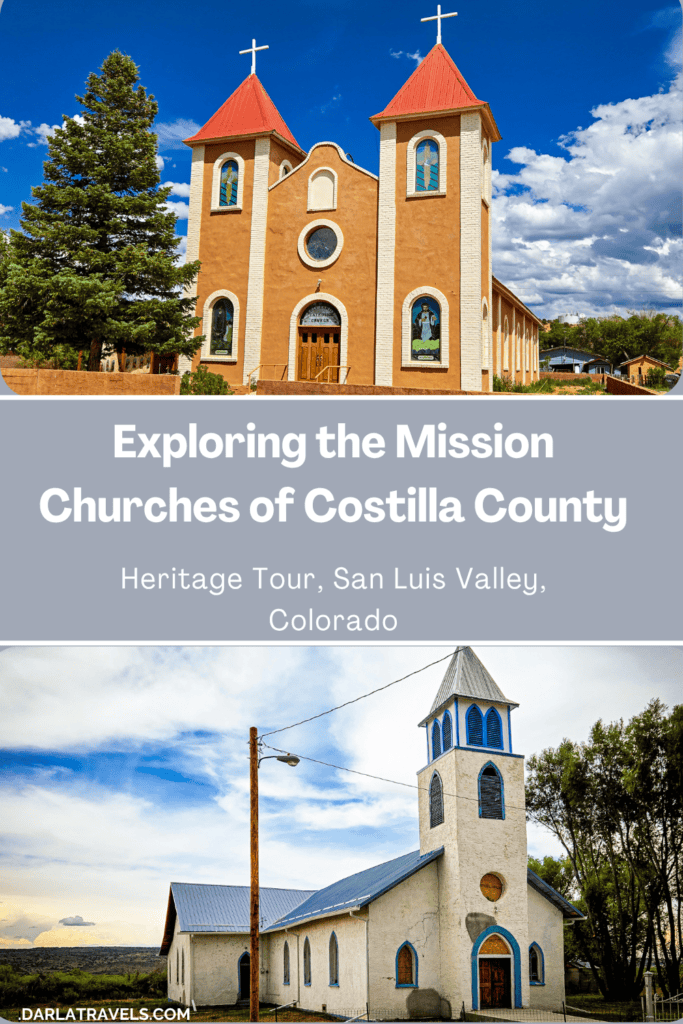
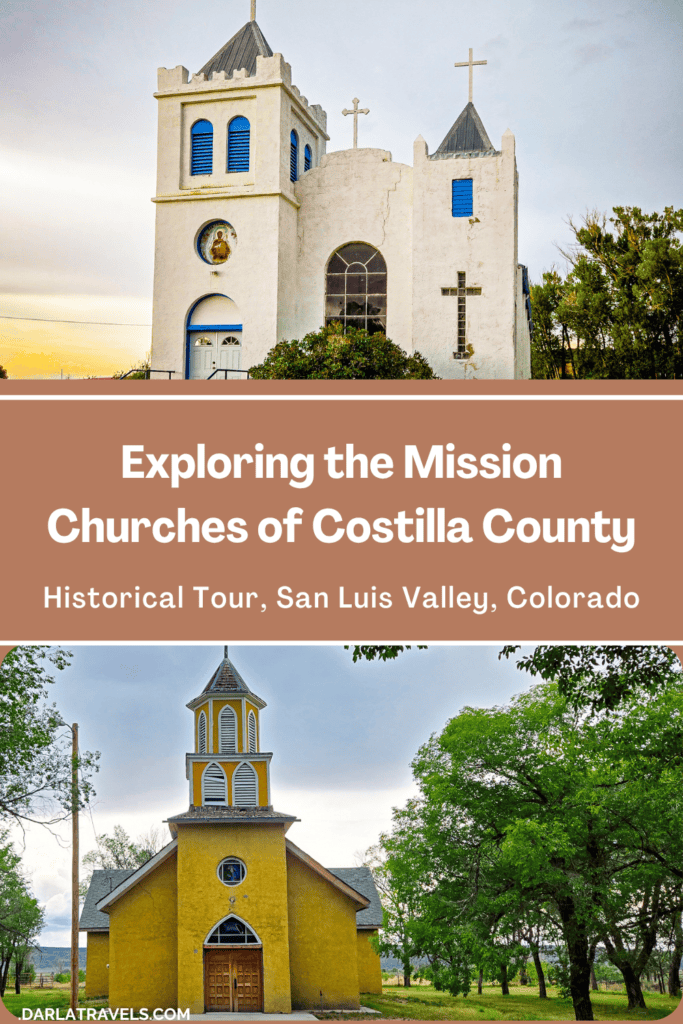
I created these images with the Mission churches of Costilla County for your Pinterest boards.
Conclusion: A Living Heritage Worth Protecting
Visiting the mission churches of Costilla County is not merely an off-the-beaten-path driving route or a checklist of nine historic buildings to see on your San Luis Valley road trip.
From the 19th-century frontier adobe walls of Capilla de Viejo San Acacio to San Francisco de Assisi’s concrete edifice, each mission church is a quiet monument to the first settlers who built them; their descendants who modified and replaced the missions; and their successors, who continue to preserve southern Colorado’s Hispano culture to this day.
According to Colorado Preservation, Inc, these communities are literally watching their churches crumble as congregations shrink and resources run thin. Visiting these spaces today is an act of support, reminding yourself and locals that these places and their history still matter. By exploring this corner of the state with care, respect, and curiosity, heritage travelers can help keep these valuable landmarks standing.
Though I’ve visited the area, I’ve missed 2 of the 3 mission churches. Thank you for the easy to follow guide for our return trip!
Glad to provide it-and glad you enjoyed the post!
Great post! I had no idea there were so many historic mission churches in the San Luis Valley. These kinds of places tell the story of a region and the people who built it. It’s also sad to hear they are endangered. Thanks for sharing this route and helping bring attention to these important landmarks.
Thank you so much for this thoughtful comment. You’re right-the churches really are story keepers for the whole region. What’s amazing is that these are only the churches in Costilla County. Conejos County just to the west (still in the San Luis Valley) has its own set of 8 or 9 historic mission churches still standing!
Such an interesting variety of architectural style! I’m curious about the tiny church next to the Sacred Heart Mission in Garcia.
You have a sharp eye! Parishioners carry the tiny model church in the the parish’s Holy Week procession. All the churches described in this article have a model church for this purpose. It’s another reminder that this community values their heritage and traditions.
I like the way you summarized each church’s specs. I haven’t been to this area, but it will make an interesting activity to add to the itinerary.
Glad you enjoyed the post!