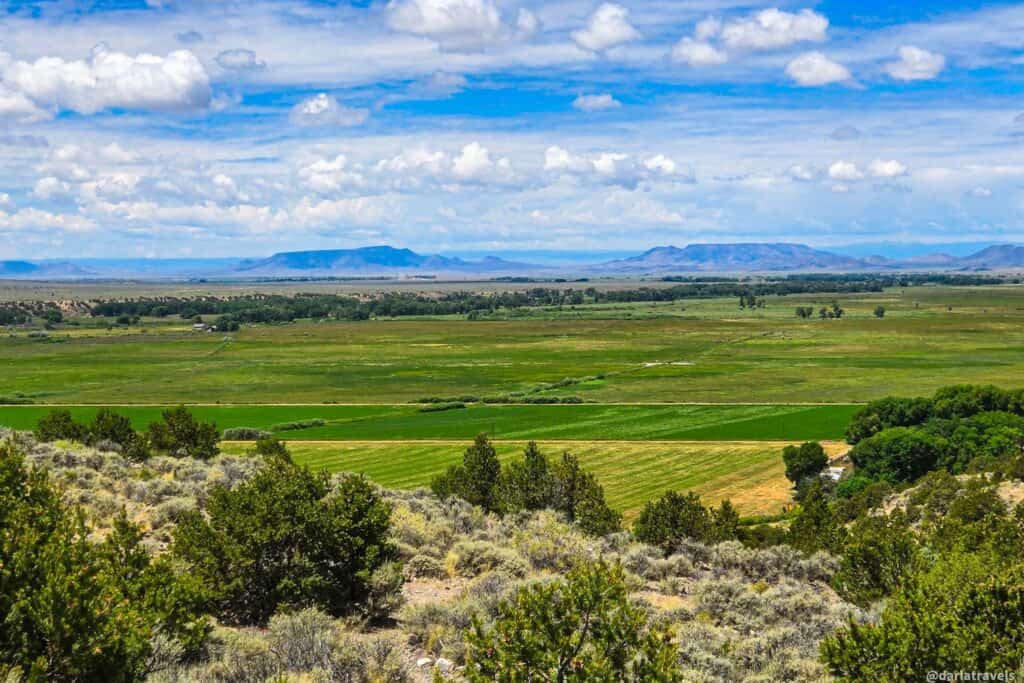
Colorado’s San Luis Valley is full of attractions that lend themselves to memorable experiences. But not all are found on maps or major “things to do” lists. Here, I’ll introduce two short walks that deliver cultural depth and historical immersion. These spots are ideal for travelers seeking purposeful things to do in the San Luis Valley beyond the Great Sand Dunes.
- First, in Conejos, the El Santuario de los Pobladores labyrinth at Our Lady of Guadalupe Parish offers a contemplative path rooted in community and tradition. It’s one of the newest cultural landmarks in southern Colorado.
- Then, the pilgrimage-style Stations of the Cross Shrine takes visitors through an outdoor art gallery of religious sculptures to a chapel on a mesa overlooking San Luis, Colorado’s oldest continuously inhabited town.
These sites have their origins in the Catholic religion of the region’s 19th-century Hispano settlers, but you don’t need to be religious to appreciate them. These short walks lend themselves to moving mindfully, whether you approach them from a historical, community, or artistic perspective.
- Why Visit These Cultural Sites in the San Luis Valley?
- El Santuario de los Pobladores Labyrinth (Conejos, Colorado)
- Shrine of the Stations of the Cross (San Luis, Colorado)
- Practical Tips for Visiting the San Luis Valley Cultural Walking Sites
- Nearby Things to Do in the San Luis Valley
- Cultural Walks in the San Luis Valley – Pin It for Later
- Where to Stay in the San Luis Valley
- Final Thoughts on Cultural Walks in the San Luis Valley
** Darla Travels is reader-supported.
When you buy through our links, we may earn a commission. **
Ready to book your San Luis Valley Trip? Find a great hotel here:
Why Visit These Cultural Sites in the San Luis Valley?
First, let’s get oriented to Colorado’s San Luis Valley.
Where Is the San Luis Valley in Colorado?
The San Luis Valley lies in south-central Colorado, starting at the headwaters of the Rio Grande. Borders include the San Juan Mountains on the west, and, on the east side, the Sangre de Cristo Mountains. Sangre de Cristo means “Blood of Christ,” and the mountain range is so-named for the blood-red or crimson alpenglow on the peaks at sunrise and sunset.
This vast rift valley is roughly 122 miles (196 km) long and 74 miles (119 km) wide. The average floor elevation is 7,664 feet (2,336 m). Multiple sources recognize the San Luis Valley as the highest and largest mountain desert in North America, and the largest alpine valley in the world.
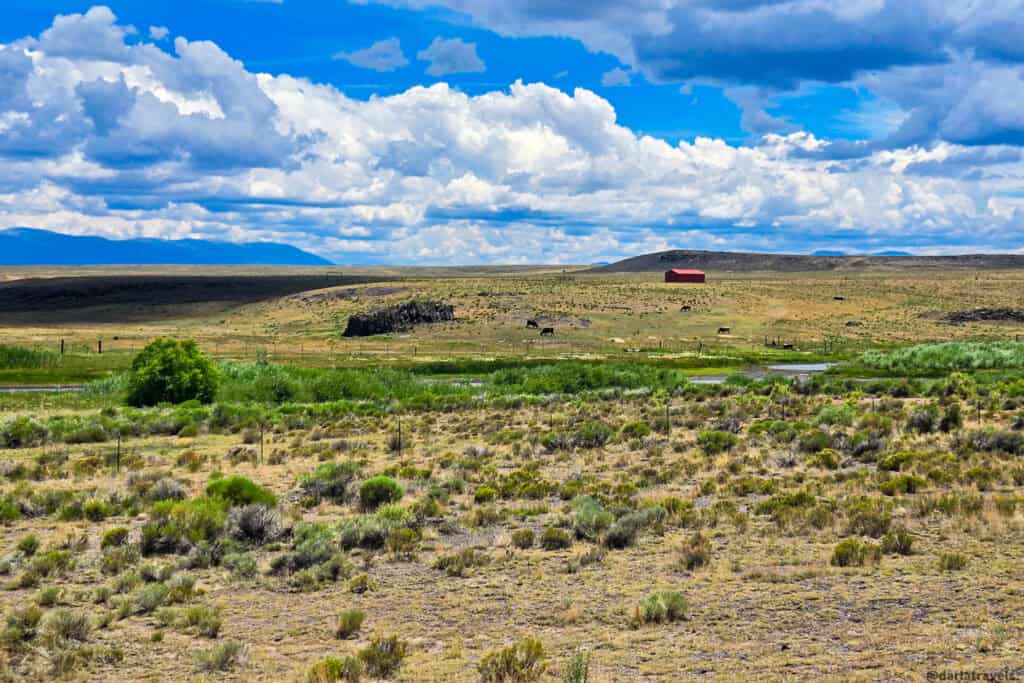
In a state known for dramatic mountain landscapes, the San Luis Valley offers a different topography: expansive views, miles of straight roads stretching ahead, and generally light traffic.
Why You Should Visit the Labyrinth and the Stations of the Cross
These walks offer a way to experience the culture of the San Luis Valley. The walk sites are filled with stories, traditions, and a creative spirit. Rooted in the valley’s Hispano heritage, both sites reflect generations of faith, community, and tenacity. Even if you don’t identify as religious, these stops provide a meaningful window into the people who shaped this landscape and those who call it home today, many of whom are descendants of the original settlers.
A note on “Hispano Heritage”: In the context of the San Luis Valley and Northern New Mexico, the term Hispano refers to the descendants of Spanish-speaking settlers who established communities in this region before it became part of the United States.
Unlike more recent immigrant groups, the Hispano identity is rooted in the Spanish Colonial and Mexican eras of the 16th through 19th centuries.
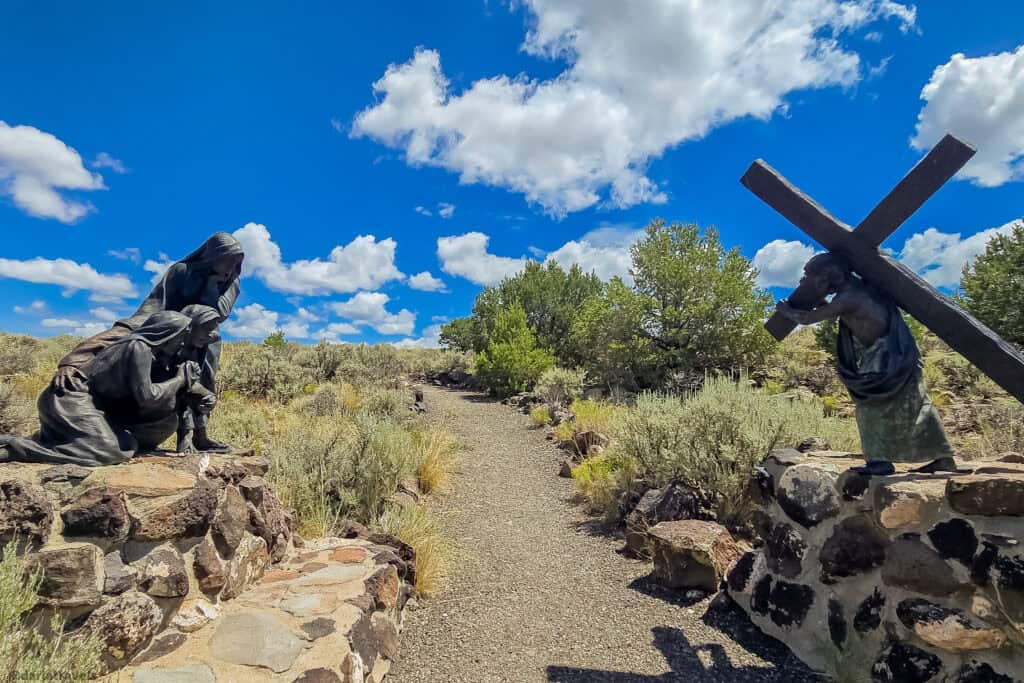
There’s also a compelling artistic dimension to these sites. The Conejos labyrinth at Our Lady of Guadalupe Parish and the Stations of the Cross path in San Luis act as open-air art galleries. Handcrafted architectural elements, symbolic designs, and nearly life-sized bronze sculptures invite you to slow down and notice details and craftsmanship.
Finally, these walks lend themselves to reflection and contemplation. You can move at your own pace, unhurried, taking in the surroundings. In the vast San Luis Valley, the labyrinth and the Stations of the Cross shrine have a grounding effect, anchoring you to the present moment, even as you consider the generations of settlers who brought the traditions that led their descendants to create these landmarks.
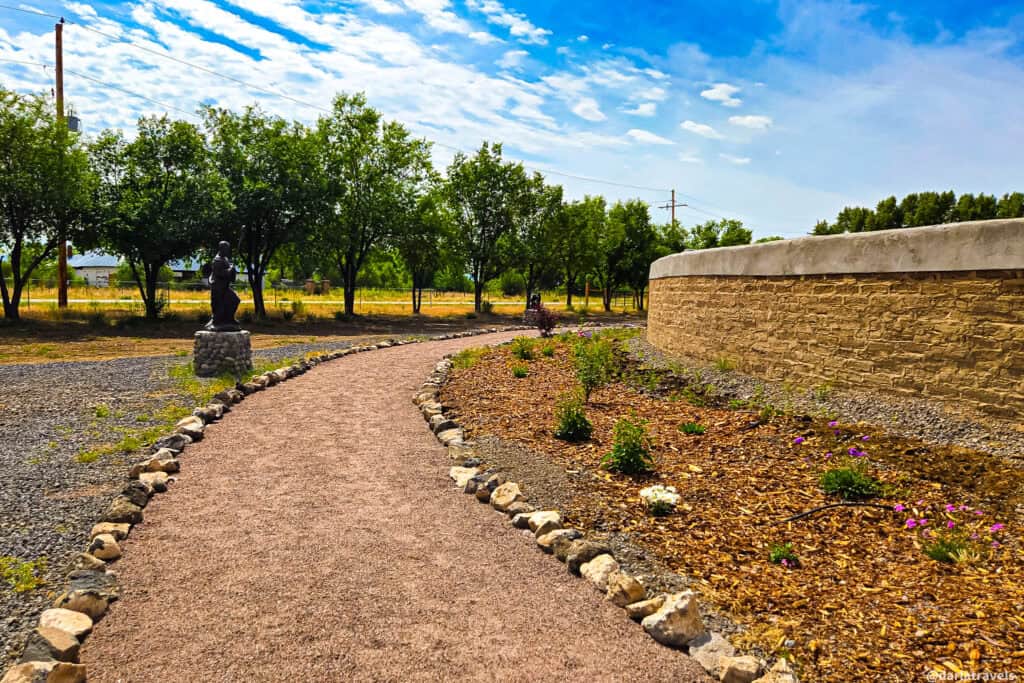
Let’s start with the walk at El Santuario de los Pobladores at Our Lady of Guadalupe Parish Church in Conejos, Colorado.
El Santuario de los Pobladores Labyrinth (Conejos, Colorado)
📍6633 Co Rd 13, Antonito, Colorado, 81120; Google Plus Code: 3XPH+WX Antonito, Colorado
The labyrinth named El Santuario de los Poblares was commissioned by Our Lady of Guadalupe Parish in Conejos, Colorado, to preserve the congregation’s Catholic and Spanish culture and traditions.
About Our Lady of Guadelupe Parish in Conejos
Our Lady of Guadalupe Parish Church (listed on the National Register of Historic Places in 2018) sits in Conejos, a tiny unincorporated community in the far southern part of the San Luis Valley, just north of Antonito. (Conejos is Spanish for “rabbits.”).
The parish is the oldest in Colorado. The original adobe church, built here in 1863 by a French missionary, served early settlers. After a fire damaged the church in 1926, builders added a new rear portion to the remaining structure. In 1948, the parish expanded the church, adding a new façade and towers in concrete brick and contrasting red clay brick that remain to this day.
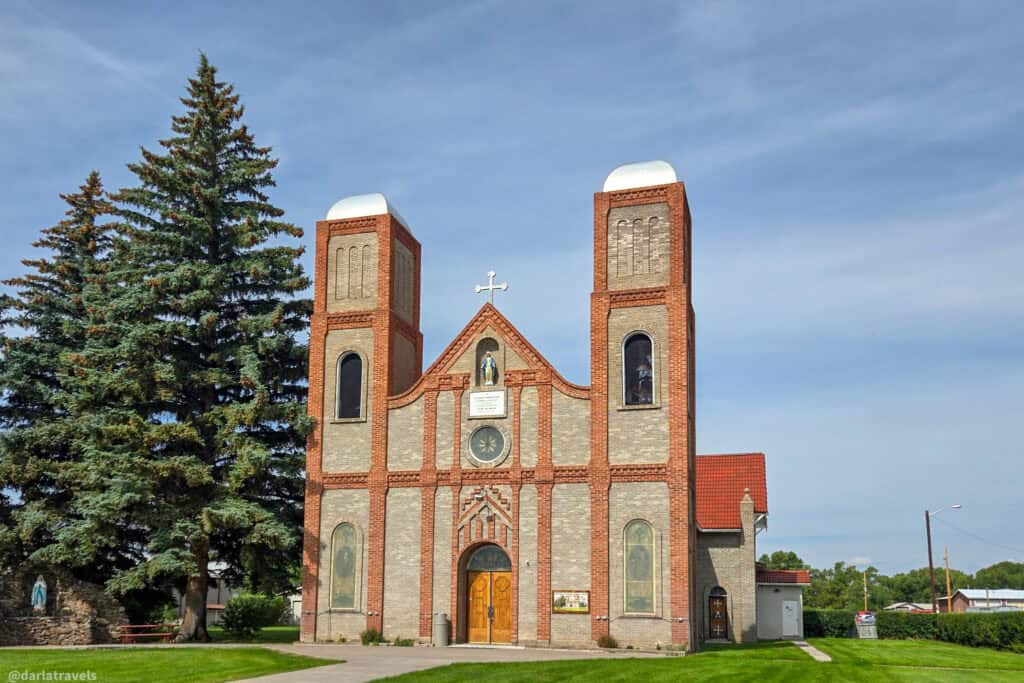
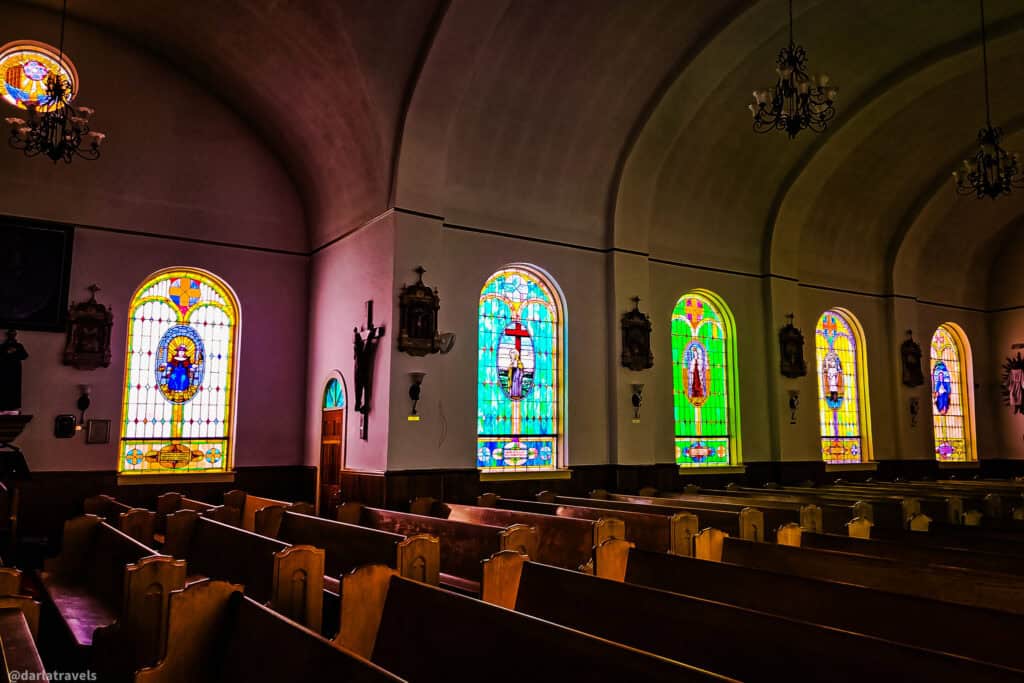
Architecturally, the church includes Spanish Colonial Revival elements. Inside, the stained-glass windows are not to be missed. Also note the hand-crafted altar and statuary.
A Note on the “Oldest Church” in Colorado
Our Lady of Guadalupe in Conejos (established 1854) is often called the “oldest church” in Colorado. This statement refers to the oldest parish in Colorado: the state’s oldest continuous Catholic congregation and administrative unit.
In contrast, the San Acacio Mission Church (built circa 1853–1856) in San Acacio is widely recognized as the oldest non-Native standing structure used for worship in Colorado. Its original adobe walls have survived for over 170 years.
What is the Santuario de los Pobladores Labyrinth?
The El Santuario de los Pobladores (“Sanctuary of the Settlers”) labyrinth began with an unexpected gift. A parishioner left Our Lady of Guadalupe Parish a substantial sum of money in her will, with one important condition: it had to be used for something meaningful and forward-looking, not simply maintenance. The parish chose to create a space for prayer, reflection, and community.
To bring that vision to life, the church commissioned esteemed architect Ronald Rael, who was born in Conejos County. Rael, along with Virginia San Fratello, produced a design (2008) in the form of a labyrinth. A labyrinth is often mistaken for a maze, but it has a very different purpose. While a maze has multiple paths, many of which terminate in dead ends, a labyrinth generally follows a single winding path to the center.
El Santuario de los Pobladores was designed as a sacred space for meditation on the Catholic Church’s Mysteries of the Rosary, pivotal events in the life of Jesus and Mary, from conception to resurrection. The idea was to create a journey, not only physical, but also internal.
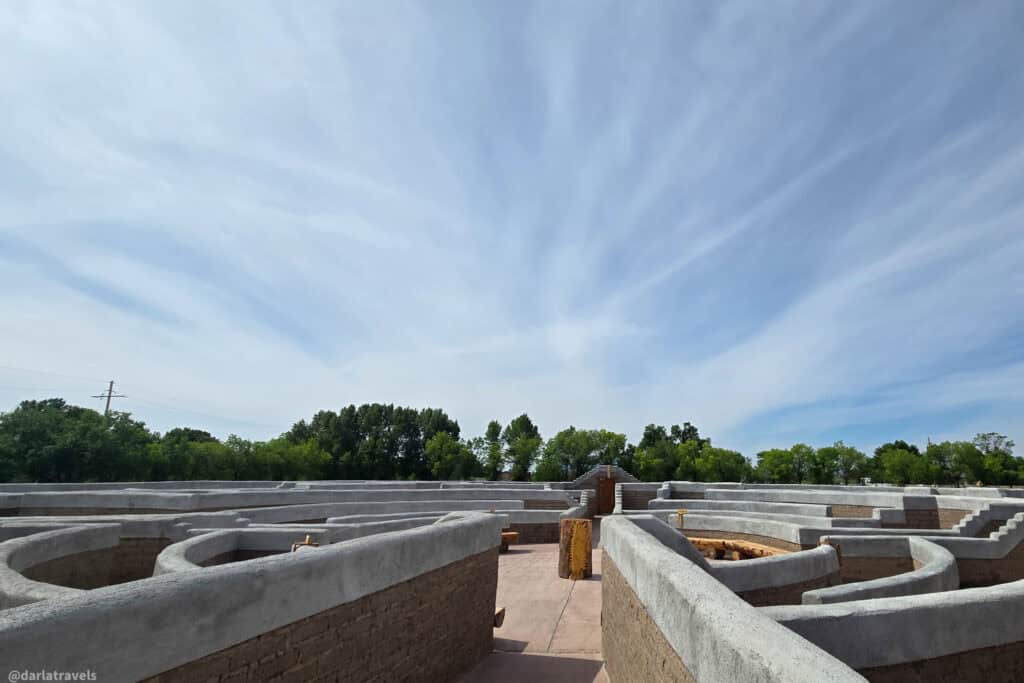
The sanctuary is so-named to honor the legacy of the pobladores, the settlers who established communities and mission churches throughout the San Luis Valley starting in the early to mid-1800’s.
The labyrinth took over a decade to build, funded exclusively by donations and volunteer work. Constructed of over 40,000 handmade adobe bricks, it is likely “one of the largest adobe buildings constructed in the 21st century.”
Layout of the Labyrinth
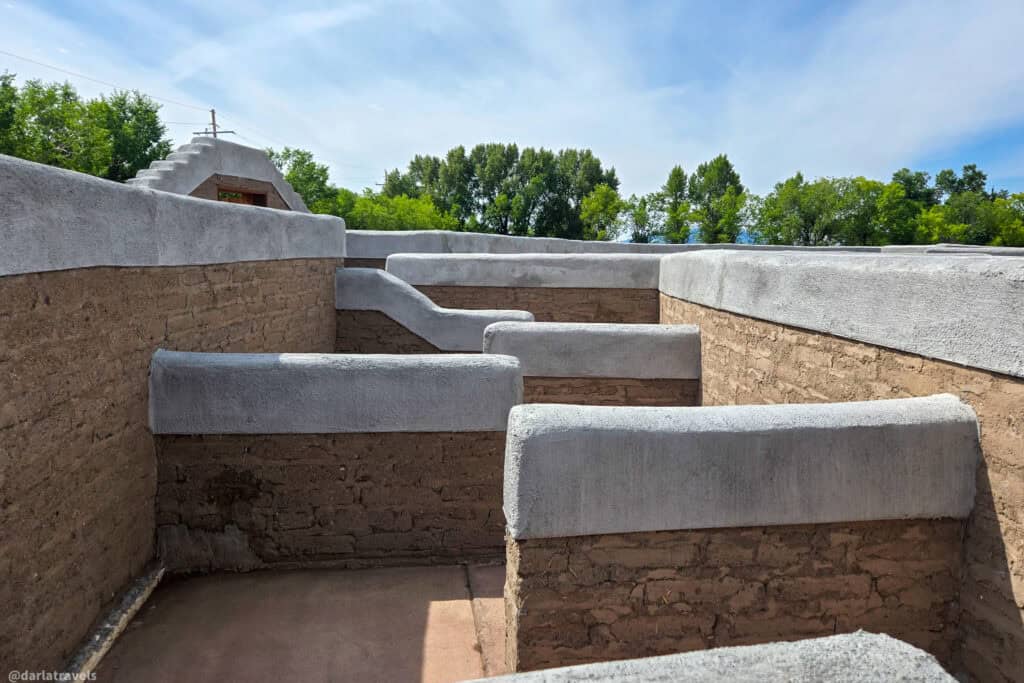
Rael and San Fratello’s design reimagined the traditional circular labyrinth to reflect Catholic devotional practice. The circular, hand-built adobe structure spans roughly 135 feet (41.1 m) in diameter and is divided into four quadrants, each representing one grouping of the Mysteries of the Rosary. These are the Joyful Mysteries, Luminous Mysteries, Sorrowful Mysteries, and Glorious Mysteries. Each quadrant has five small meditation chapels, or nichos. Each nicho holds a bronze sculpture by artist Lynn Kircher depicting a single Mystery.
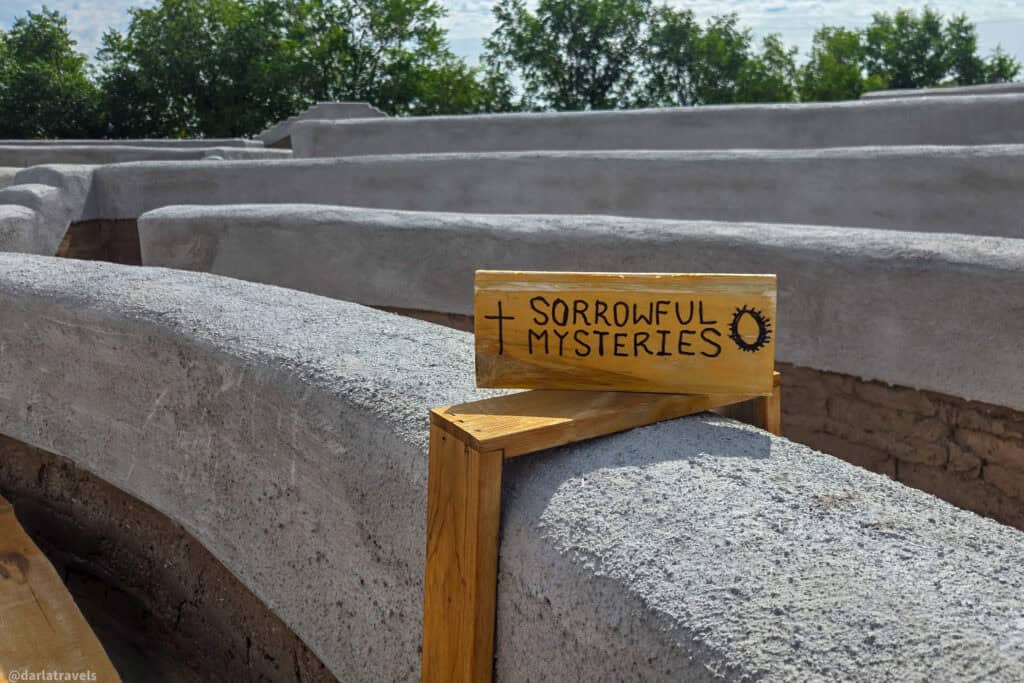
The up to six-foot-high (1.6 m) adobe walls guide visitors along a continuous path without dead ends. There are five evenly spaced meditation chapels (nichos) in each quadrant, creating a layout with a natural rhythm for walking and reflection.
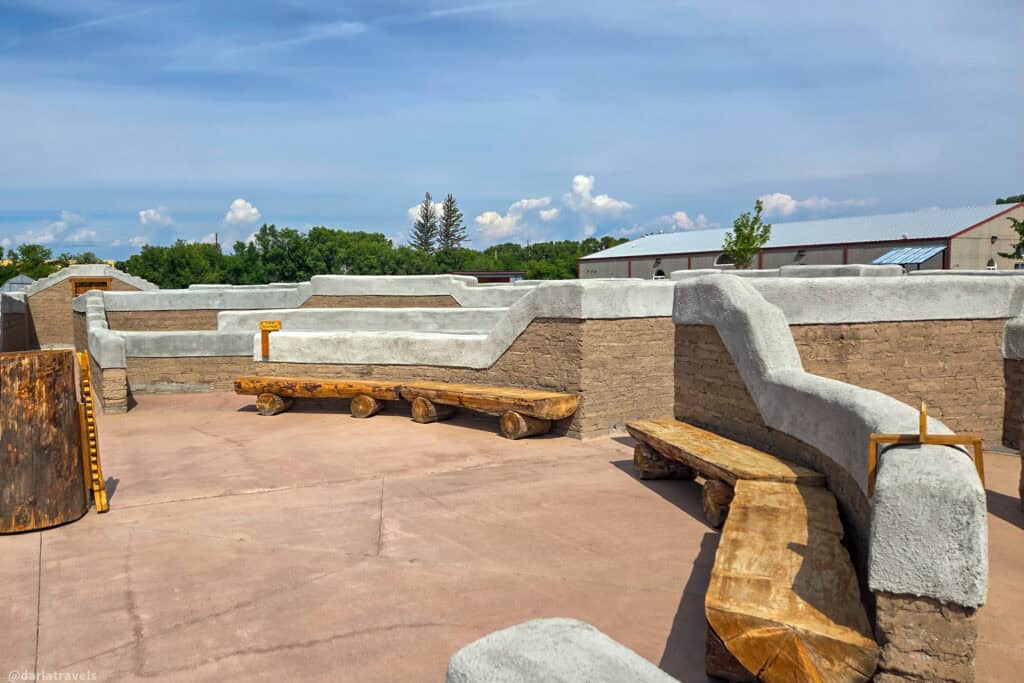
After walking to the end of a quadrant, a visitor will return to the center of the labyrinth. This setup is unlike a traditional labyrinth, where a single path leads to the central endpoint. At the center of the El Santuario de los Pobladores labyrinth, two elevated viewing platforms offer a broader perspective of the structure and the surroundings.
Walking the Labyrinth
A simple sign near the entrance set the tone:
A place of peace, prayer, reflection. No dead ends, no wrong turns. All are welcome.
As a first-time visitor, especially one who doesn’t share the religious background, I found that message reassuring.
When I arrived, the labyrinth was open and completely quiet.
I noticed that the landscaping around the site seemed to be “in progress” and was reminded that donations were still being accepted to complete the buildout. For example, there are plans to place a bronze sculpture of the Virgen de Guadalupe at the labyrinth entrance.
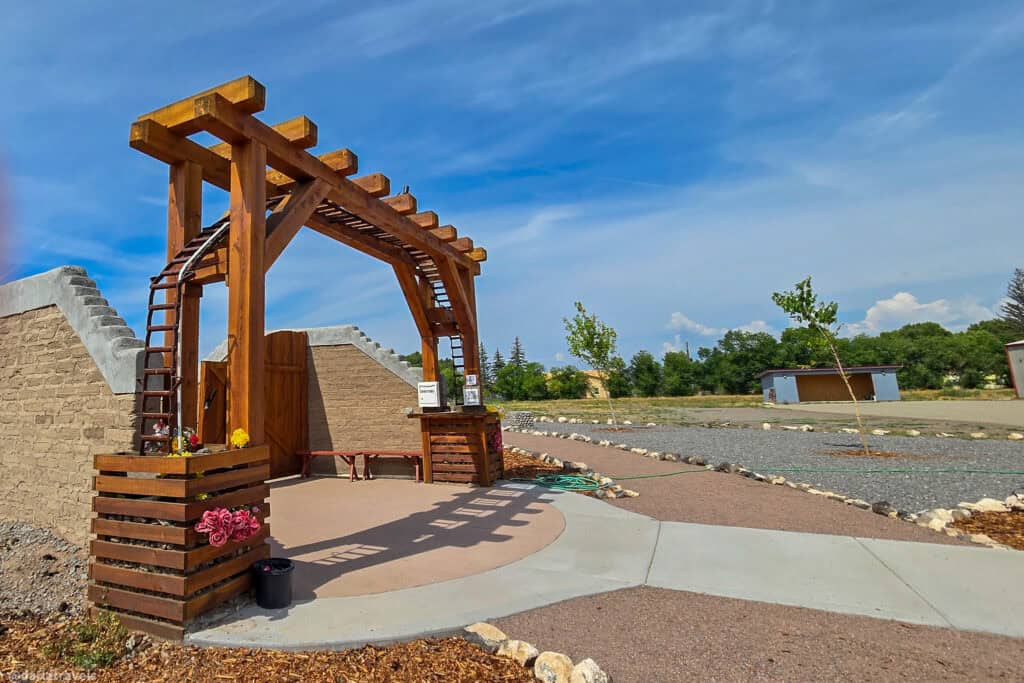
I walked toward the center to begin, as intended, before setting out along one of the four clearly marked paths. While each of the four sections corresponds to the different groups of the Mysteries of the Rosary, you don’t need to follow any specific order to move through the space.
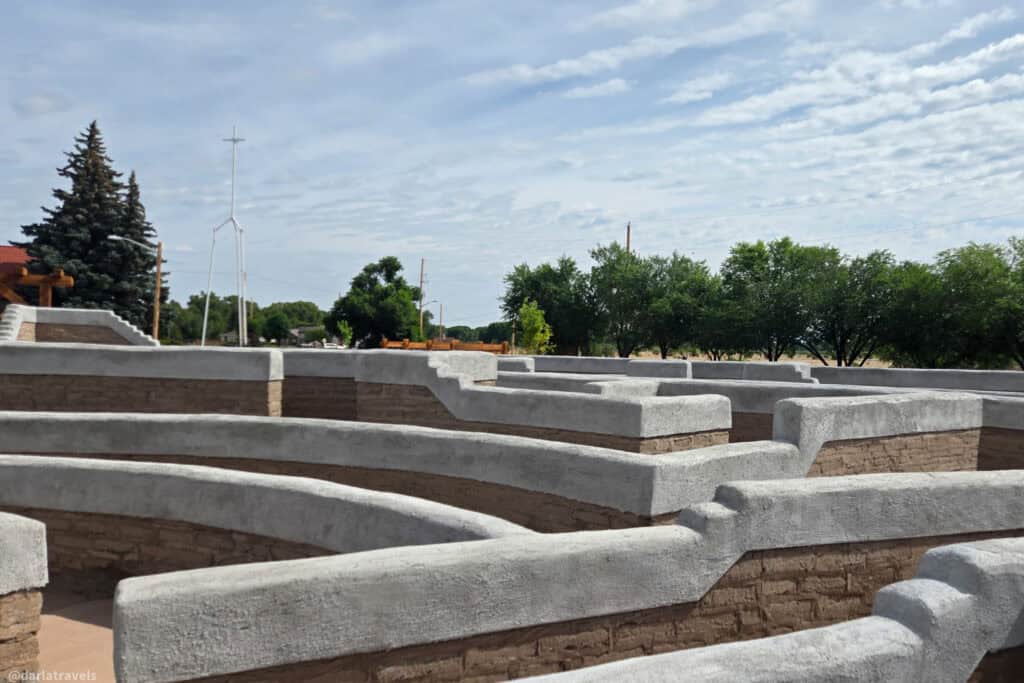
The walls were generally lower in the center and rose to the full height at the outer wall. In between, shorter walls and walls that rose or fell by a few steps gave additional visual interest. The path continued back and forth, guiding me without decision-making. I needed no map, and there were no choices, just steady forward movement. At the end of each quadrant, the route returned me to the center.
Even without a religious connection, the walk felt intentional. It wasn’t about distance or efficiency, but about just being there. Placing one foot in front of the other and realizing that I was walking through (probably) the largest adobe labyrinth in the world felt like a reason to be grateful.
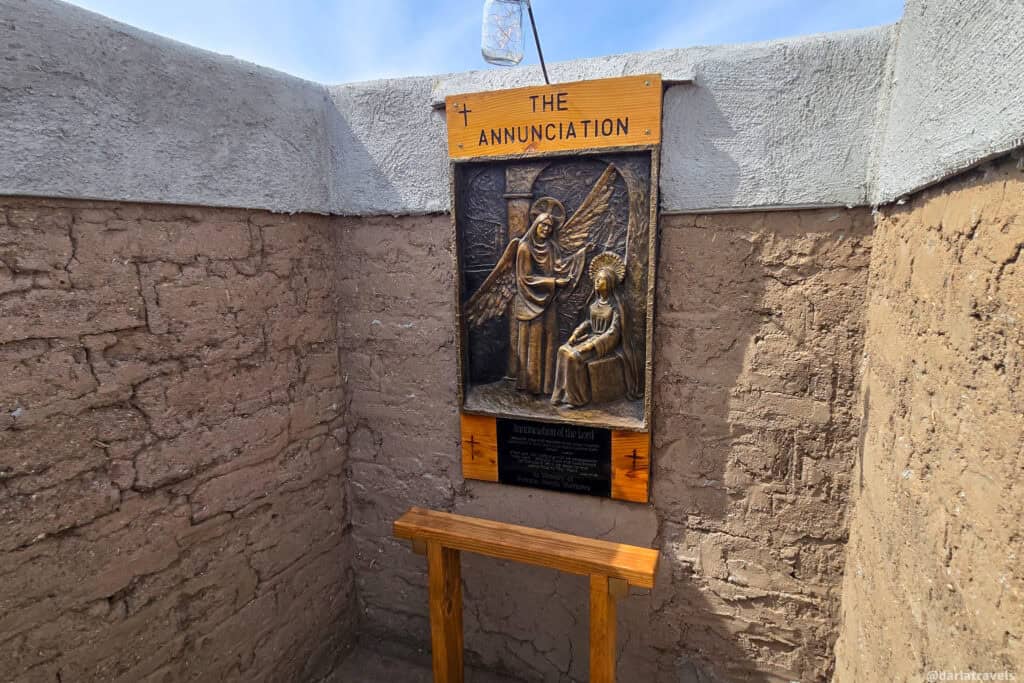
The full walk of the four quadrants and around the perimeter took a little over 20 minutes at an unhurried pace. Along the way, I paused at several of the nichos to admire the sculptures. Surprisingly spacious, each had a bench and a place to kneel for reflection, meditation, or prayer.
Shrine of the Stations of the Cross (San Luis, Colorado)
📍Trailhead: Stations of the Cross Park (Picnic Area), San Luis
GPS: 37.20045417767992, -105.42604322593706
Google Plus Code: 6H2F+5H San Luis, Colorado
While the El Santuario de los Pobladores labyrinth offers a contained, meditative experience, another of the San Luis Valley’s most meaningful walks follows a hillside trail lined with powerful sculptures to a mesa-top chapel in San Luis, Colorado. The Stations of the Cross Shrine is considered one of the most striking cultural and spiritual landmarks in the San Luis Valley.
About San Luis (Colorado’s Oldest Town)
Established on April 5, 1851, by Hispano settlers from Taos, San Luis (originally named San Luis de la Culebra) is the oldest continuously inhabited town in Colorado. Its founding predates Colorado’s statehood by decades.
The town still retains some hallmarks of historical and cultural influences present during early settlement. The traditional Spanish village layout and adobe architecture stand out in this regard. And the tradition of shared community resources is still strong here. For example, La Vega, a 633-acre (256-ha) communal grazing pasture, is one of only two formal commons areas in the United States (the other being Boston Common). And the San Luis People’s Ditch is the oldest continuously used community irrigation ditch or “acequia” in Colorado.
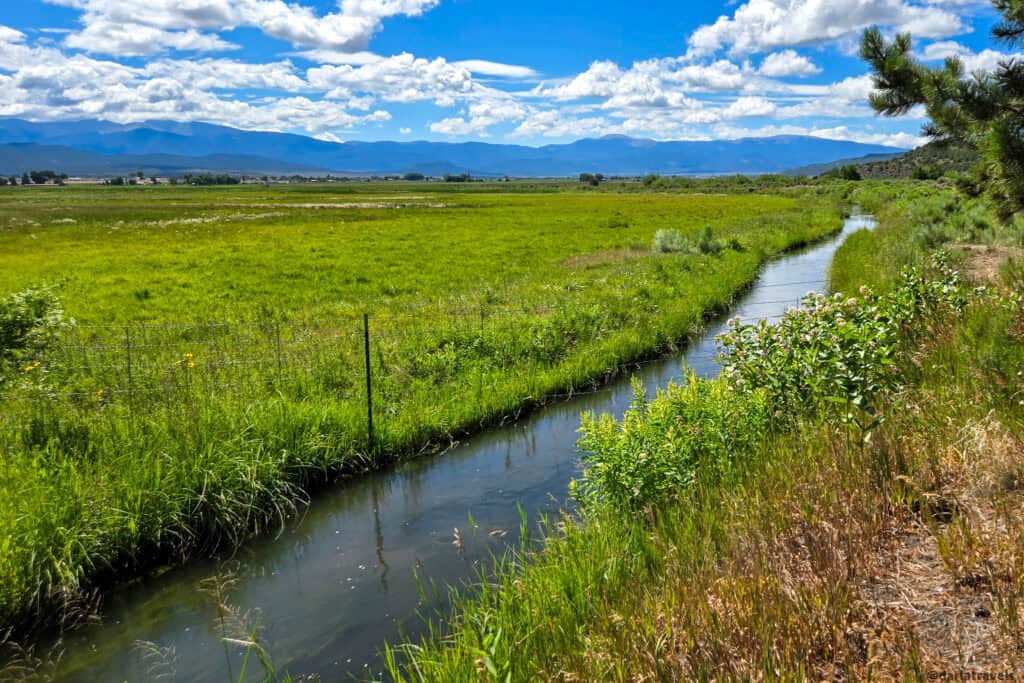
San Luis’s original settlers also brought their Catholic faith and religious observances. San Luis is home to the Sangre de Cristo Parish Church, formally established in 1881. The current church building was finished in 1894 under the direction of Father Samuel Garcia.
The Hispano traditions of faith, land, and community come together in the town’s Stations of the Cross Shrine.
About the Stations of the Cross Shrine in San Luis
The Stations of the Cross is a Christian veneration consisting of fourteen images depicting Jesus Christ on the day of his crucifixion. Traditionally, worshippers move from one station to the next on a mini-pilgrimage, pausing at each stop to pray or meditate on the event.
The Sangre de Cristo Parish began creating the Stations of the Cross Shrine in San Luis in 1988, “as an act of faith and love for the parishioners of the Sangre de Cristo Parish.” The Shrine was dedicated in 1990.
At the San Luis Stations of the Cross Shrine, each station is a two-thirds life-size bronze sculpture created by San Luis artist Huberto Maestas. The sculptures line a half-mile (0.8 km) trail gently climbing up a mesa (flat top mountain) in the center of town. The official name is “La Mesa de la Piedad y de la Misericordia,” or The Hill of Piety and Mercy.
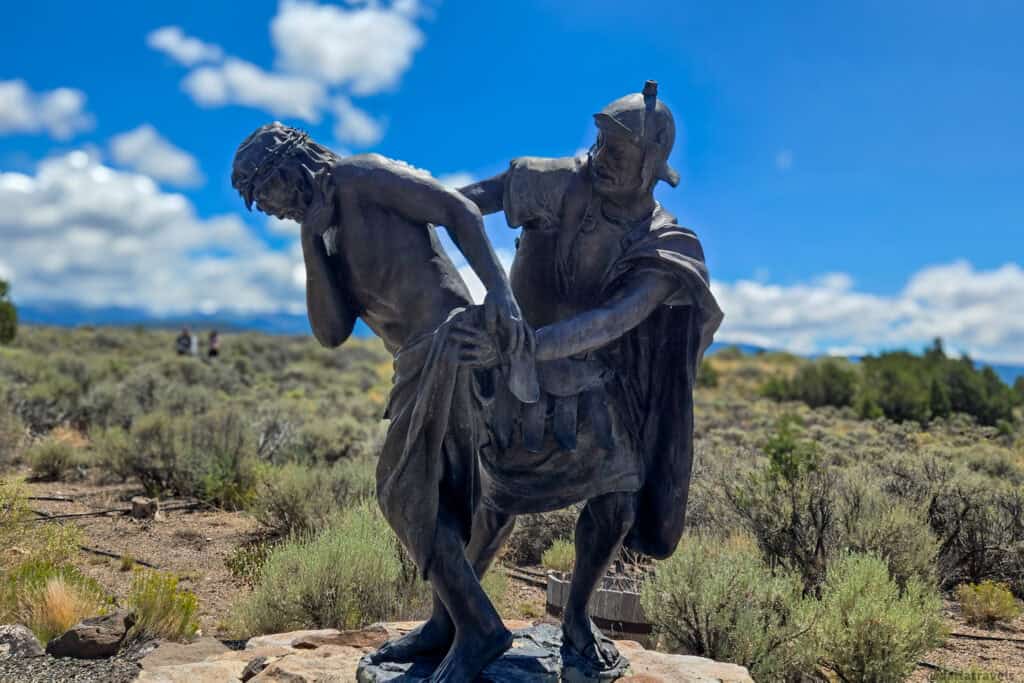
In addition to the traditional fourteen stations, the shrine includes a fifteenth station depicting the Resurrection of Jesus.
The path leads to La Capilla de Todos Los Santos, the Chapel of All Saints. This adobe church in a Spanish-Moorish style has thick whitewashed walls, two steeples/bell towers, and a domed altar that gives it a mission-like silhouette. Built in the late 1980s, the chapel has a mission-like silhouette that fits naturally into the landscape.
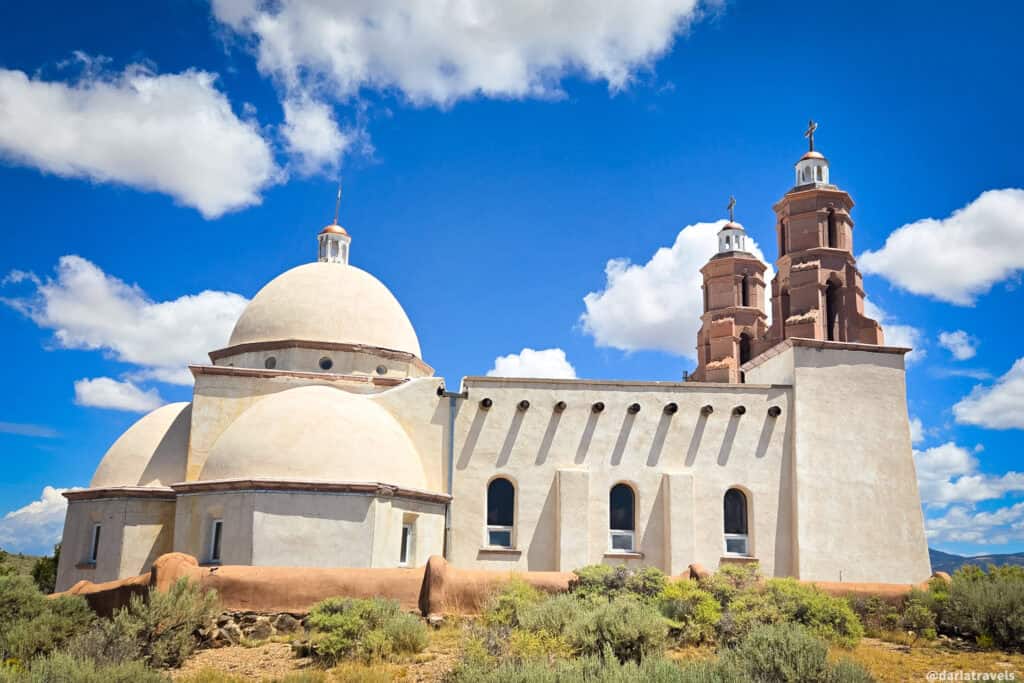
Beyond the Chapel, visitors can continue to a grotto of Our Lady of Guadalupe and a shrine to 25 Mexican saints and martyrs.
Experiencing the Walk at the Stations of the Cross Shrine
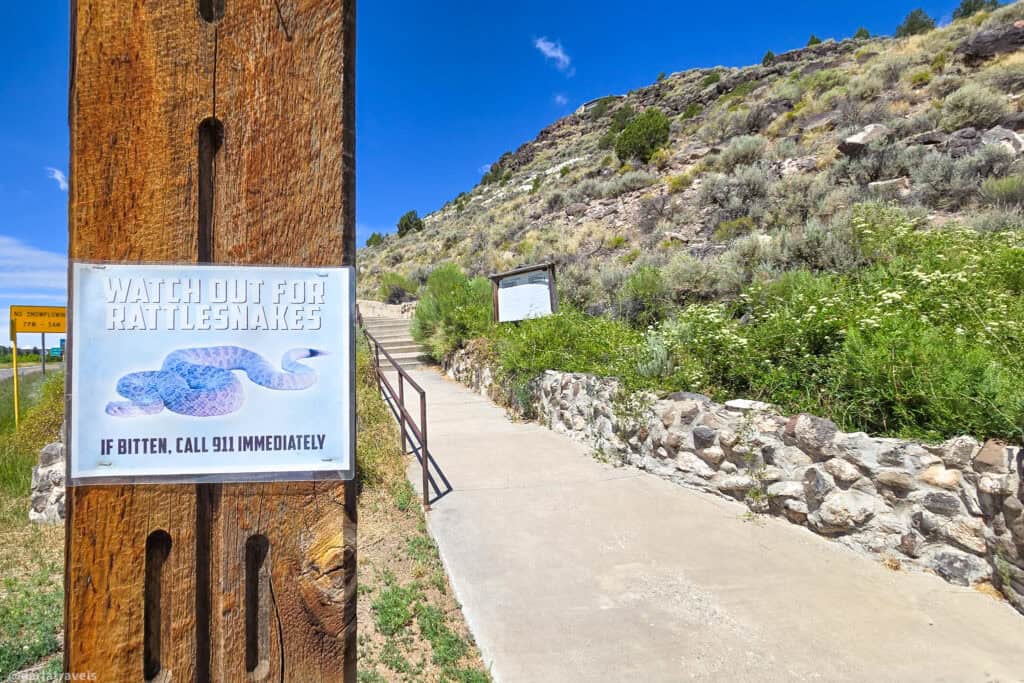
The walk begins at a small picnic area across the street from the San Luis Visitor Center, where a partially paved path leads toward the mesa. Right away, it feels more like a traditional hike than the labyrinth’s enclosed experience. Signs along the route warn visitors to be alert for rattlesnakes in the warmer months. I also found that uneven pavement and insects could be hazards.
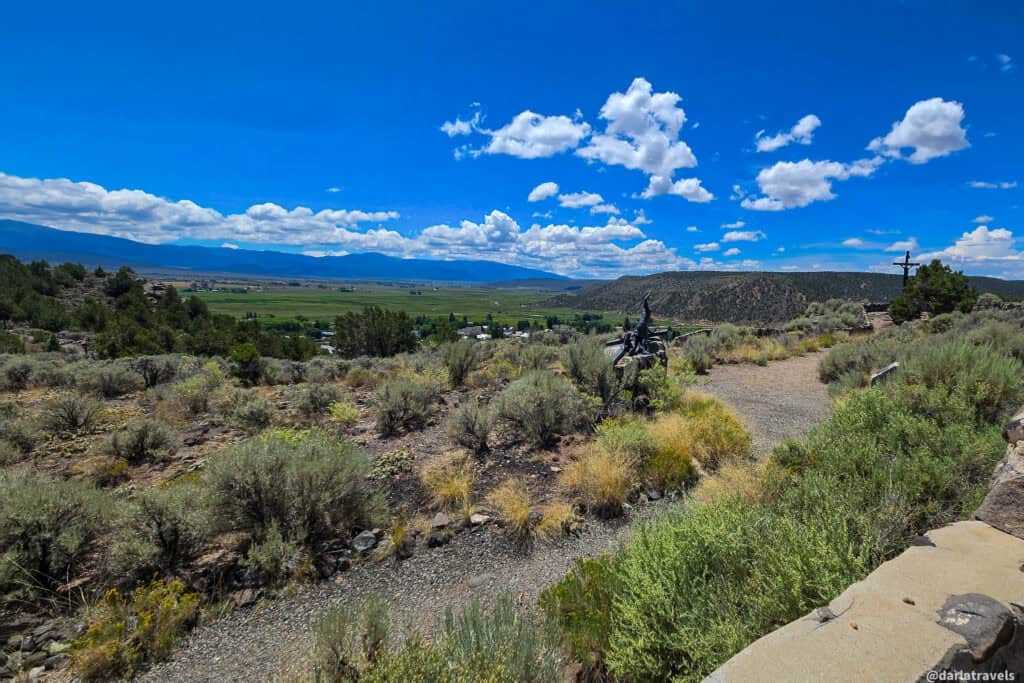
The path climbed steadily but moderately, with plenty of space to move at my own pace. There were only a few other people on the trail, making it easy to linger without feeling rushed.
Each station included an explanatory plaque with the station number, donor information, Bible verses for contemplation, and prayer intentions.
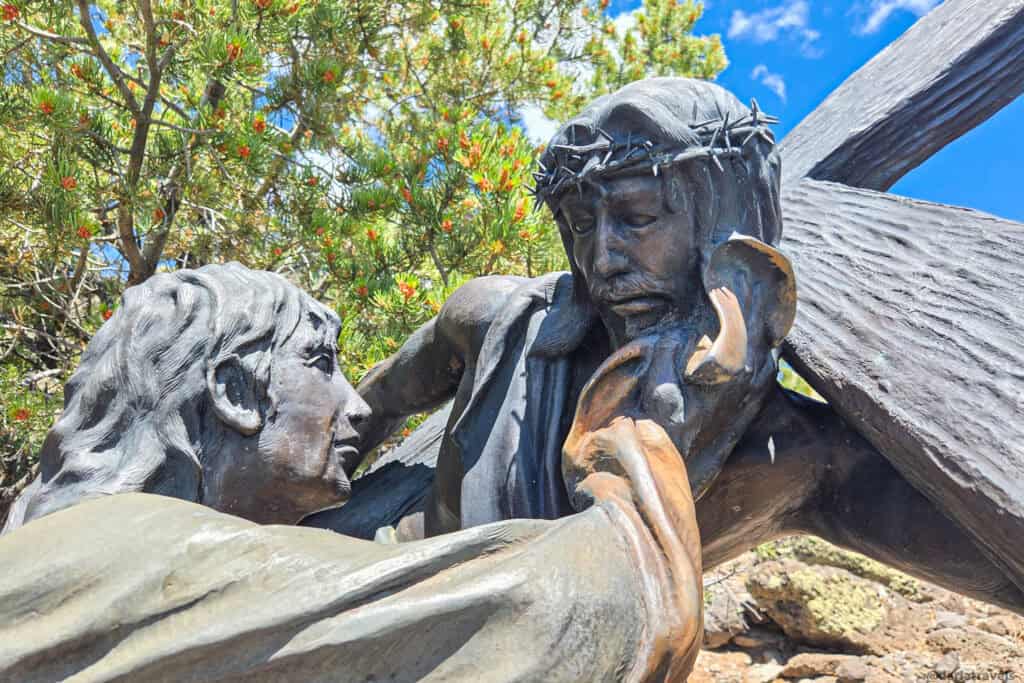
Every bronze sculpture marking the Stations of the Cross is worthy of a stop. Over and over, I was struck by the depth of emotion conveyed in detailed facial expressions and accentuated by body language in these art pieces. In creating these figures, talented artist Huberto Maestas has made suffering, confusion, and anguish palpable and immediate.
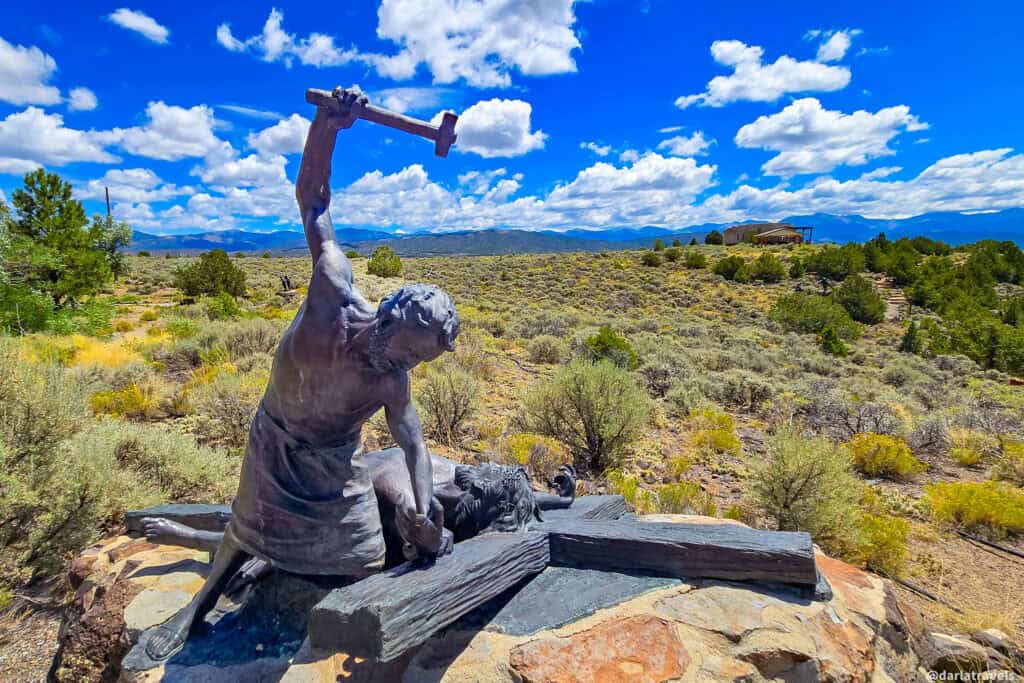
And unlike viewing art in a museum, you can experience these outdoor sculptures from every angle. Walk around them to take in the full nature of each scene. The ability to have this kind of perspective creates a sense of immersion that feels surprisingly real.
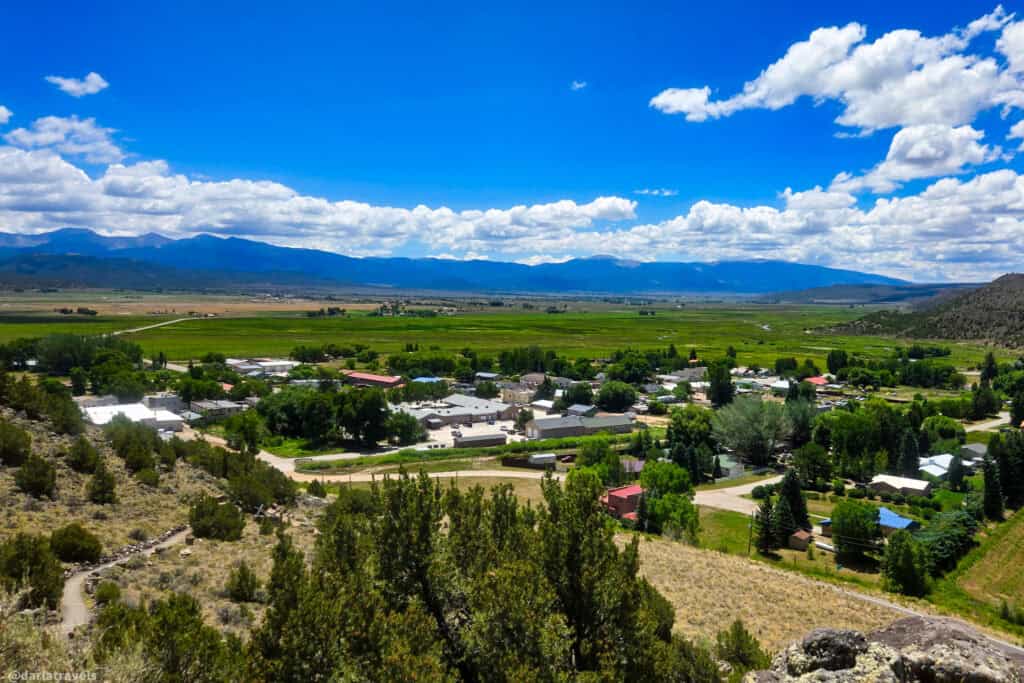
As I climbed up the mesa, the landscape widened. A view of San Luis opened up below, while the broad San Luis Valley stretched outward with mountains rising in the distance. By the time I reached the top, the panorama was nearly 360 degrees.
During my visit, the Chapel of All Saints was closed, and I could only admire it from the outside. Still, it was nice to see this focal point up close.
Trail Map for the Stations of the Cross in San Luis, Colorado
1.1 miles (1.9 km) out and back
180 feet (55 m) elevation gain
Visiting the Stations of the Cross left me with a deeper appreciation for the imagination and effort required to create it. It’s part artwork, part pilgrimage, and 100% local and authentic. The shrine makes it clear that the people of San Luis and the Sangre de Cristo Parish are profoundly committed to their culture and willing to share it with visitors from all backgrounds.
Practical Tips for Visiting the San Luis Valley Cultural Walking Sites
Can I visit the Labyrinth and the Stations of the Cross in one day?
Yes—these two sites are easily combined into a single, unhurried day. The drive between Conejos and San Luis takes about 45 minutes, crossing the wide-open landscape of the San Luis Valley.
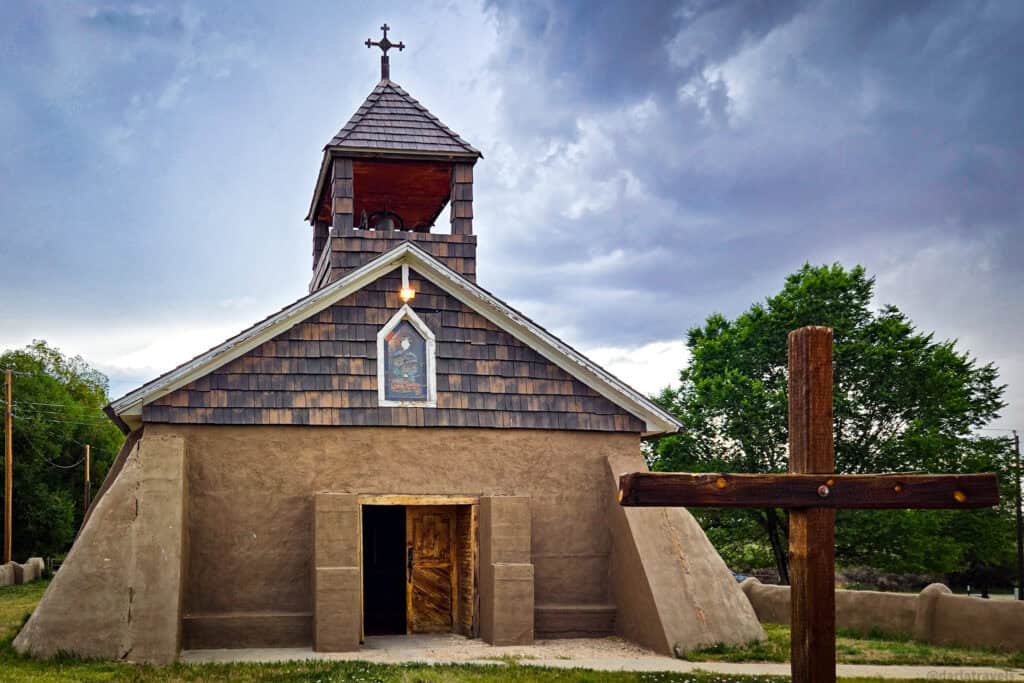
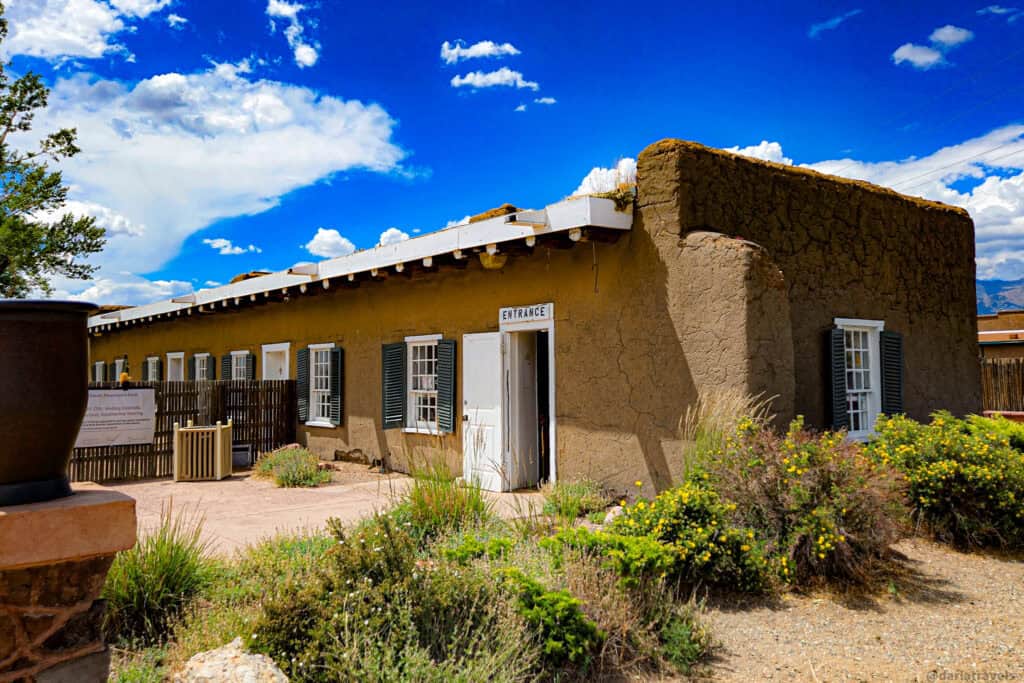
Along the way, there are a few worthwhile stops if you want to turn the drive into a deeper exploration of the region. For example, in San Acacio (close to San Luis), you can visit the adobe San Acacio Mission Church (County Road 15, San Acacio; Google Plus Code: 6F2R+PM San Acacio, Colorado; GPS: 37.20165572609578, -105.50852589691493). As noted above, it’s considered the oldest non-Native Christian church building in Colorado. Its simple structure and long history offer another window into the valley’s early settlement.
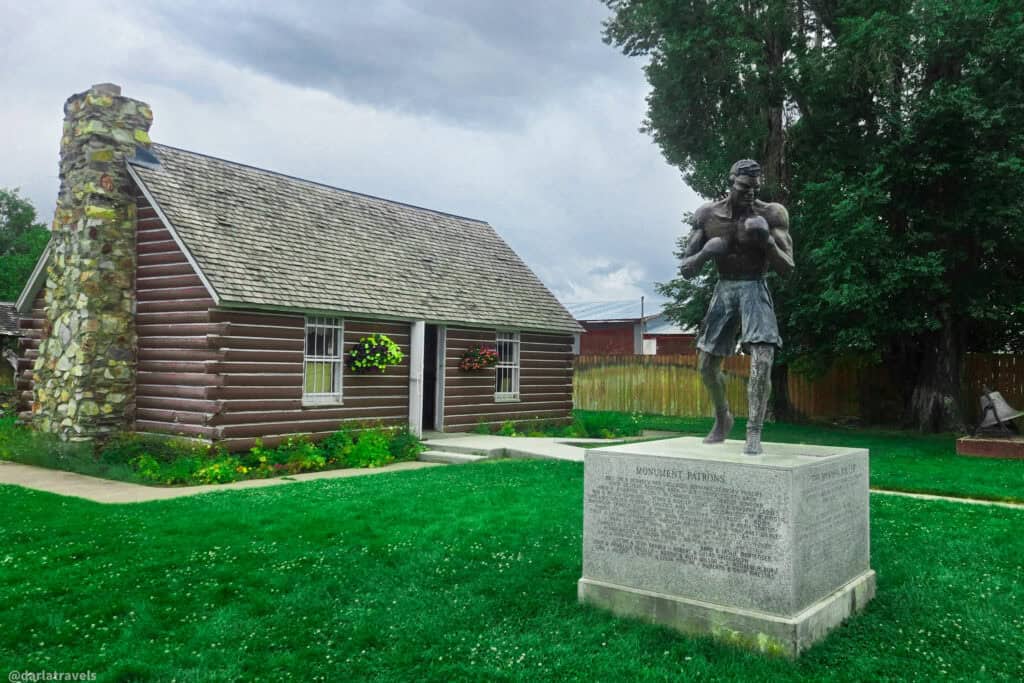
You could also stop in the small town of Manassa, the birthplace of heavyweight boxing champion Jack Dempsey. The modest log cabin where he was born now houses the small Jack Dempsey Museum (412 Main St, Manassa), filled with boxing gloves, photographs, and memorabilia that tell the story of his rise to fame.
Taken together, these stops create a day that blends walking, history, and culture without feeling rushed, and with plenty of space to experience the quiet character of the San Luis Valley.
What to Bring for These Short Walks
These walks are short and accessible, but the high-desert environment of the San Luis Valley calls for a bit of preparation.
At over 7,500 feet (2,286 m) above sea level, the San Luis Valley’s elevation can take visitors by surprise. Even on shorter walks, you may notice the effects of thinner air, so take your time, stay hydrated, and listen to your body.
Wear comfortable clothing and supportive walking shoes, especially since portions of the Stations of the Cross trail can be uneven.
Bring plenty of water, along with electrolytes if you’re sensitive to heat or elevation.
Sun protection is essential as the valley’s open landscape offers little shade. Pack sunscreen, a hat, and sunglasses. At the same time, have layers handy, as the weather and temperatures can sometimes shift quickly.
You may also want insect repellent, particularly in warmer months.
Also, bring a map or downloaded directions, as cell service can be limited in some areas.
With these essentials taken care of, you’ll be well-prepared to enjoy the experience of these cultural walks.
What is the Etiquette at these Cultural Sites?
The sign at the Stations of the Cross Shrine says it best:
The shrine is a place of prayer and reflection. Please respect it as such. Please respect others visiting as well.
I didn’t see any signs regarding dress codes at these sites, but it might be prudent to dress modestly when entering Our Lady of Guadalupe Parish Church or the Chapel of All Saints.
Nearby Things to Do in the San Luis Valley
The San Luis Valley has historic sites, museums, and recreational areas at your disposal. The following are just a few additional attractions to include on your San Luis itinerary.
- Fort Garland Museum & Cultural Center – Restored 1858 adobe military fort with permanent and rotating exhibits.
📍29477 CO-159, Fort Garland, CO - Great Sand Dunes National Park – The tallest sand dunes in North America.
📍Visitor Center, 11999 State Highway 150, Mosca, CO - Zapata Falls – a spectacular 30-foot (9.1 m) waterfall requiring a short hike uphill and through a stream for viewing. Next to Zapata Falls Campground.
📍Zapata Falls Trail, Mosca, CO (near Colorado State Highway 150 between mile markers 10 and 11)
📍Google Plus code: JCCR+J5 Mosca, Colorado - Colorado Gator Reptile Park – Family-friendly refuge for rescued alligators and other reptiles, amphibians, birds, and fish.
📍9162 Lane 9 North, Mosca, CO
Finally, if these two cultural walks leave you wanting to explore more of the San Luis Valley’s Hispano heritage, consider visiting the mission churches of Costilla County. From adobe structures that predate statehood to community churches that still serve active congregations today, the mission churches of Costilla County offer another layer of cultural depth for travelers. For a guide to these, endangered, lesser-known sites see my article on Visiting the Mission Churches of Costilla County.
Cultural Walks in the San Luis Valley – Pin It for Later
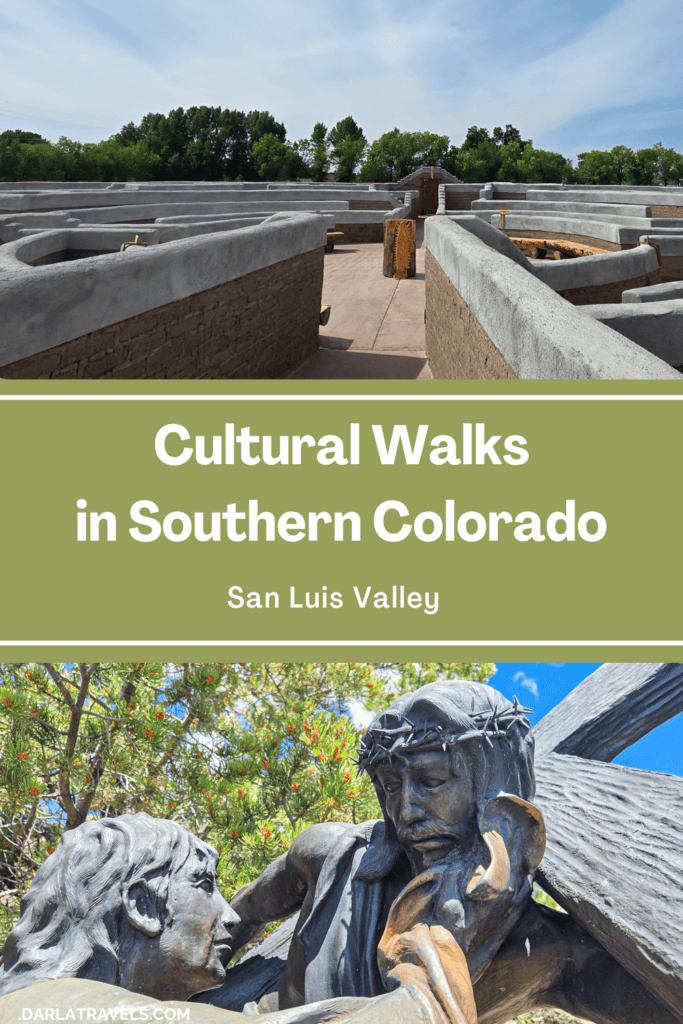
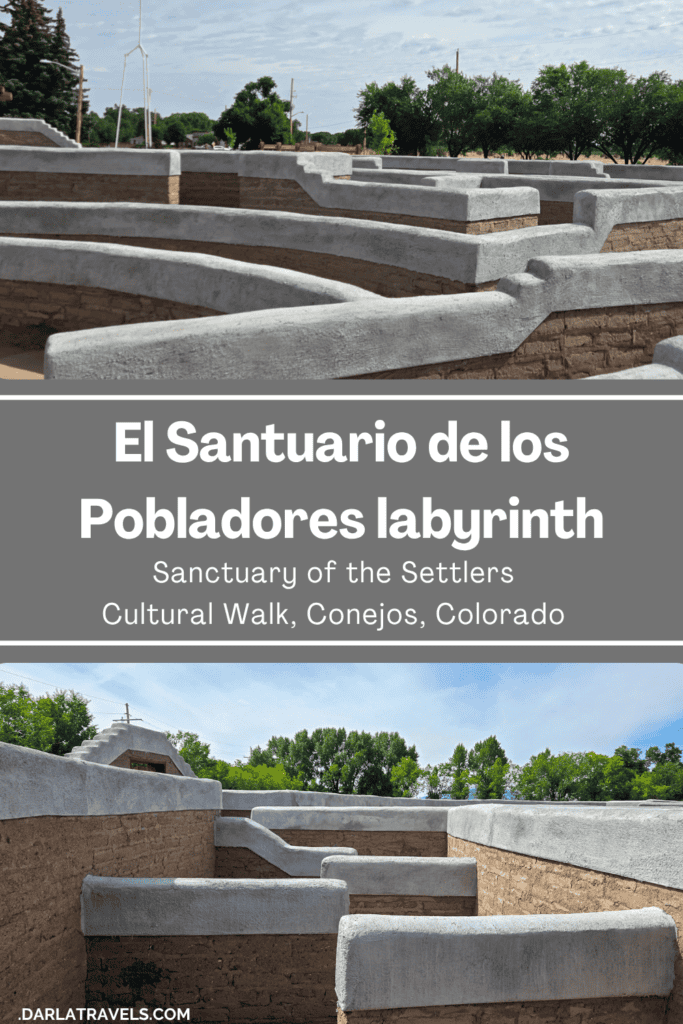
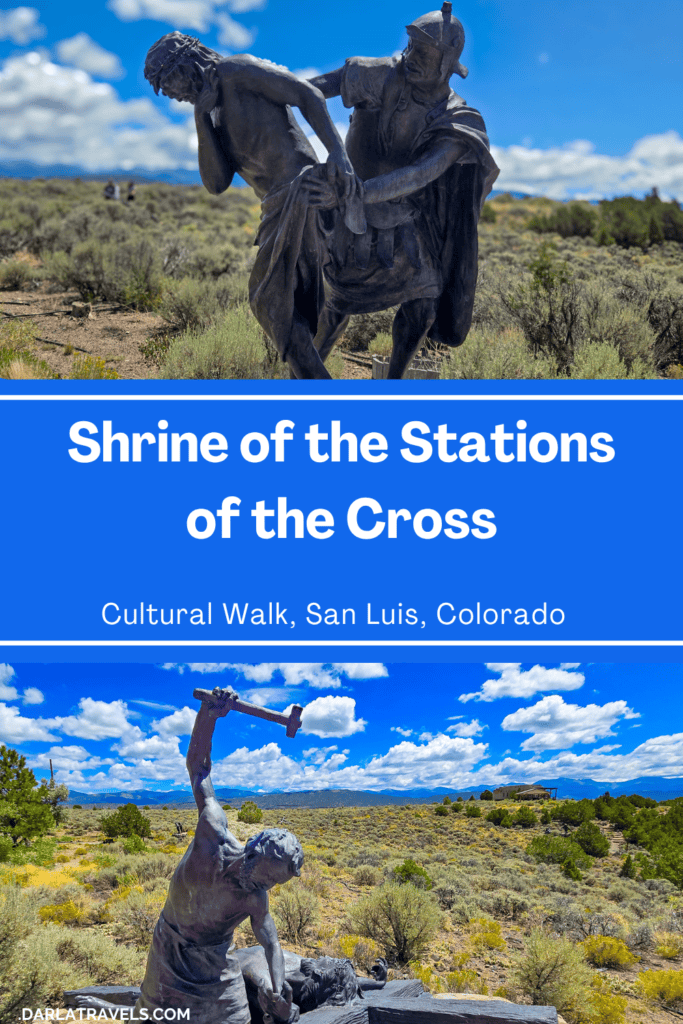
I created these images highlighting the El Santuario de los Pobladores labyrinth (Conejos) and the Stations of the Cross Shrine (San Luis) for your Pinterest Boards.
Where to Stay in the San Luis Valley
Basing Yourself in Alamosa
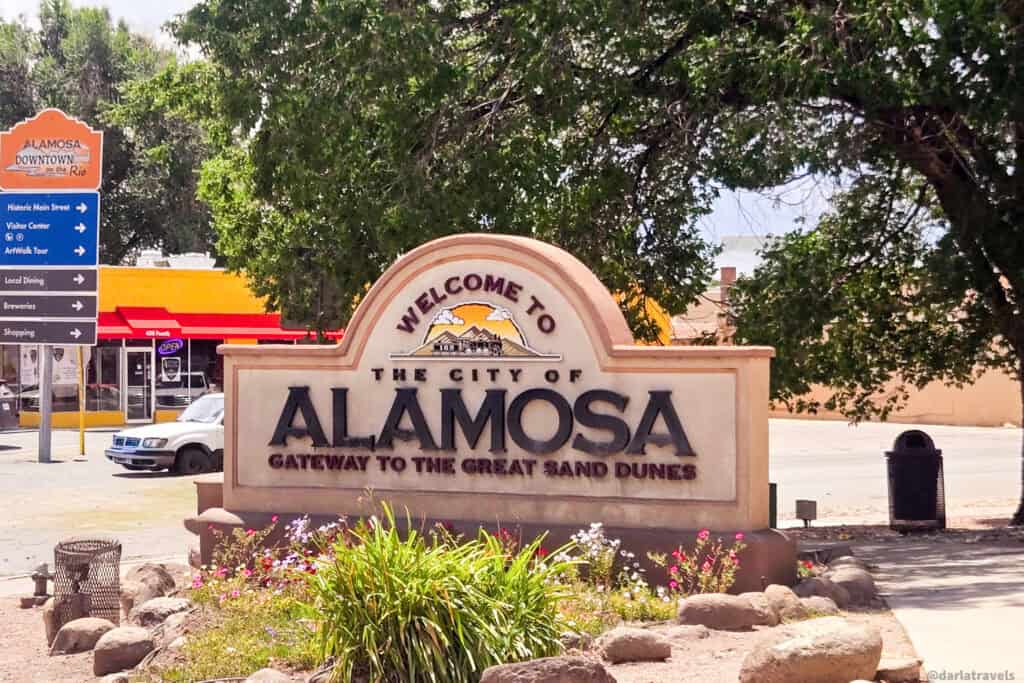
For most travelers, Alamosa is the best base in the San Luis Valley. It’s the largest city in the San Luis Valley and has the most services for tourists. It’s a convenient jumping-off point for both the cultural sites highlighted here and other attractions in the area.
Some solid, mainstream lodging options in Alamosa include: Hampton Inn Alamosa, Holiday Inn Express & Suites, Comfort Inn & Suites, and the Fairfield by Marriott. Each pet-friendly hotel offers comfortable rooms, Wi‑Fi, an indoor pool, a hot tub/spa, a fitness center, coffee- and tea-making facilities, and a free breakfast.
Staying in Alamosa makes it easy to pair these cultural walks with other San Luis Valley stops, such as Great Sand Dunes National Park, while keeping drive times manageable.
Use the map and links below to research and book your stay in Alamosa.
Book now at Booking.com ♦ Book now at Expedia ♦ Book now at Hotels.com
Other Lodging Options in San Luis and Antonito (Conejos)
If you’d like to stay in San Luis, the San Luis Inn Hotel sits on Main Street and offers simple, convenient lodging within walking distance of town landmarks.
There are no hotels in Conejos, but Antonito is just a short drive from Our Lady of Guadalupe Parish. The historic Steam Train Hotel is a cozy, historic-style inn with individually decorated rooms and a bed-and-breakfast feel.
Final Thoughts on Cultural Walks in the San Luis Valley
The curved adobe walls of the El Santuario de los Pobladores labyrinth and the hillside bronze sculptures of the Stations of the Cross are examples of sacred spaces shaped by residents and open to all, regardless of religious background.
Both walks are grounded in the valley’s deep Hispano heritage and ongoing artistic traditions. If you prefer a slower, more mindful way to explore on foot, these spots offer quiet awe without the need for technical trails or summit goals. Instead, they offer time, space, and a chance to feel part of something larger than yourself in Colorado’s oldest cultural landscape.
I had a chance to stop here and walk the stations of the cross en route to see the Monte Vista National Wildlife Refuge last year for the crane migration. I missed the labyrinth though, so I’ll be sure to look for that next time I’m in town.
That’s great! I have yet to see the cranes in Monte Vista, but it’s on my to-do list.
I’ll have to check this out on my next trip to Colorado. It’s a little scary that they have a sign that says, “Call 911 if bitten by a rattlesnake.”
Yeah, I get that. If you are from Colorado you get used to signs like this, and just watch where you’re walking. But I can see how people from other climates and ecologies might need a slightly scary reminder about both the snakes and the seriousness of the situation.
This is such a unique perspective on the San Luis Valley. Most visitors focus on the Great Sand Dunes, but these cultural and historical sites sound just as meaningful. I especially love the idea of combining history, art, and a peaceful walk while learning more about the region’s Hispano heritage. Thanks for highlighting some lesser-known places to explore in southern Colorado!
Thank you, I’m glad you enjoyed the post!