Greater Prairie chickens are year-round residents of the grasslands near Wray, Colorado. But during the spring breeding season, male prairie chickens become quite animated in their behaviors as they compete to attract the interest of females in areas called booming grounds or leks. It’s a fascinating display.
A Wray prairie chicken tour lets you see this delightful spectacle up close. This early-morning adventure takes birders, photographers, and nature lovers to a remote-feeling spot before dawn to watch the birds put on a show designed to attract a mate. As the sun rises and the landscape lights up, the male prairie chickens inflate the bright orange air sacs on their necks, begin their vocalizations, stamp their feet, and challenge rival males for the chance to mate. It’s a memorable experience worth waking up in the dark for.
This guide covers what you need to know about attending a Greater Prairie Chicken tour in Wray, Colorado, including what to expect and how to prepare.
** Darla Travels is reader-supported.
When you buy through our links, we may earn a commission. **
- Why Wray, Colorado is an Ideal Place for a Prairie Chicken Tour
- Wray Prairie Chicken Tour Details and Registration
- My Experience on the Wray Greater Prairie Chicken Tour
- Day 1: Orientation
- Day 2: Before Sunrise
- Day 2: A Warm Finish
- Video – Greater Prairie Chicken Calls (Booming) and Behavior
- Do You Need a Colorado State Wildlife Area Pass to Take a Prairie Chicken Tour?
- Spring Birding Gear: What to Pack for your Visit to Wray
- Clothing
- Comfort Items for the Tour
- Binoculars, Scopes, and Camera Gear
- Apps
- Before You Leave Your Hotel for the Tour
- Other Things to do in Wray, Colorado
- Where to Stay and Eat in Wray for Your Prairie Chicken Tour
- Dining Options Before Orientation or After a Day in the Field
- Pin It for Later- Wray Greater Prairie Chicken Tours
- Final Thoughts on the Wray Prairie Chicken Tour: It’s Worth a Trip to Eastern Colorado
Ready to book your Wray hotel? Find a great spot here:
What’s a Greater Prairie Chicken and Why Care?
Despite its name, the Greater Prairie Chicken (sometimes written as prairie-chicken; Latin name, Tympanuchus cupido) isn’t a chicken at all! While about the same shape and size as a domestic chicken, it’s technically a medium-to-large grouse.
Note: Prairie Chickens are sometimes called Pinnate Grouse or “Sandhill Dancers.”
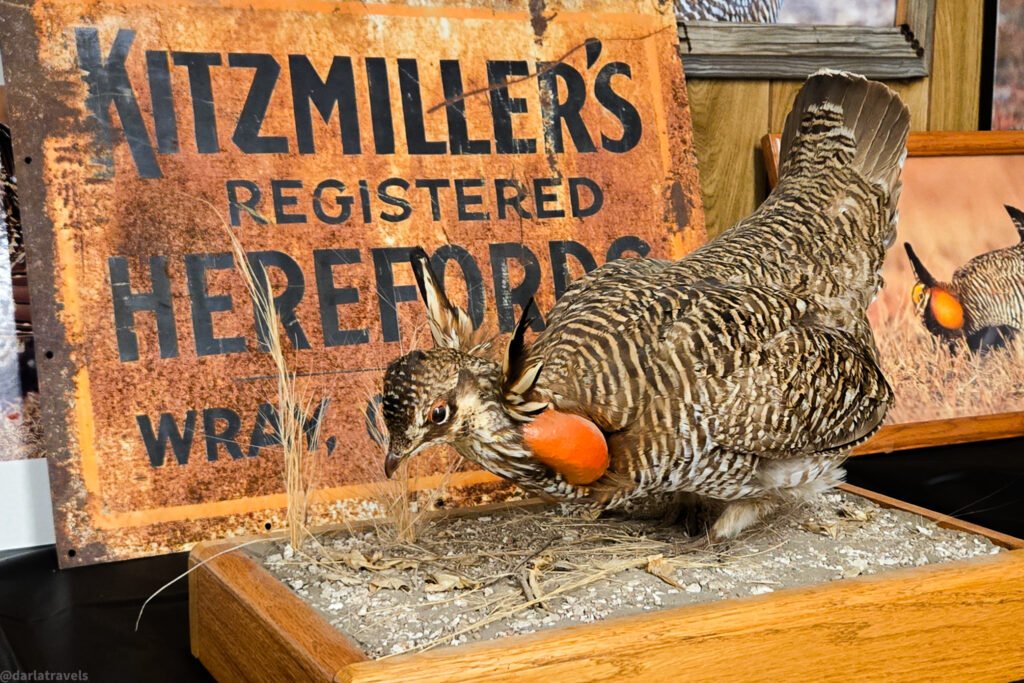
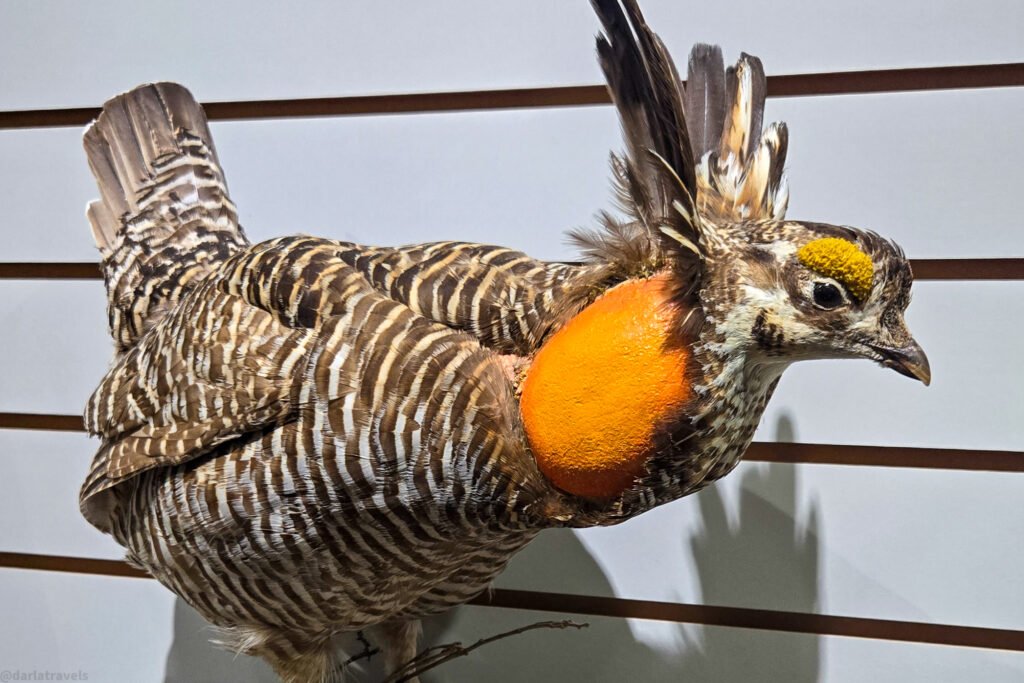
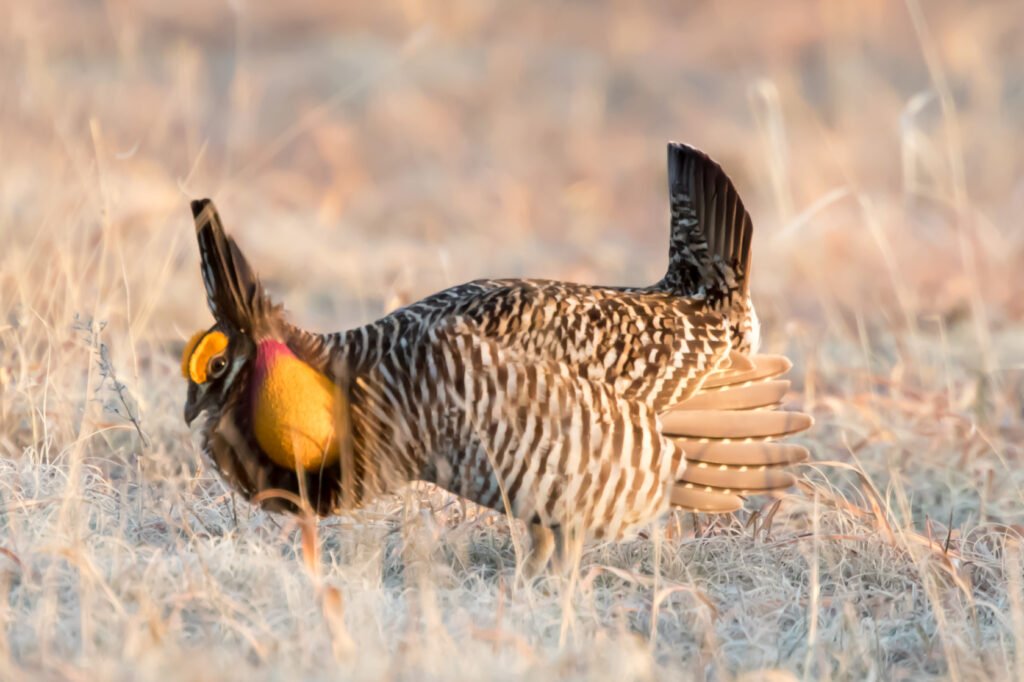
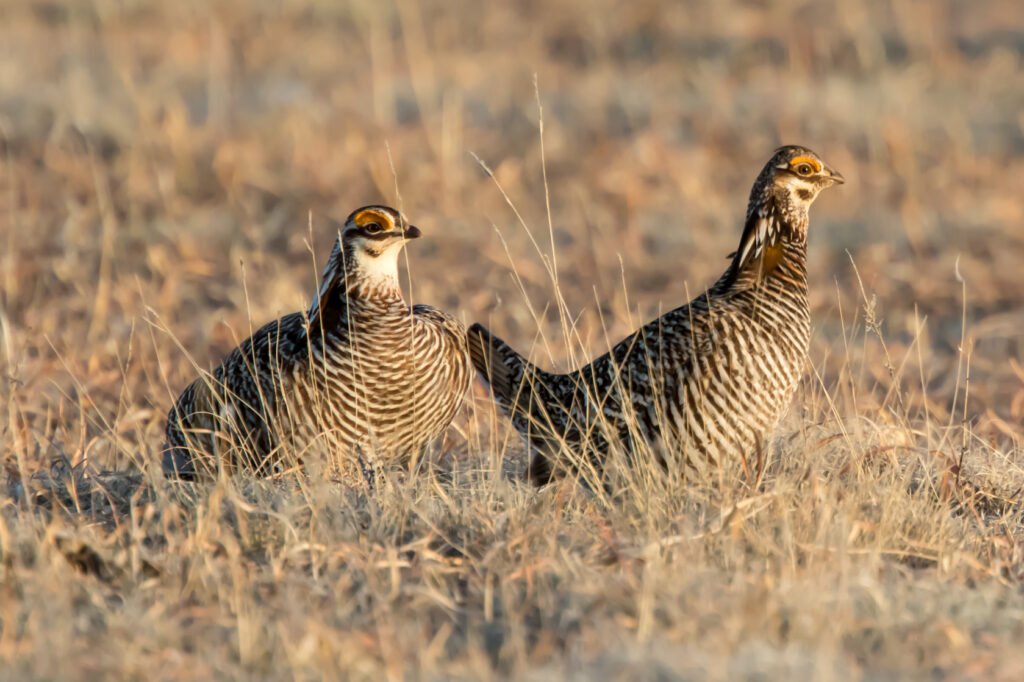
Prairie Chickens, once endangered in Colorado, are native to the Great Plains of North America, with brown and white barred feathers that help them blend into the landscape. Males differ from females by their size, larger yellow eyebrow combs, and vivid orange air sacs that they inflate during their courtship displays.
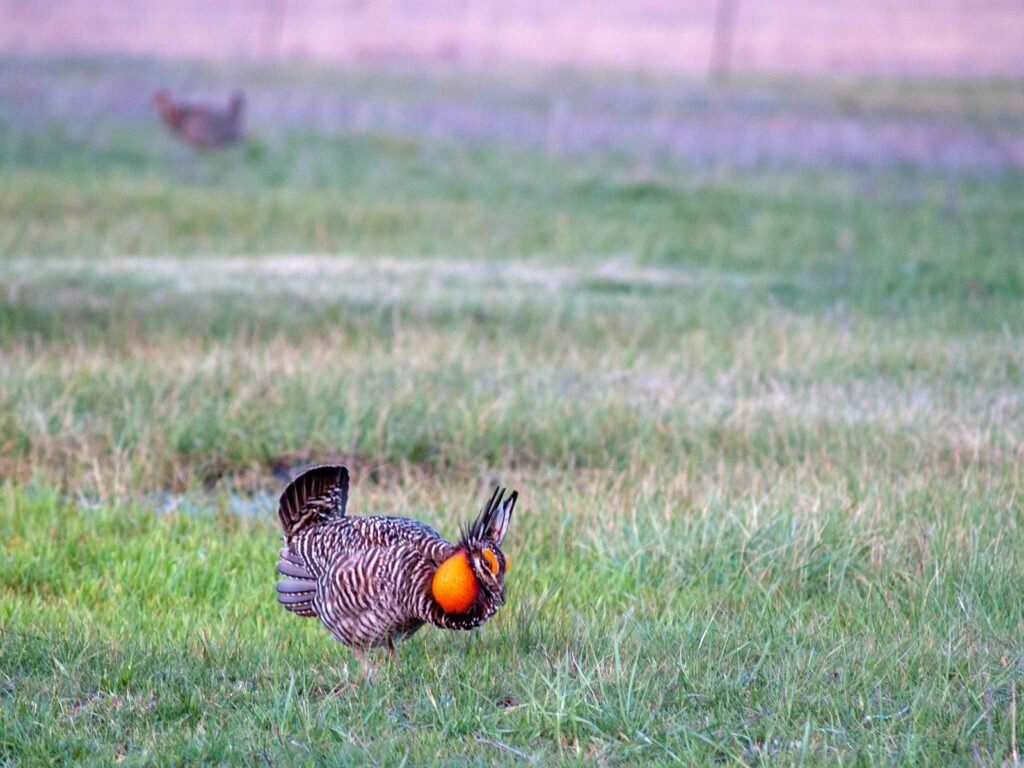
Greater Prairie Chickens are an “umbrella species,” meaning that protecting the habitat they need also benefits countless other grassland plants and animals. Healthy Prairie Chicken populations are a sign of healthy native grasslands, making these birds an important indicator of threatened ecosystems.
For visitors, watching a booming ground offers the rare chance to be reminded of what these vast grasslands once looked and sounded like before non-native settlers arrived.
Did you know? There is also a Lesser Prairie Chicken, similar in appearance to the Greater Prairie Chicken. In Colorado, the Lesser Prairie Chicken, also an umbrella species, resides primarily in pockets in the southeastern part of the state, including Prowers County, Cheyenne County, Baca County, and the Comanche National Grasslands. The Lesser Prairie Chicken is critically endangered in Colorado, with a population having fewer than 100 breeding males. A 2026 Stewardship Action Plan aims to protect and strengthen the Lesser Prairie Chicken population with the help of agricultural partners.
Now that you know why the Greater Prairie Chicken matters, let’s look at why Wray should be on your list as one of the best places to experience their springtime breeding display.
Why Wray, Colorado is an Ideal Place for a Prairie Chicken Tour
Where is Wray, Colorado?
Wray, Colorado is a small city in the northeastern Colorado Plains. The Nebraska state line is approximately 9 miles (14.5 km) to the east, and Denver is 170 miles (274 km) to the west.
The city lies at the intersection of U.S. Highway 34 and U.S. Highway 385, near the Republican River, at an elevation of 3,563 feet (1,086 meters). And it’s a gateway to one of Colorado’s important prairie ecosystems.
🪧For a deeper look at Wray and its history, landmarks, and highlights, see my detailed guide to visiting Wray, Colorado.

Wray’s Sandsage Prairie
Most of Colorado’s Greater Prairie Chickens inhabit the sandsage prairie just north of Wray. “Sandsage prairie” is a specific type of Great Plains prairie where sand sagebrush (Artemisia filifolia) is the dominant shrub growing on very sandy soils, dotted with areas of grasses and other plants.
The Greater Prairie Chicken requires large, high-quality, contiguous grassland habitat, and this structure of low shrubs plus dense grasses is exactly the kind of terrain that supports its life cycle throughout the year. For example, open areas without trees are used for courtship activities (lekking), while dense, tall grasses are ideal for protecting chicks from predators while providing food sources.

The open areas that support the lek are also beneficial for birdwatchers who won’t have any obstacles to viewing these quirky birds. And because so much intact habitat remains around Wray, visitors have an excellent opportunity to observe the birds behaving naturally in one of the species’ strongest populations in the state.
Is the Prairie Chicken Endangered in Colorado?
Before the 1930s, Yuma County residents commonly saw leks with more than 50 birds, but drought, poor grass production, overgrazing, and broader habitat loss caused drastic declines. By 1973, biologists estimated only about 600 Greater Prairie Chickens remained in Colorado, prompting the state to list the bird as endangered.
Thanks to private landowner cooperation and changed grazing practices to improve the habitat, numbers climbed to roughly 7,000 birds by 1992 and about 10,000 by 1998, allowing the species to be downlisted from endangered to threatened and later to a state “species of concern.” Today, the Greater Prairie Chicken population is stable at around 10,000.

The recovery was significant enough that Colorado reopened a limited hunting season in 2000 for the first time since 1937. The hunting season now runs from October 1 through January 31 yearly.
Now that you know why Wray has become Colorado’s premier destination for viewing Greater Prairie Chickens, let’s look at what it’s actually like to attend one of the sunrise tours.
Wray Prairie Chicken Tour Details and Registration
| Prairie Chicken Tour Quick Facts | |
| Season | March–April |
| Duration | Orientation + sunrise tour |
| Cost | $150 |
| Viewing Time | 1.5–2 hours |
| Accessibility | ADA accessible |
| Breakfast | Included |
| Restroom at lek | No |
Wray Prairie Chicken Tours take place on select weekends in March and April, with two tours per weekend. Conceived by a former Colorado Division of Wildlife officer, these tours started in 1994 to showcase and help conserve the state’s then-endangered Greater Prairie-Chicken population.
Since then, stewardship of the tours has evolved. The East Yuma County Historical Society managed the program during the late 1990s as a fundraiser for the Wray Museum, and the Wray Chamber of Commerce assumed responsibility in the early 2000s. Today, the Chamber partners with the Historical Society, Colorado Parks and Wildlife, and the Kitzmiller Grazing Association to operate the tours.
What’s Included?
Each tour includes:
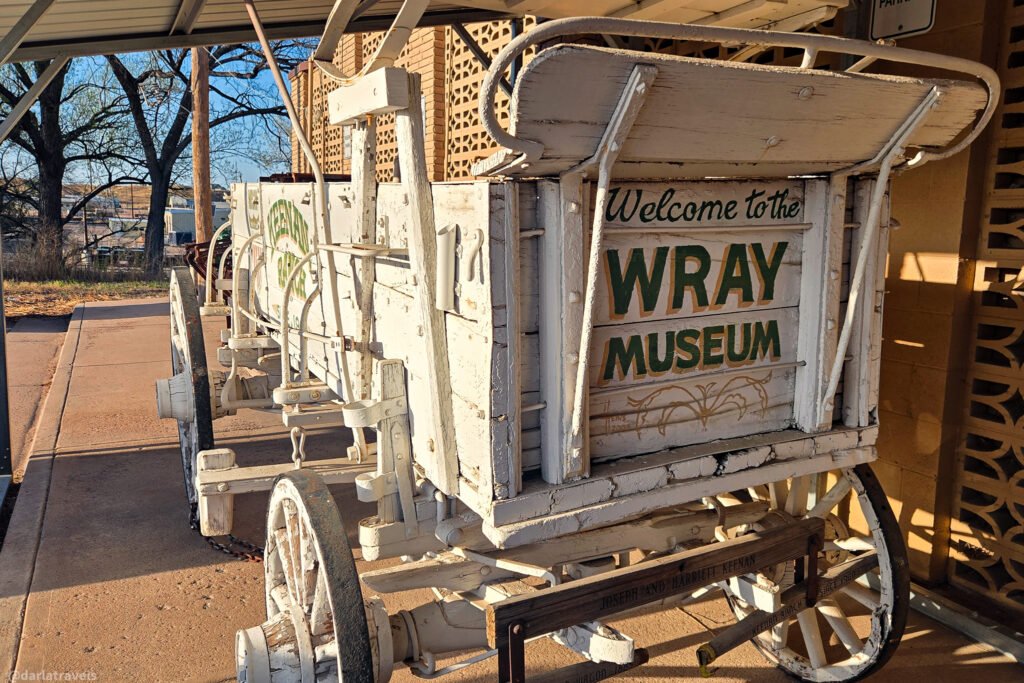
- A mandatory orientation session at the Wray museum the afternoon before your excursion. You’ll learn about Prairie Chicken behavior and viewing etiquette and have time to explore the museum’s exhibits.
- Transportation to a lek site on private land for a sunrise viewing. You’ll spend approximately 1½ to 2 hours observing the birds from a viewing blind. (No restroom is available at the lek.)
- A home-cooked breakfast after the viewing, followed by transportation back to Wray. (Restroom available at breakfast)
You can choose between:
- Friday afternoon orientation + Saturday morning tour
- Saturday afternoon orientation + Sunday morning tour
The tours are ADA accessible and are canceled only if road conditions make travel to the lek unsafe, which happens very rarely.
Registration
Registering for a tour must be done through the Greater Prairie Chicken Tours Official website: BOOK HERE.
Selecting a tour brings up a page with detailed information to read before finalizing your registration.
⚠️Be sure to note the strict cancellation and no refund policies.
The current price for a tour is $150.
Can I see the Greater Prairie Chickens Without a Tour?
Technically, yes, you can, but your chances of seeing the birds well are much lower.
The Colorado Birding Trail recommends taking a tour to see the Greater Prairie Chickens on their leks. They note that the only reliable lek locations are on private lands. You must stay in public areas and on public roads when searching for birds, but most of the leks are behind sandhills on private property. So while you might hear the Prairie Chickens from the road, they could very well be hidden from view.
On the other hand, the tour takes you to a location that virtually guarantees an excellent viewing opportunity. Instead of hoping to find the birds on your own, you’ll spend 90 minutes to two hours watching the courtship displays.
My Experience on the Wray Greater Prairie Chicken Tour
Day 1: Orientation
I had an early dinner in Wray before the mandatory Orientation at 6:00 p.m. on Day 1 to ensure I could get to bed early.
Our orientation started with introductions and information about the museum. A Colorado Parks and Wildlife Officer explained the biology and courtship behavior of the Greater Prairie Chicken. This introduction was much more valuable than I expected. The information made it much easier to understand what to look for on the lek the next morning.
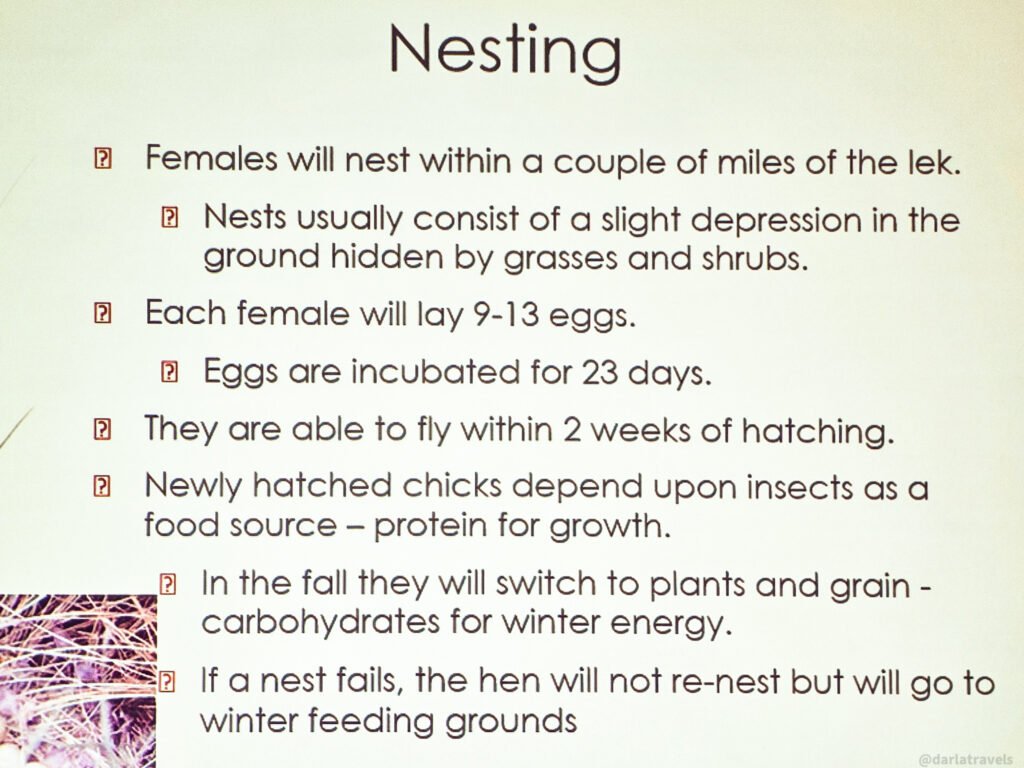
The Orientation also included a short talk about “the rules” of the tour, designed to minimize our impact on the birds, and to maximize viewing enjoyment for the birdwatchers. These included:
- Wearing dark clothing that doesn’t rustle when it moves. Bright clothing and noise can disturb the birds.
- Setting electronic devices (camera, phone, watch, etc.) to silent. Shutter sounds are OK, but other noises, music, or notification sounds will disturb the birds.
- Stay quiet. Once again, the noise disturbs the birds.
After the presentation, we had ample time to wander the Wray Museum. Among other high-quality exhibits, the museum includes the Jones-Miller Archaeology exhibit, a permanent Smithsonian Institution exhibit, one of only a few outside Washington, D.C.
Day 2: Before Sunrise
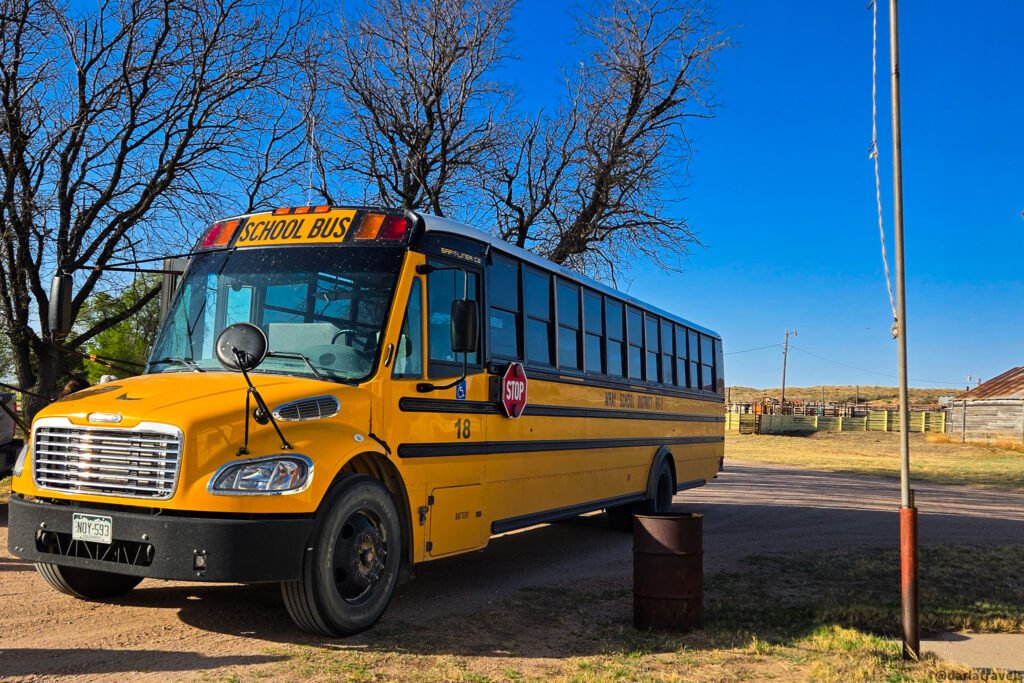
Morning came early. Our tour transportation, a yellow school bus, left the Wray Museum at 4:30 a.m. We were accompanied by the same Wildlife Officer who talked to us at the orientation the night before. After an approximately 30-minute drive in the dark, we arrived at the lek site.
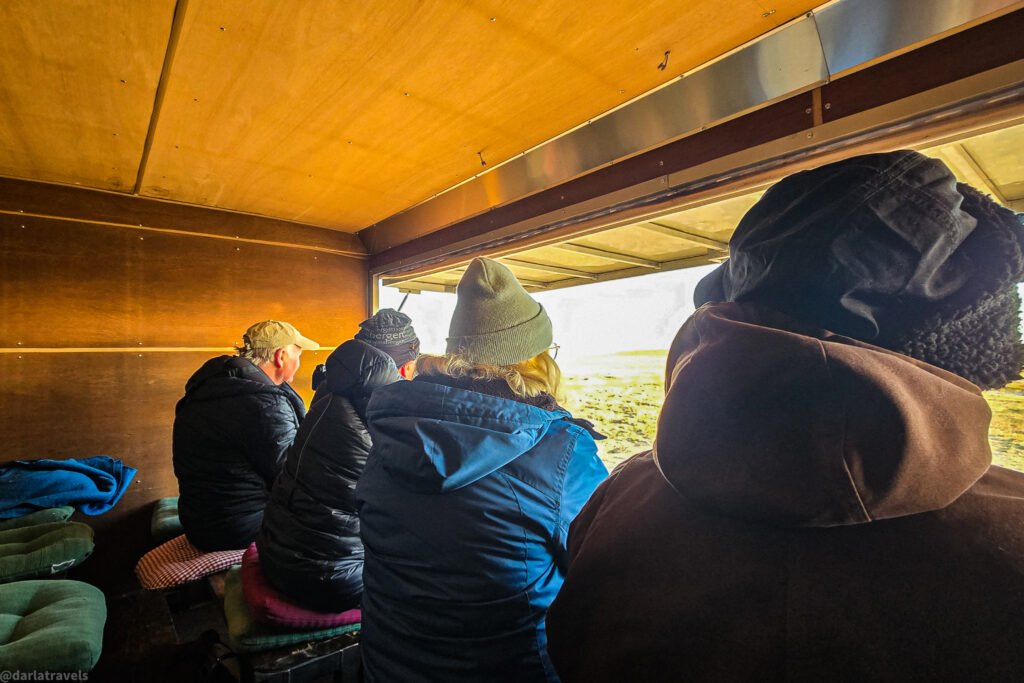
Everyone quietly shuffled off the bus and into the back of a small trailer that served as our viewing blind. The three rows of bench seating were basic but functional, with seat cushions. Extra blankets were offered to anyone who wanted a little more warmth. The no-frills setup, while cold, was as comfortable as could be expected. The focus was entirely on the birds, and our trailer was oriented to get the best views of the lek.
Once everyone was seated and had their binoculars and camera gear set up, the windows on the front of the trailer were opened up almost exactly at sunrise.
Day 2: Watching the Lek Come Alive
Sitting in silence, my eyes adjusted to the lighting as I scanned the ground for Prairie Chickens. But I heard them well before they showed themselves.
The first sounds were the calls known as “booming”. Many sources describe it as similar to the sound made when blowing air over the top of an empty, glass soda bottle. To me, booming had the mellow quality of a bass flute. This booming tone is generated by the males inflating and deflating their large orange neck sacs. See the video below to hear the booming.
Slowly, the males began to arrive, continuing to boom and perform other vocalizations. They seemed a little like actors taking their places on a stage just before a performance. This feeling wasn’t entirely wrong. It turns out that males do not just roam around the lek area. Instead, they select a particular spot to hang out, which they occupy for the entire breeding season, and which they defend from other males.
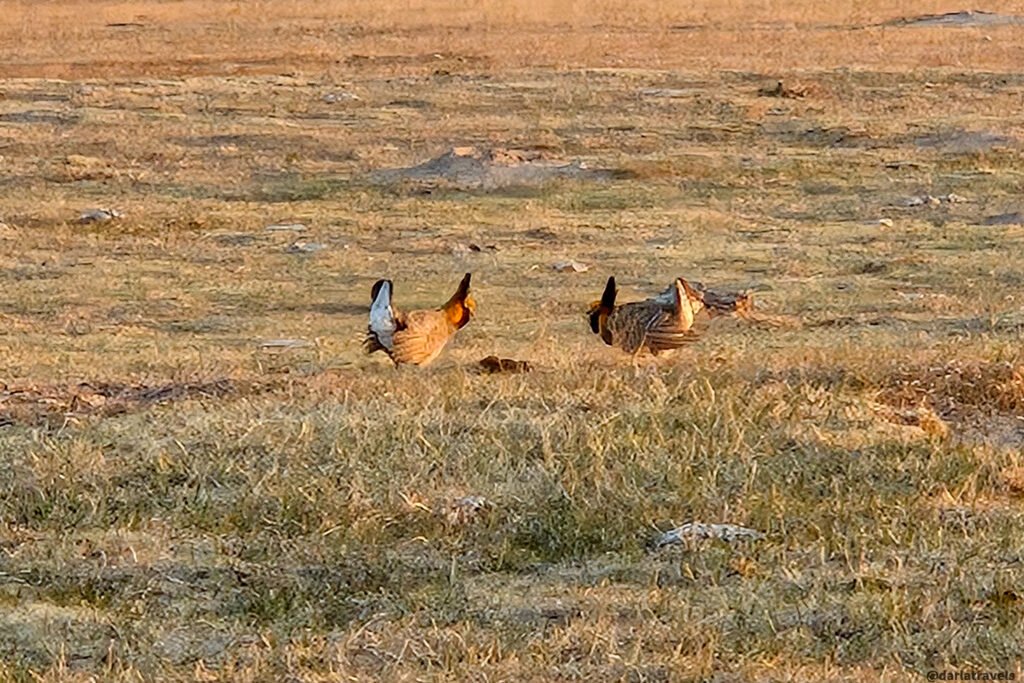
The sun slowly came up, but the temperature lagged. The few dominant males near the center of the lek had the most energetic and flamboyant displays. It’s not a surprise that these dominant males tend to be selected as mating partners by the females, while the less active males at the periphery are just out of luck. During my time observing the lek, I saw almost all of the following reported behaviors in these males:
- Flutter Jumps. Leaping into the air while flapping wings, often accompanied by whooping or cackling calls.
- Raising their pinnae feathers over their head. When raised, they look a little bit like rabbit ears.
- Dancing: Fanning their tails, lowering their wings to the ground, and rapidly stomping their feet.
- Aggressive behavior: Males chasing each other, jumping into the air, and making contact with wings, feet, and bills. Much of this is ritualized behavior resulting in few injuries.
Things really picked up when a hen casually strolled into the lek. Once the males noticed her, they seemed to be even more earnest in their courtship behavior. Hens visit the leks solely to check out the males for fitness, but the few hens that came through didn’t appear to be impressed. They pretty much ignored the males and just kept walking through.
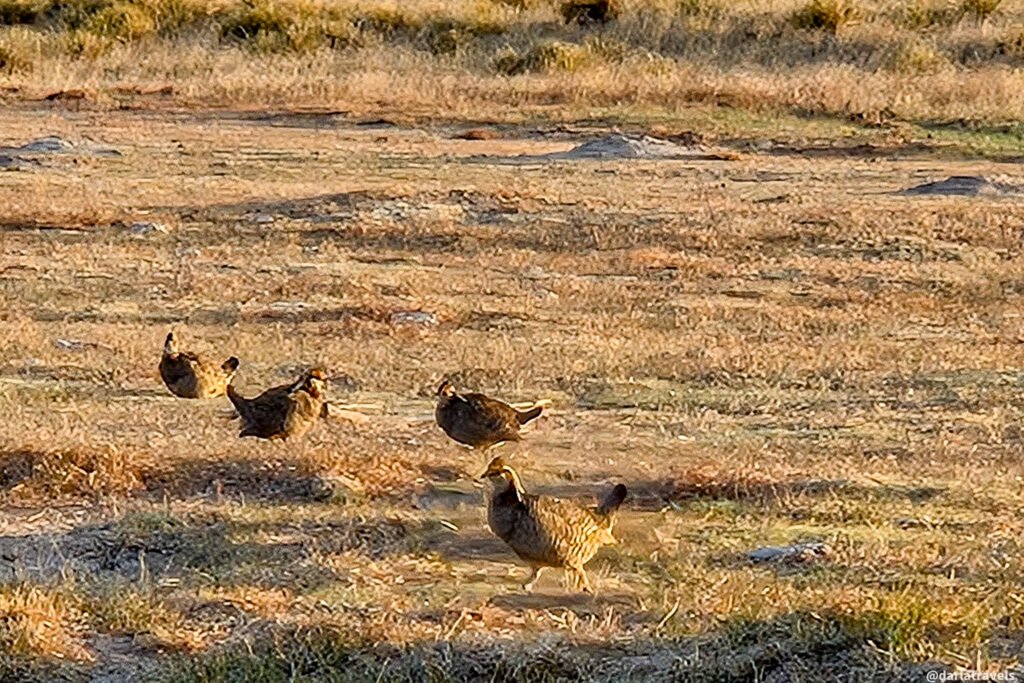
Despite the cold and my numb fingers, I was fixated on the performance.
The viewing blind proved remarkably effective. Because everyone remained silent and out of sight, the Prairie Chickens carried on as though we weren’t there. We also kept watch for coyotes and burrowing owls, which have been known to make an appearance on the lek, but none were spotted.
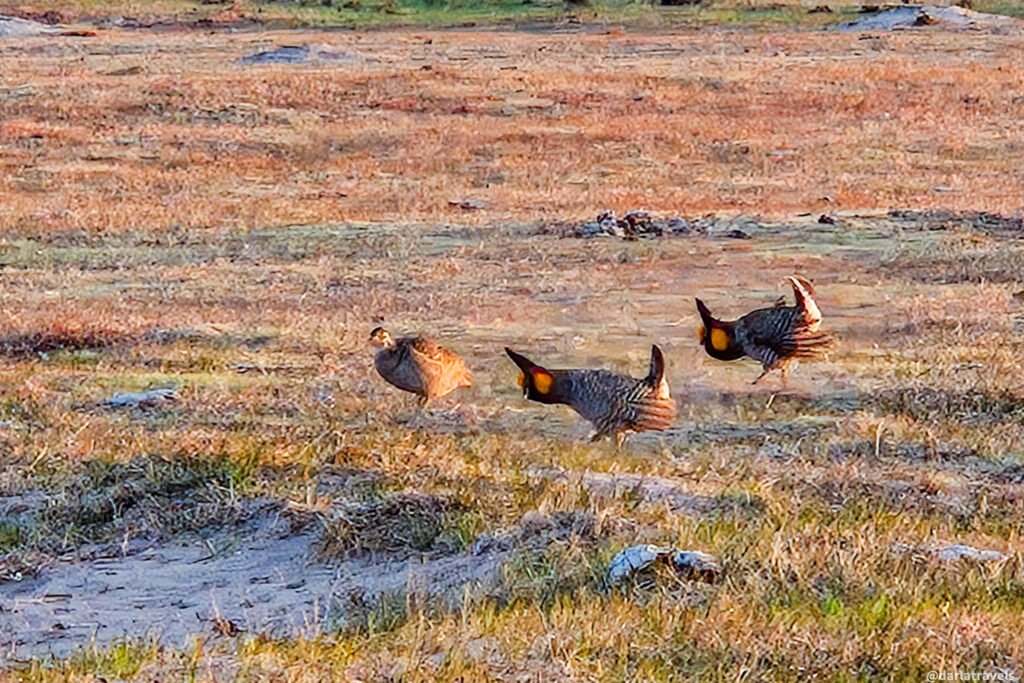
Day 2: A Warm Finish
After viewing the Prairie Chickens for close to two hours, the viewing windows were closed, and we retreated to the bus. We drove just a short distance to the Kitzmiller Grazing Association Headquarters.
Inside the warm building (with a restroom), volunteers from the Wray Chamber of Commerce had been busy preparing a ranch breakfast for us. We eagerly partook of freshly scrambled eggs, bacon, pancakes, hot coffee, and orange juice.
Sufficiently warmed up, we spoke with each other, the Chamber of Commerce staff, and even Kitzmiller Grazing Association personnel.

Warm and fed, we boarded the bus for our return to the Wray museum, arriving in time to take a shower before checking out of our hotel.
Watching Prairie Chickens perform their annual courtship display in the wild was surprisingly captivating in a way that’s impossible to experience from a television screen or online video. It wasn’t lost on me that the Greater Prairie Chickens have been doing their thing out here on these vast grasslands since long before the Great Plains were settled. Seeing it for the first time, I was grateful for the opportunity and honored to play a very small part in the conservation effort to keep it going.
Video – Greater Prairie Chicken Calls (Booming) and Behavior
Preparing for a Prairie Chicken Tour in Wray
Because the birds display only during a short window in spring and are sensitive to disturbance, tours run on limited dates and require reservations. The rural location means you’ll want to plan lodging, meals, and driving routes around Wray. You definitely want to arrive rested and ready for the orientation and pre-dawn departure the next morning.
Here’s how to prepare so you can focus on enjoying the Prairie Chicken Tour rather than worrying about logistics.
🪶REMEMBER TO REGISTER FOR YOUR TOUR IN ADVANCE!
Who Should Attend This Spring Birding Event?
Wray’s Prairie Chicken Tours will appeal to many types of visitors.
- Birders, anyone from first-time novices to experienced listers.
- Photographers seeking movement, early morning light, and expansive prairie landscapes.
- Travelers looking for educational, community-based experiences in rural Colorado.
- Anyone who enjoys immersive nature experiences and wants to see one of North America’s amazing mating displays up close.
Do You Need a Colorado State Wildlife Area Pass to Take a Prairie Chicken Tour?
For this tour, the answer is no, you do not need a Colorado State Wildlife Area (SWA) pass. The lek and viewing blind are on private land owned by the Kitzmiller Grazing Association.
An SWA pass or hunting/fishing license only comes into play if you decide to bird or hike on State Wildlife Areas or State Trust Lands elsewhere in Colorado on your own. In that case, everyone 16 or older does need either a hunting or fishing license, or an SWA pass to be there.
Spring Birding Gear: What to Pack for Your Visit to Wray
Whether you’re attending a Wray Prairie Chicken Tour in March or April, you’ll need to be prepared for changing weather conditions. Snow might fall all afternoon on one day, feel wintry the next morning, then turn into a warm and sunny day… or vice versa!
And since you’ll be sitting in an unheated trailer while viewing the birds for up to 2 hours, you’ll want to bundle up well. Even though daytime highs can be pleasant, don’t underestimate how cold you’ll feel while sitting still in an unheated viewing blind before sunrise. I wore two layers of merino wool leggings and still felt chilled.
The following weather information may help you plan.
Average Weather Statistics for Wray in March:
- Typical highs reach 53-61°F (11.7-16.1°C).
- Overnight lows dip to 27-33°F (-2.8-0.6°C).
- Average snowfall of 5.9 inches (15 cm)
- Average rainfall of just 0.88 inches (2.2 cm)
- Skies are cloudy about half the time in March.
Average Weather Statistics for Wray in April:
- Typical highs reach 61-69°F (16.1-20.6°C).
- Overnight lows dip to 34-42°F (1.1-5.6°C).
- Average snowfall of 2.6 inches (6.6 cm)
- Average rainfall of 1.92 inches (4.9 cm)
- Skies continue to be cloudy in April, slightly less than half the time.
Clothing
Flexibility and layering are key to comfort. A warm base layer, an insulating jacket, and a weatherproof shell are a good start. Dark clothing is recommended so you don’t agitate the birds.
Other recommendations for clothing and accessories include:
- Insulated touchscreen gloves
- A warm winter hat
- A scarf or neck gaiter
- Warm socks
- Good outdoor walking shoes/boots
- Hand and toe warmers, either reusable or disposable air-activated chemical warmers (such as HotHands or Grabber).
Comfort Items for the Tour
The viewing blind has three rows of bench seating. Cushions and blankets are provided, but you might want to bring your own just in case.
🪑Another item that I wish I had brought is a stadium seat with back support.
You could bring a thermos with a hot drink or water, but remember, there are no restrooms at the viewing site.
Binoculars, Scopes, and Camera Gear
At a minimum, bring a decent pair of binoculars. If you don’t own any, I recommend borrowing a pair to get the most out of your Prairie Chicken-watching experience.
Most of the time, the birds are close enough that a spotting scope is unnecessary as long as you have good binoculars.
Camera gear is optional, but trust me, you’re going to want some photos of these engaging birds. Tripods or monopods are allowed, but the blind is small, and you’re sharing it with others, so your gear should have a compact footprint.
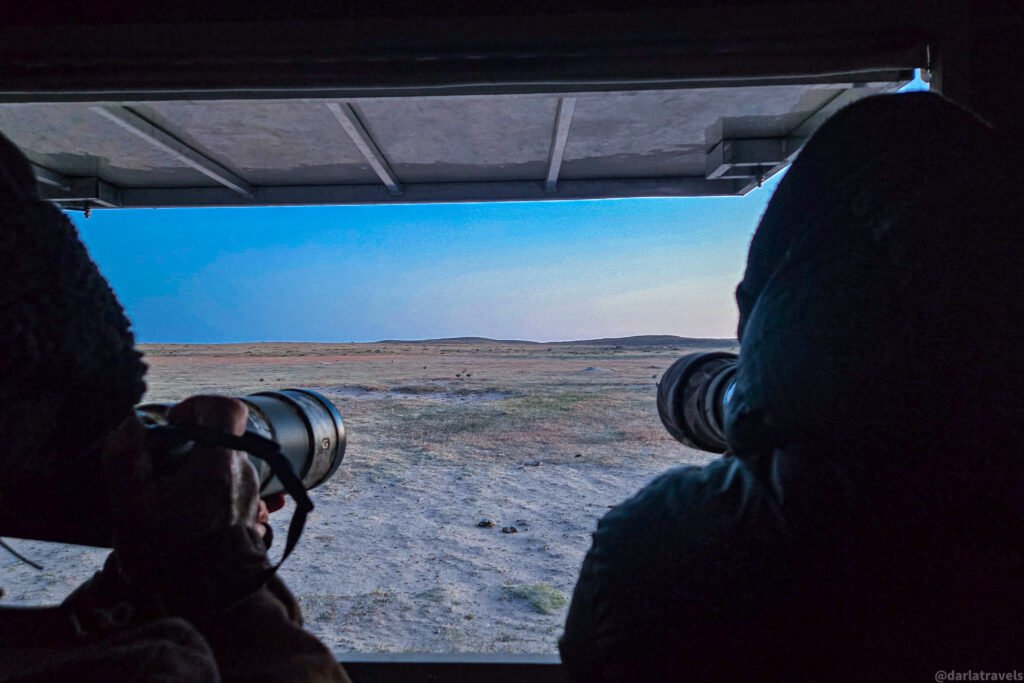
Remember to make sure your camera (and your phone, watch, etc.) is set up so that they stay silent, other than a shutter sound.
Apps
Don’t forget to record your Greater Prairie Chicken sighting on the Merlin or eBird app.
Before You Leave Your Hotel for the Tour
These are just a few final tips for your early morning departure.
- Eat a light snack if you normally wake up hungry.
- Charge your camera batteries.
- Charge your phone.
- Bring medications.
- Visit the restroom.
- Dress in all your layers.
Other Things to do in Wray, Colorado
For a complete guide to exploring Wray, including where to eat, stay, and what else to see, see my detailed guide here.
In that article, I discuss not only the Wray Museum, but also describe:
- A historic downtown walk
- A walk along the Republican River and around town
- Wray’s Flirtation Point
- Beecher Island Battleground, a nearby historic site
And much, much more.
Where to Stay and Eat in Wray for Your Prairie Chicken Tour
Cobblestone Inn & Suites – Wray
Just west of downtown, the Cobblestone Inn & Suites is my pick if you want modern comfort without losing that small‑town feel. You’ll get a complimentary hot breakfast, free Wi‑Fi, a fitness center, an on‑site beer‑and‑wine bar, guest laundry, and a 24‑hour mini‑market all under one roof.
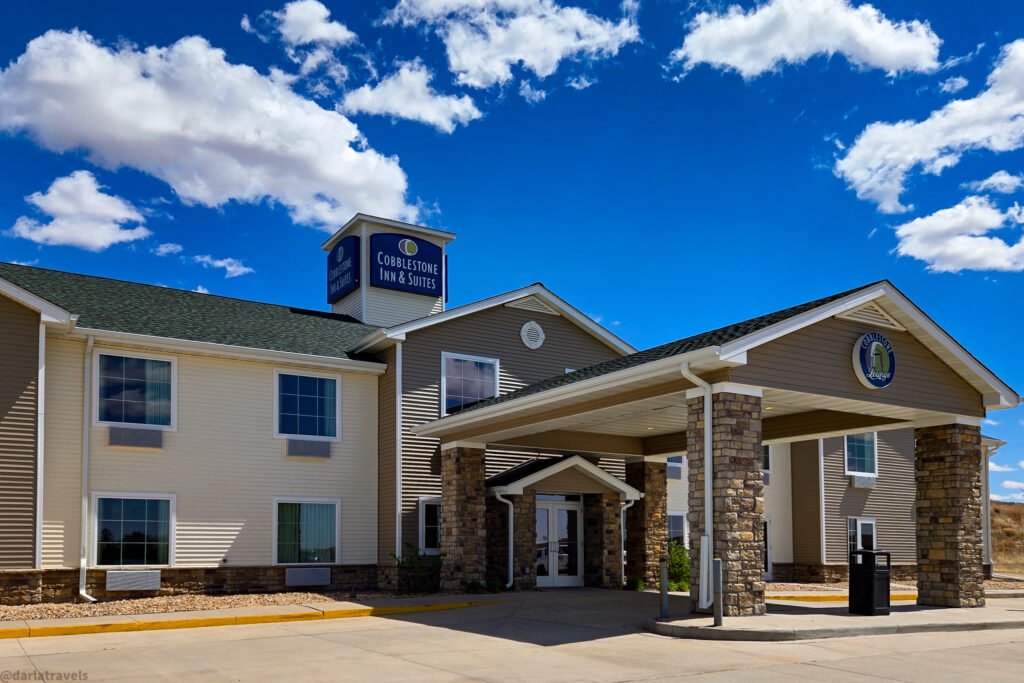
On my April 2026 visit, I paid $129.11 per night (including taxes and fees) for a spacious double‑queen room. The amenities and easy access to downtown Wray, including the Prairie Chicken tour departure site, made it a great value. My room had a microwave, refrigerator, and in‑room Seattle’s Best Coffee.
Video walkthrough of Cobblestone Inn & Suites – Wray
Other Wray Lodging Options
If you want to stay right in the core of town, the Butte Motel (330 E 3rd Street) is an affordable, simple, older property that reviewers describe as clean, quiet, and friendly: nothing fancy, but a solid overnight base with a helpful front desk.
For a more home‑like stay, Doc’s Bed & Breakfast (443 Blake Street) offers six queen suites and two cottages, and of course, they provide a sit-down morning meal.
Book Now
Use the map and links below to book your Wray lodging:
Book now at Booking.com ♦ Book now at Expedia ♦ Book now at Hotels.com
Dining Options Before Orientation or After a Day in the Field
A dinner in Wray is part of the Greater Prairie Chicken Tour experience. Before your Orientation, enjoy the historic atmosphere of the 4th & Main Downtown Grille (402 Main St), the south-of-the-border feel at El Vaquero Mexican Restaurant & Cantina (29231 County Road 35), or locally made pizza at Flirtation Point Pizzeria (220 Main St).
After the early morning Prairie Chicken tour, you might want to have a second breakfast or lunch at a locally owned café like Canyon Coffee and Cafe (345 Main St) or LaLa’s Bakery & Espresso Bar (301 Main St).
Note: Check opening times for restaurants in Wray to avoid disappointment.
Pin It for Later- Wray Greater Prairie Chicken Tours
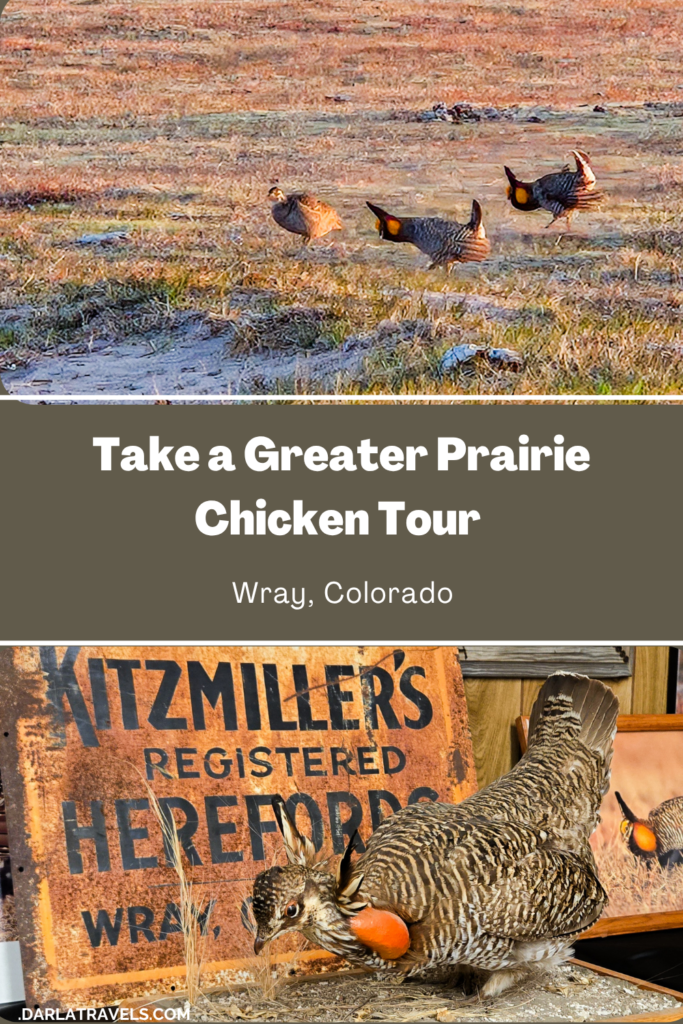
I created these images of the Wray Prairie Chicken Tour for your Pinterest Boards.
Final Thoughts on the Wray Prairie Chicken Tour: It’s Worth a Trip to Eastern Colorado
If you’re willing to trade crowded attractions for wide-open landscapes, a morning filled with booming bird calls, authentic wildlife encounters, and a little bit of education, the Wray Greater Prairie Chicken Tour should be on your list. Add in a dash of conservation and a heap of local hospitality, and you’ll have a decidedly memorable experience that stays with you long after the birds have disappeared back into the grasslands. Start planning your spring journey to Colorado’s Eastern Plains now to attend a Greater Prairie Chicken Tour in Wray, Colorado.
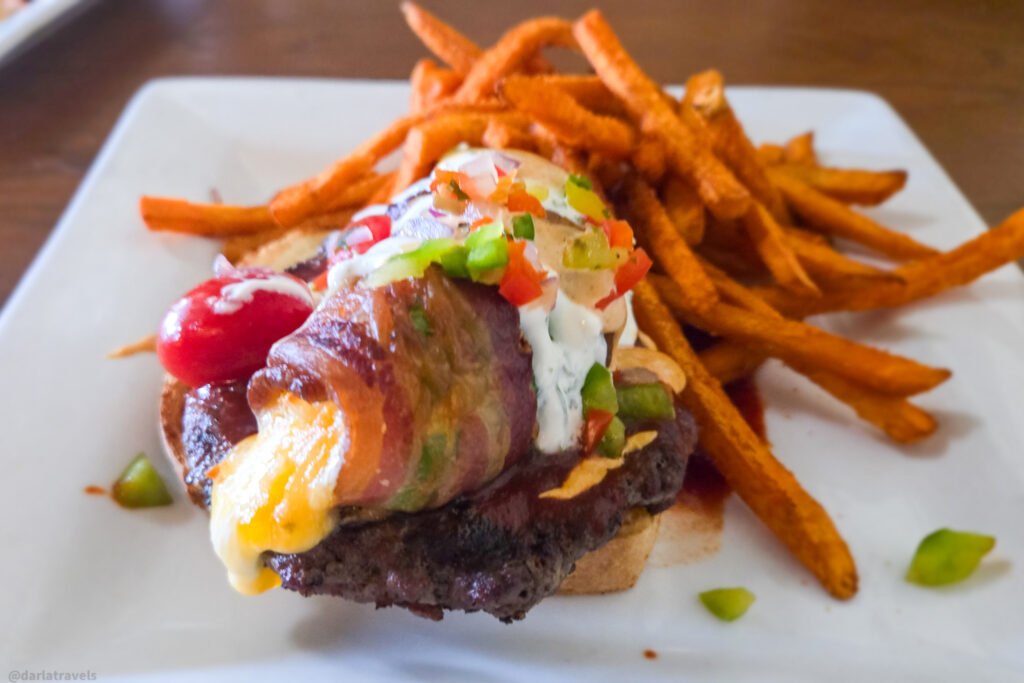
Based on what I saw and read on YouTube during the Fifa World Cup, European tourists would be thrilled to learn that the Prairie Chicken Tour was in a yellow school bus! As for me, the highlight would be the Open-faced Popper Madness Burger at the 4th and Main Grille. Looks absolutely amazing!!!
The burger really WAS amazing. That’s an interesting perspective on the school bus–it’s much more fun to think of it as a whimsical conveyance rather than just something practical and budget-friendly.
I’d never heard of this tour but it sounds like a fun springtime activity to add to our list. Thank you also for the tips on what to bring along–a stadium seat sounds like a nice addition.
Glad you enjoyed the post!
Ok, that burger for me was the highlight. Amazing how one good picture can make you hungry. Very unique and interesting tour.
It was a highlight of the trip, for sure! Glad you enjoyed the post.
What a unique wildlife experience! Watching the Greater Prairie Chickens perform their booming displays at sunrise must be unforgettable. I’d happily wake up before dawn for a chance to see this fascinating behavior in the wild—thanks for such a detailed guide on what to expect!
Glad you enjoyed the post!
I had planned to see the Prairie Chickens in Nebraska, along with the Sandhill Crane Migration. It’s nice to know of this alternative. I love birding!
Yes, while there are several places for prairie chicken tours in Nebraska, this is a good backup if your crane-viewing schedule gets too full.